
A B2B buyer's guide to fiber optic installation crew skills: FOA and BICSI certification paths, in-house training ladders, subcontractor vetting tests, RFQ clauses and acceptance documentation.
When a fiber optic project goes wrong, the cause is rarely the cable itself. It is almost always the hands that pulled it, the splicer who cleaned a connector too quickly, or the crew that skipped a bend-radius check to save twenty minutes. For B2B buyers — telecom contractors, ISP project managers, and procurement teams — the qualification of the installation crew is therefore not a soft HR topic. It is a hard variable in the project budget, the acceptance schedule, and the long-term reliability of the network you are paying for.
The economics are unforgiving. Fiber installation is a labor-intensive process where a small percentage of defective work generates a disproportionate share of total cost. A poorly dressed slack loop, a connector contaminated during mating, or a splice made with a dirty cleaver will pass initial visual inspection but fail during OTDR acceptance testing — or worse, fail weeks after handover during subscriber activations. Every one of those failures means a truck roll, a re-splice, a re-test, and a delay on the handover date your customer has already contracted.
Consider a concrete illustration. Assume a 5,000-subscriber FTTH build where each drop averages 80 meters and each subscriber activation requires roughly 45 minutes of crew time under normal conditions. If an under-trained crew introduces defects on just 8% of drops — a realistic figure on sites without formal fiber training — that is 400 drops needing rework. Add 90 minutes per rework visit (travel, fault location, repair, re-test) and you have 600 additional crew-hours. At a fully loaded crew cost of, say, USD 35 per hour, that is roughly USD 21,000 of direct labor — before counting overtime, missed activation slots, customer complaints, and the penalty clauses many ISP contracts attach to late handover. A structured training program for the whole crew typically costs a fraction of that figure. The numbers will vary by region and contract, but the ratio rarely does: prevention is cheaper than rework by an order of magnitude.
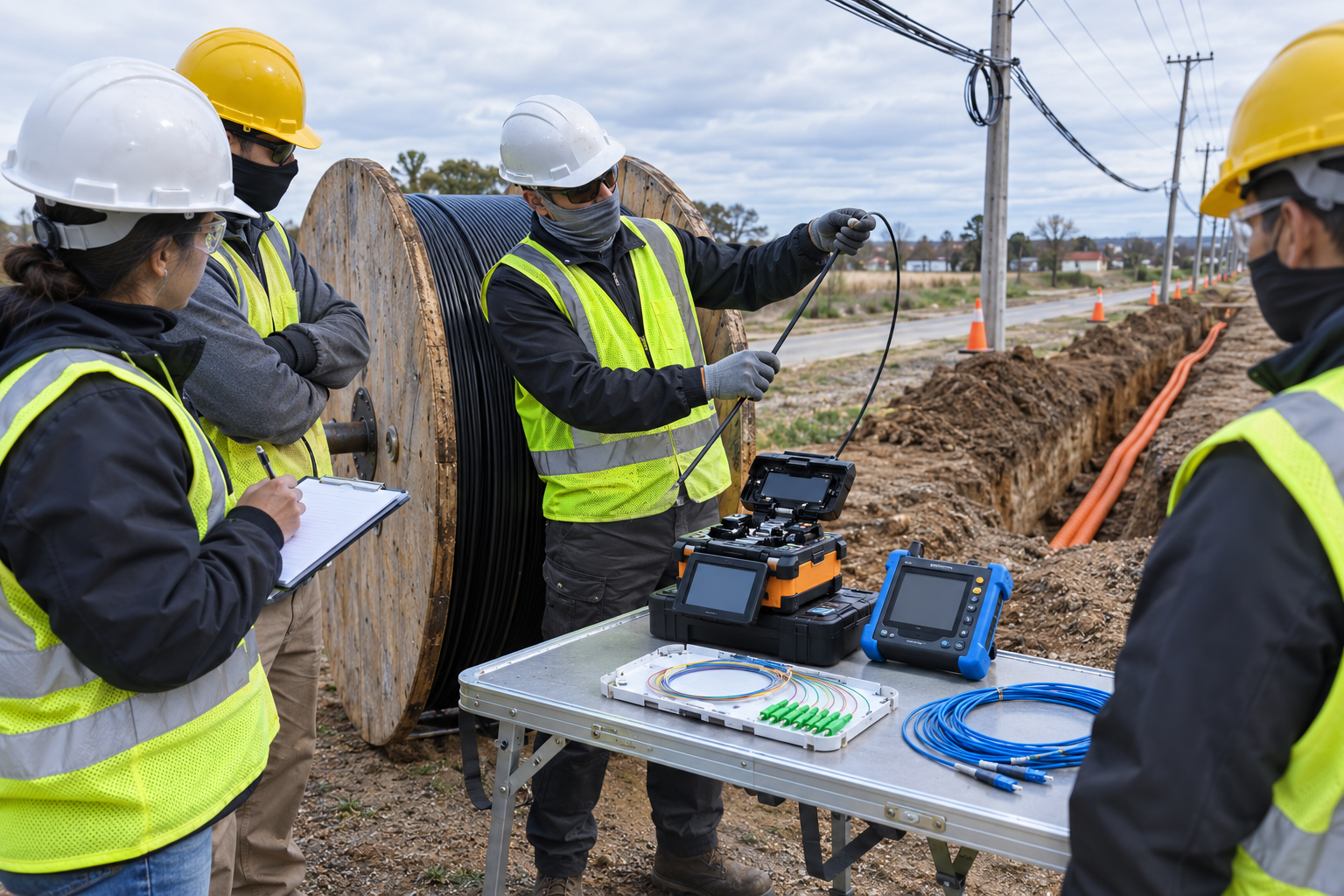
Why Crew Qualification Decides the Outcome of a Fiber Project
Buyers often evaluate fiber projects on three visible metrics: cost per kilometer or per drop, installation speed, and acceptance test results. All three trace back to the same root factor — the skill level of the people on site. A qualified crew works faster because it does not repeat tasks, produces cleaner documentation because the testing routine is second nature, and passes acceptance on the first attempt because the work meets the standard the test is checking against.
The Cost of Rework on a Poorly Installed Link
Rework on a fiber link is more expensive than it looks, because the fault is rarely visible. A kinked cable behind a closure lid or a connector endface damaged by improper mating shows up only as elevated insertion loss or an OTDR event. Locating it consumes the most expensive resource on the project: trained crew time on a truck.
Typical failure modes attributable to crew technique include:
- Excess splicing loss. A fusion splice made with a dirty or poorly cleaved fiber typically shows 0.1–0.3 dB loss instead of the 0.05 dB or lower that trained splicers achieve; those are typical industry values and exact acceptance thresholds should be set per project specification.
- Contaminated connectors. Industry studies consistently attribute a majority of physical-layer network faults to dirty or damaged connector endfaces. Cleaning and inspection discipline costs seconds; contamination costs outage hours. See our guide on how to clean and inspect fiber optic connectors to prevent costly network downtime.
- Exceeded bend radius during pulling or slack storage. Macro-bends increase attenuation and may not appear until the link is tested under temperature cycling months later.
- Improper closure preparation. Water ingress into a splice closure from incorrect gasket installation produces degrading loss over time, not an immediate failure — which makes warranty claims contentious.
Each of these is preventable with training, not with better equipment. The same fusion splicer produces a 0.05 dB splice or a 0.4 dB splice depending on the operator.
Acceptance, Warranty, and Liability Risks
Acceptance testing converts installation work into a payable milestone. If your crew cannot produce a clean, well-organized test record — OTDR traces, insertion loss measurements, and documented test references — the acceptance review stalls regardless of how good the physical work is. Many crews that install competently still fail handover because their test documentation is inconsistent or the test setup reference was not established correctly.
Warranty exposure follows the same logic. Cable manufacturers typically back their product for a defined period — for Nexora cable and accessories, the warranty is 12 months from shipment date, and buyers should read precisely what such a warranty covers and excludes. A warranty covers defects in the product; it does not cover damage inflicted by improper installation. If an investigation traces a link failure to excessive pulling tension or a violated bend radius during installation, the cost falls on the installer or the network owner, not the manufacturer. That distinction is exactly why crew qualification belongs in your risk assessment.
Liability also extends to safety. Fiber installation involves lasers governed by the IEC 60825 series: crews must never look into an unterminated fiber end or into a connector on an active link, and must follow local job-site safety regulations. Training programs embed these rules; untrained casual labor does not always know them.
The Core Skills Every Fiber Optic Installation Crew Needs
Before you can evaluate a certification program or write training requirements into an RFQ, you need a clear inventory of the skills a competent crew actually uses. They fall into two broad groups: universal handling discipline that applies to every cable type, and route-specific practice that changes with the deployment method.
Cable Handling and Pulling Discipline
Most installation damage occurs during pulling, not during splicing. Crew members must understand three physical limits and respect them instinctively:
- Maximum pulling tension. For many common outdoor loose-tube designs, the typical short-term maximum pulling tension falls in the range of roughly 2,700 N for standard builds, with lower values for smaller drop and indoor cables. These are typical industry values; always confirm the exact limit against the product datasheet before planning a pull.
- Minimum bend radius. Under load during pulling, typical designs require a bend radius of roughly 20 times the cable diameter, relaxing to about 10–15 times when the cable is at rest — again, typical values to be confirmed against the datasheet for the specific product.
- Twist and kink control. Cable must be pulled off the reel in a figure-eight or rotated-reel pattern; twisting the cable during hand pulls builds in macro-bends that surface as OTDR reflections later.
A disciplined crew also plans the pull before touching the cable: measuring the route, calculating tension with and without lubricant, positioning intermediate pull points for long routes, and assigning one person to communicate speed and stops. Our detailed guide on pulling fiber optic cable without exceeding tension and bend limits breaks this process down step by step, and it is a useful internal training document for new crew members.
Handling discipline also covers the small things that separate professional crews from improvised ones: capping cable ends immediately after cutting to keep moisture and dirt out of the water-blocking elements, labeling both ends of every cable as it is installed, and photographing the route before backfill or closure for as-built records.
Route-Specific Installation Practice
Universal discipline is necessary but not sufficient, because each deployment method imposes its own demands on the crew.
Underground and direct-buried routes. Crews digging and backfilling need to understand duct preparation, pulling-in techniques for duct runs, depth and warning-tape requirements, and how to protect the cable at transitions between duct and buried sections. Direct-buried installation has its own practical rules around trenching, duct placement, and backfill compaction that are covered in our guide to installing direct-buried fiber optic cable. The dominant outdoor plant cable here is loose-tube single mode construction — for example G652D outdoor cable such as Nexora's outdoor G652D single-mode fiber optic cable — where the crew must also understand fiber color-coding inside the buffer tubes so that splicing assignments are traced correctly.
Aerial routes. Aerial work adds working-at-height competence, hardware installation (hooks, clamps, dead-ends), and correct sag and tension practice. The crew must also distinguish between cable types: figure-8 self-supporting cable, with its integrated steel messenger, is installed with the messenger tensioned and clamped while the fiber core hangs slack — our guide to figure-8 self-supporting cable for aerial networks covers the deployment method. ADSS (all-dielectric self-supporting) cable requires different hardware and a correct understanding of tension and span limits, described in our ADSS selection guide. Installing an ADSS cable with figure-8 habits — or vice versa — is a classic untrained-crew error that produces crushed cable or fallen spans.
Indoor and FTTH routes. Crews terminating at racks and ODFs need tight-buffered cable skills, connectorization, patch cord management, and drop cable installation technique for subscriber drops. These skills overlap with the splicing and testing topics covered later in this article.
The practical takeaway for buyers: when you evaluate a crew or a subcontractor, ask for evidence of competence on the specific route types in your project, not just general "fiber experience." A crew excellent at indoor riser work may be unsafe and destructive on an aerial span. Route-specific training is where certification programs and structured in-house ladders — the subject of the next sections — earn their cost.
Termination, Testing, and Documentation Skills That Decide Acceptance
The first three skill blocks — cable handling, route preparation, and connector work — are only half the picture. The remaining skills below are where most acceptance failures and post-installation faults actually originate, so weigh them equally when you assess a crew.
Fusion Splicing and Termination Quality
Splicing is the highest-skill task on any crew. A fusion splice joins stripped and cleaved fiber ends in an arc fusion splicer, and the operator's cleaving technique, stripping discipline, and machine maintenance all show up directly in the loss numbers. A competent operator typically achieves splice losses in the range of 0.02 to 0.05 dB per splice on single mode fiber — a typical industry value; confirm against the product datasheet and your project specification, since poor cleaves, dirty ferrules, or a misaligned splicer can push individual splices well above that.
Mechanical splicing is a faster, lower-equipment alternative, but each method has different loss and reliability characteristics — our comparison of fusion splicing vs mechanical splicing explains the trade-offs in detail. Whichever method the crew uses, they must handle factory-terminated components correctly too. When splicing a fiber optic pigtail onto a cable end, the operator must protect the factory-polished connector from contamination and store the slack loop at the proper bend radius inside the tray. Splice-on work at closures, ODFs, and demarcation points is where inexperienced crews produce their worst results.
When evaluating a crew, ask to see their splicer's estimated loss readings and their recorded OTDR results from previous jobs. A consistent pattern of outliers — one bad splice per fifty — usually indicates a worn cleaver blade or rushed work, both of which are fixable if the supervisor knows to look for them.
Testing, Troubleshooting, and Loss Budget Discipline
A crew that cannot test its own work will not pass third-party acceptance. Two instruments dominate day-to-day verification: the light source and power meter, which measure end-to-end insertion loss, and the OTDR, which locates and characterizes individual events along the fiber. Crew members should be able to set test references correctly, clean connectors before every measurement, and interpret results without guessing. Our guides on OTDR acceptance testing and testing a link with a light source and power meter cover the procedures in depth and make good training material.
Discipline starts before installation. The designer should calculate a link loss budget, and the crew should understand what that budget means for the cables and connectors they are installing. As typical industry reference points — always confirm against the datasheets for the specific components in your project — a fusion splice typically contributes around 0.02–0.05 dB, a mechanical splice roughly 0.1–0.3 dB, and mated connector pairs roughly 0.3–0.75 dB depending on polish grade and connector type. Multimode and single mode differ, and wavelengths matter, so a crew that quotes loss numbers from memory rather than from the budget sheet is a warning sign.
Troubleshooting is the complement to testing. When a link fails, the crew should isolate the cause systematically: visual fault locator first for obvious breaks and macrobends near connectors, OTDR for distance-located events, and connector inspection for contamination. A crew whose first response to a failed link is "re-terminate everything" will burn your schedule and your budget.
Documentation, Labeling, and Color Code Discipline
Documentation is the skill block buyers most often forget to specify — and the one that determines whether the network can be maintained a year later. Every crew member should recognize the standard fiber and buffer tube fiber optic color code and apply it consistently at splices, patch panels, and closures. Color code errors are silent failures: the splice records look correct, the fiber behind the panel is not, and troubleshooting time doubles.
Labeling and record-keeping expectations should be defined before mobilization. At a minimum, the crew should deliver:
- A labeled scheme for every fiber, port, and panel position, tied to the ODF and rack termination plan.
- Splice records for every closure and tray: fiber IDs, splice loss values, and closure locations.
- As-built test results — insertion loss per link at the specified wavelength, plus OTDR traces where required.
- Slack storage notes showing where spare cable loops are parked and how much slack exists at each point.
A crew that treats documentation as a deliverable rather than an afterthought is almost always a crew that treats the cable itself the same way. Ask for sample documentation from a previous project during vetting.
Recognized Training and Certification Programs for Fiber Optic Technicians
With the skill blocks defined, the next question is how crews acquire them. No single certificate guarantees competence, but a structured mix of recognized certification, supplier-specific guidance, and locally required safety credentials gives you an objective basis for vetting. The three program families below cover most markets, and buyers should ask candidates to show certificates plus evidence of recent field work — a certification earned years ago without practice is worth little.
The Fiber Optic Association (FOA): CFOT, CFOS, and Fiber U
The Fiber Optic Association is a non-profit international certifying body founded in 1995. Its CFOT (Certified Fiber Optic Technician) credential is a widely recognized first-level certification covering fiber installation, termination, and testing, and it serves as the prerequisite for FOA specialist credentials such as CFOS/O for outside plant work and CFOS/T for testing. FOA training is delivered through approved schools worldwide, which makes it practical to require certification for crews in most regions. For crew members building theory knowledge before hands-on training, FOA also runs free online learning at Fiber U. For outside plant and FTTH projects, requiring at least one CFOT-certified lead per crew, with a CFOS/O for the outside plant specialists, is a reasonable baseline.
BICSI Credentials for Structured Cabling Crews
BICSI offers widely used installer and technician credential tracks that focus on structured cabling practice inside buildings and campuses — relevant if your project includes indoor distribution, riser and plenum runs, or data center termination work. For the design side of your organization or your design consultant, the RCDD (Registered Communications Distribution Designer) credential is the recognized marker for network distribution design competence. BICSI credentials pair well with FOA fiber-specific credentials: a crew carrying both signals breadth in premises cabling and depth in fiber work.
Manufacturer and Supplier Training
Cable and hardware makers often provide application guidance, termination instructions, and datasheets tailored to their own products — splicing parameters for a specific fiber, connector assembly steps, cable-specific pulling and bend limits. Never assume these materials substitute for hands-on training, but do treat them as mandatory reading for the crew before mobilization. Start by making sure everyone can read a fiber optic cable datasheet, since every performance value the crew must respect — pulling tension, bend radius, temperature range, attenuation — lives there as a typical value to be confirmed for your specific product.
When you select a supplier, ask directly what support is included: application notes, termination guides, splicing parameters, or pre-sales technical consultation. Do not assume training is bundled for free. If you need clarity on what support a supplier such as Nexora provides alongside its cables, patch cords, adapters, and pigtails, contact the Nexora team and confirm the scope before you place the order.
Regional Licensing and Safety Requirements
Certification in fiber technique does not replace the licenses and safety credentials your jurisdiction requires. Two layers apply on every job. First, laser safety: fiber optic transmission equipment emits invisible laser light, and safe practice under the IEC 60825 series requires crews to never look into an unterminated fiber end or a connector on an active link. Build that rule into crew induction and enforce it on site. Second, local job-site safety regulations govern everything else — working at height for aerial installs, trenching and shoring for buried routes, electrical clearances, and any regional licenses for construction work. Verify which credentials your locality mandates, and require proof from every subcontractor before crews arrive on site.
How to Build an In-House Training Ladder
If you plan to install fiber with your own people instead of subcontracting, you need a structured path from raw recruit to trusted lead technician. A defined training ladder solves three problems at once: it gets new hires productive quickly, it gives you a defensible quality system when customers audit your work, and it reduces the hidden cost of rework caused by untrained hands. The ladder below assumes a mixed workload - pulling and terminating indoor cable, splicing in closures, and testing links - and it maps each stage to observable sign-offs rather than time served alone.
Before a new hire touches live fiber, cover the safety basics from the IEC 60825 series: crews must never look into an unterminated fiber end or a connector on an active link, and every trainee should know the local job-site safety regulations that apply to your projects. Fiber ends carry invisible laser light, and this rule belongs in the first hour of training, not the last.
Stage 1: Apprentice or Trainee Technician
An apprentice works under direct supervision and earns trust with the low-risk tasks that quietly decide network quality. The core competencies at this stage:
- Cable handling and pulling. The apprentice learns to feed cable, watch the reel, respect pulling tension limits, and hold minimum bend radius during pulls. Typical industry practice limits pulling tension and bend radius to values specified per cable type - treat these as typical values and always confirm against the product datasheet for the specific cable on the job. Our guide on pulling fiber within tension and bend limits gives the site-level detail your trainer can walk through with the trainee.
- Connector cleaning and inspection. Contaminated ferrules are the single most common cause of failed links. Teach the apprentice the cleaning and inspection routine early, using a fiberscope and one-click cleaners, and make it a habit before every mating. Our connector cleaning guide is a suitable training text.
- Reel and warehouse handling. Show apprentices how cable reels are stored, rolled, and protected, and how to log receiving inspections. Poor storage quietly damages cable before it ever reaches the trench; our storage guide covers the practical rules.
- Tool care. Clean and strip tools, cleaver blade condition, and the care of the fusion splicer are apprentice responsibilities. A crew that respects its tools produces lower-loss splices.
Sign-off for Stage 1 should be practical: the supervisor watches the apprentice pull a simulated run, clean and inspect a set of connectors, and describe the safety rules unprompted.
Stage 2: Certified Installation Technician
At this stage the technician works with reduced supervision and takes on termination and testing. The benchmark we recommend is CFOT-level competence - the Certified Fiber Optic Technician credential from the Fiber Optic Association (FOA), a non-profit international certifying body founded in 1995. CFOT is a widely recognized first-level certification and a prerequisite for FOA specialist credentials such as CFOS/O (outside plant) and CFOS/T (testing). FOA training is delivered through approved schools worldwide, and FOA also runs free online learning at Fiber U, which is useful for pre-course preparation on a limited budget.
Classroom certification alone is not enough. Require two practical sign-offs before a Stage 2 technician works independently:
- Splicing sign-off. The technician demonstrates fusion splicing of both single mode and, where relevant, multimode fiber inside a closure, achieving typical splice loss targets - commonly around 0.05 dB mean for fusion splices in good conditions, though acceptable values depend on your project specification and the splicer used. Mechanical splices and pre-terminated options are legitimate alternatives on some builds; our comparison of fusion versus mechanical splicing helps you set a policy your crew can follow consistently.
- Testing sign-off. The technician sets a light source and power meter reference correctly, measures insertion loss of a known link, records results in the required format, and interprets a failure correctly. Reference method errors are the most common testing mistake; our guide to testing a fiber link with a light source and power meter covers the procedure your trainer should enforce.
Stage 3: Lead Splicer and Field QA Role
Stage 3 is not just about better splicing - it is about owning quality on site. A lead splicer or field QA technician should:
- Own acceptance testing. Plan the OTDR test setup, choose wavelength and pulse settings appropriate to the link, interpret traces including gainer events and reflective ends, and decide when a marginal result needs rework or a documented deviation. Our OTDR acceptance guide is the reference document for this role.
- Produce as-built documentation. Accurate closure diagrams, fiber routing, splice records, measured loss values, and test files organized by link ID. Documentation quality is what customers audit months later; a lead who treats it as part of the job, not paperwork afterward, protects your reputation.
- Mentor apprentices. Each lead carries one or two trainees and signs off their Stage 1 tasks. This keeps the ladder turning without sending every new hire to paid external courses.
- Escalate intelligently. Recognize when a problem is a material issue, a design issue, or a workmanship issue - and involve you or the supplier accordingly instead of masking it.
Refresher Training and Skills Records
Skills decay, tools drift, and standards evolve. Run a short annual refresher covering safety rules, connector inspection, reference-method testing, and any new cable or connector types entering your projects. Ask every technician to keep awareness of instrument calibration status - a power meter out of calibration produces confident, wrong numbers - and log calibration dates for meters, OTDRs, and cleavers.
Maintain a skills record per technician: certifications held with expiry dates, practical sign-offs completed, refresher dates, and equipment the person is authorized to use. This record costs little to keep and pays off twice - internally, when you assign crews, and externally, when a customer or prime contractor asks you to prove crew competence. Buyers who audit their own suppliers should ask for exactly these records; the vetting section below shows how.
How to Vet a Subcontractor Crew Before You Award the Contract
If you hire instead of training, remember that the subcontractor's crew quality becomes your network quality. Most subcontractors will claim experienced, certified crews; a structured vetting process separates claims from evidence. Do the vetting before contract award, and write the results into the contract so the crew you vetted is the crew that arrives - substituting unvetted staff mid-project is a common failure mode.
Evidence to Request
Ask each bidding subcontractor for:
- Certificates with names and validity. Copies of each crew member's certifications (for example FOA CFOT or BICSI installer credentials), showing the holder's name, issue date, and validity period. A certificate with no name attached proves nothing about who will actually stand on your site.
- Training and sign-off records. Internal training logs, refresher dates, and equipment authorizations - the same records you would keep if the crew were yours.
- Recent OTDR result sheets from past projects. Traces and summary tables from work completed in the last 12 months, ideally on projects similar to yours in scale and environment. Real OTDR files show splice and connector loss distributions and reveal whether the crew's testing discipline is real. If you are new to reading traces, our OTDR acceptance guide lists what a healthy result set looks like.
A Practical Vetting Test
Paper evidence can be recycled between bids, so run a short practical test with the actual crew members who would be assigned to your project:
- Mockup splice panel. Provide a short length of loose-tube cable and a closure or splice tray. Watch the crew organize buffer tubes, set splice protection, manage bend radius in the tray, and close the panel. Measure the resulting splices; typical good fusion splice loss is around 0.05 dB mean, though confirm the acceptance threshold in your project specification.
- Sample link test. Ask the crew to test a known link and produce a written result. Check reference method, wavelength, and whether they document the setup. Sloppy references show up immediately as inconsistent numbers.
- Connector inspection under a microscope. Have them clean, inspect, and mate a set of connectors. The inspection images tell you instantly whether their cleaning routine matches the standard in our connector cleaning guide.
Give yourself a scoring sheet for these three tests and keep it on file. Two hours of testing prevents months of troubleshooting a badly built network.
Vetting Questions and What Good Answers Look Like
| Question | A qualified crew answers with | A red flag sounds like |
|---|---|---|
| Who exactly will work on our project, and what certifications do they hold? | Named individuals, each with a dated, valid certificate (e.g., FOA CFOT or equivalent) and a copy attached | "Our company is certified" or certificates without holder names and dates |
| How do you set and verify the reference before insertion loss testing? | A specific reference method, stated re-verification steps, and consistency across technicians | "We just meter it" or different answers from different crew members |
| What splice loss values do you accept, and how do you handle a splice that fails? | A stated acceptance threshold, a re-splice policy, and OTDR verification after rework | "It always passes" or "we go by feel" - no numbers, no rework procedure |
| Show us OTDR results from a recent similar project. | Trace files and summaries from the last 12 months, with link IDs and dates matching a real project | Screenshots only, no raw files, or results that cannot be tied to a named project |
| How do you clean and inspect connectors before mating? | A defined routine with inspection scopes and one-click cleaners, applied before every mating | "We wipe them with a shirt or alcohol if it fails" - cleaning only after failure |
| Will the vetted crew stay on our project, and how do you handle substitutions? | Named crew committed in the contract; any substitution requires prior notice and the same vetting | "We assign people per availability" - the vetted names are not a commitment |
Use the answers and the practical test results as contract annexes. If a subcontractor resists the vetting process itself, treat that as useful information about how they will behave when quality problems appear later.
Matching Crew Skills to the Route: Underground, Aerial, and Indoor
A crew that can splice neatly in a data center is not automatically a crew that can hang ADSS on a pole line or rod a blocked duct. Route type dictates which skills matter most, which tools the crew must carry, and what you should check during acceptance. When you build an RFQ or evaluate subcontractors, break the job down by route type and match the crew's demonstrated experience to each segment. The sections below describe what a qualified crew should be able to do on underground, aerial, indoor, and FTTH drop work, and which of our guides and products relate to each scenario.
Underground and Duct Routes
Underground and duct work exposes a crew to two very different skill sets: getting the cable safely through the duct, and protecting the splices and slack for decades afterward.
On the pulling side, the crew must know how to set up cable rollers and pulling eyes, how to calculate and respect pulling tension limits, and how to keep the cable's minimum bend radius throughout the run. A skilled pulling lead uses lubricant where duct friction demands it, stations a person at both the pulling end and the feed end, and stops the pull when the tension monitor rises above the planned limit. Pulling force and bend radius values vary by cable construction, so treat any number in a plan as typical and confirm against the product datasheet before the pull starts. Our guide on how to pull fiber optic cable without exceeding tension and bend limits walks through the practical details your crew lead should already know: pulling fiber optic cable within tension and bend limits.
On the splicing side, the crew must prepare closures correctly. This includes stripping the outer jacket without nicking the buffer tubes, grounding and bonding the armor where the design calls for it, dressing loose tubes into the splice tray without kinks, and storing the required service slack in a coil that a future technician can actually reach. Slack loops that are too tight, buried under other coils, or left with no closure protection are the most common latent failures we hear about from field teams. A crew that understands closure selection and slack storage discipline will leave you an infrastructure that can be repaired years later without a full re-pull. See our guide on choosing a fiber optic splice closure and managing slack storage: splice closure selection and slack storage. When the work crosses direct-buried sections, crew members should also understand trench depth, duct placement, and backfill practice; our direct-buried installation guide covers those steps in detail.
Aerial Routes
Aerial work requires crew members who are comfortable at height and who understand the mechanical limits of the specific cable type. Self-supporting figure-8 cable, with its steel or FRP messenger, demands skills in messenger anchoring, tensioning, and lashing or clipping; the crew must keep the fiber unit relaxed while the messenger takes the load. ADSS (All-Dielectric Self-Supporting) cable removes the metallic messenger but transfers the entire load to the aramid-reinforced cable jacket, so the crew must respect span length, sag, and tension values for the actual pole line. Those values are specific to each design; treat any published figure as typical and confirm against the product datasheet. Our ADSS guide explains the design trade-offs: ADSS for aerial networks, and our figure-8 guide covers messenger deployment: figure-8 self-supporting cable deployment.
Buyers should ask aerial crews for documented training in pole climbing and fall protection, and for hands-on experience with dead-end and suspension hardware. A crew that has only done indoor splicing will struggle with mid-span access on tensioned cable, one of the most demanding tasks in aerial work.
Indoor and Building Routes
Indoor installations shift the emphasis from mechanical pulling strength to fire safety, bend control, and clean terminations. Crews working in risers and plenums must know which cable ratings are permitted in each pathway and why substitution is a code violation, not a shortcut. Our guide to choosing indoor cable for riser, plenum, and horizontal runs gives buyers the vocabulary: indoor cable selection for riser and plenum runs. Typical indoor products such as tight-buffered indoor cable and distribution cable each demand slightly different handling: tight-buffered fiber tolerates direct connectorization, while distribution cable requires the crew to fan out tubes and manage tighter internal geometry.
Indoor crews must also be trained to restore fire barriers. Every penetration through a rated wall or floor needs firestopping to be reinstated after the cable is pulled. This is a life-safety obligation, and inspectors routinely flag installations where crews left penetration seals compromised. Finally, indoor work lives or dies on termination quality and rack discipline; crews should be fluent in color-code practice and in planning the ODF and rack termination so that panels are populated logically, not just quickly.
FTTH Drop Segments
The subscriber drop is short, but it is where crews work on private property, at customer doors, under time pressure. Skills that matter here include choosing and handling the correct drop cable type, controlling bends at the customer enclosure, sealing entry points against water and insects, and terminating or splicing drop connectors cleanly. A crew that treats a drop as an afterthought generates the majority of post-installation service calls in many FTTH rollouts. Our drop cable guide explains cable options and handling: choosing FTTH drop cable, and products such as our FTTH drop cable are designed specifically for these last-meter runs. When vetting subcontractors for FTTH projects, ask specifically how many drops each lead technician has completed and what their first-visit success rate looks like.
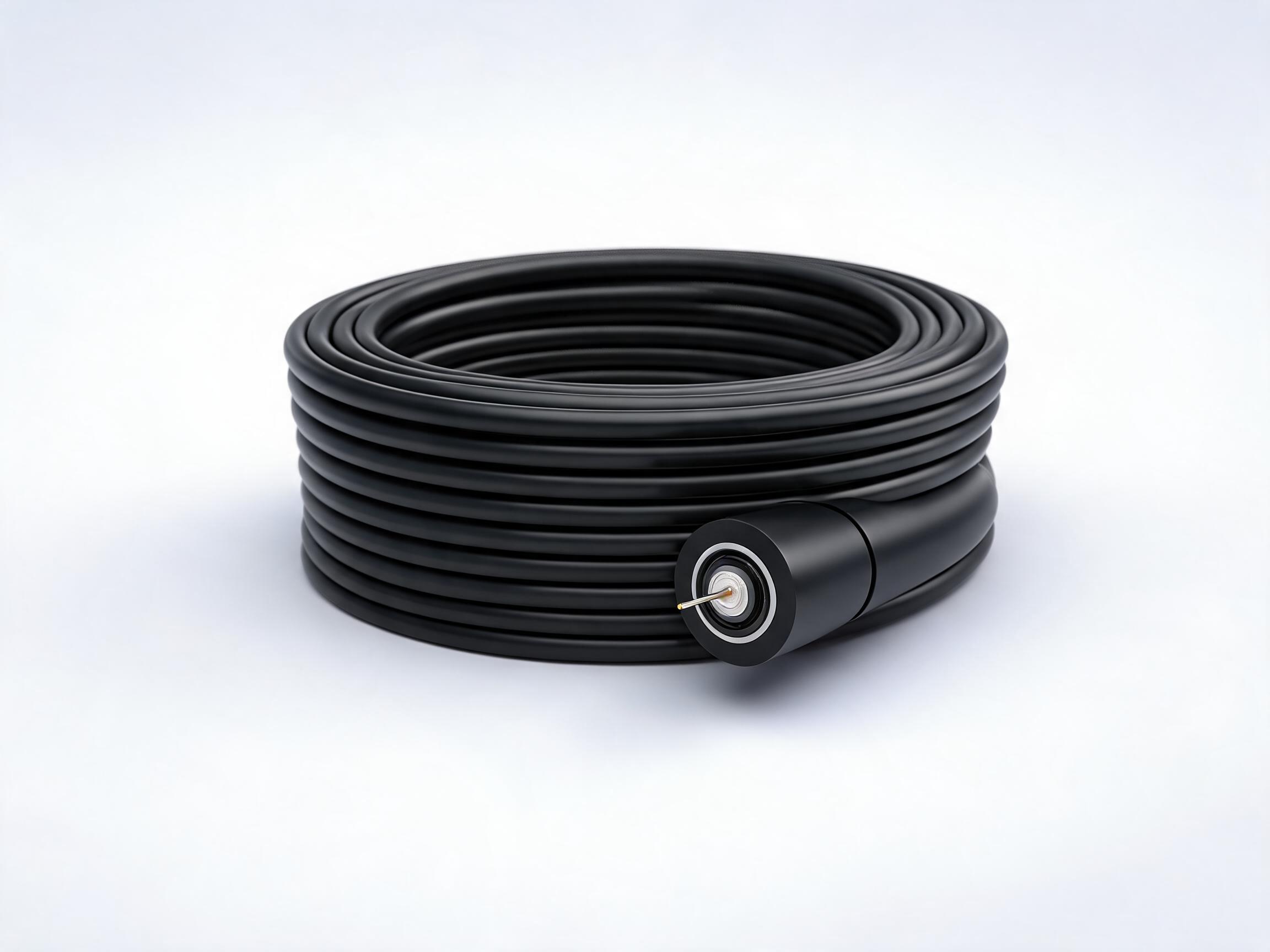
This outdoor loose-tube cable coil represents the everyday material of underground and aerial crews. Handling it well means protecting the coil during transport, paying it off without twisting, and knowing how the outer jacket and water-blocking elements behave when stripped. Crews that have practiced on real outdoor cable make far fewer jacket-damage mistakes than crews trained only on indoor samples.
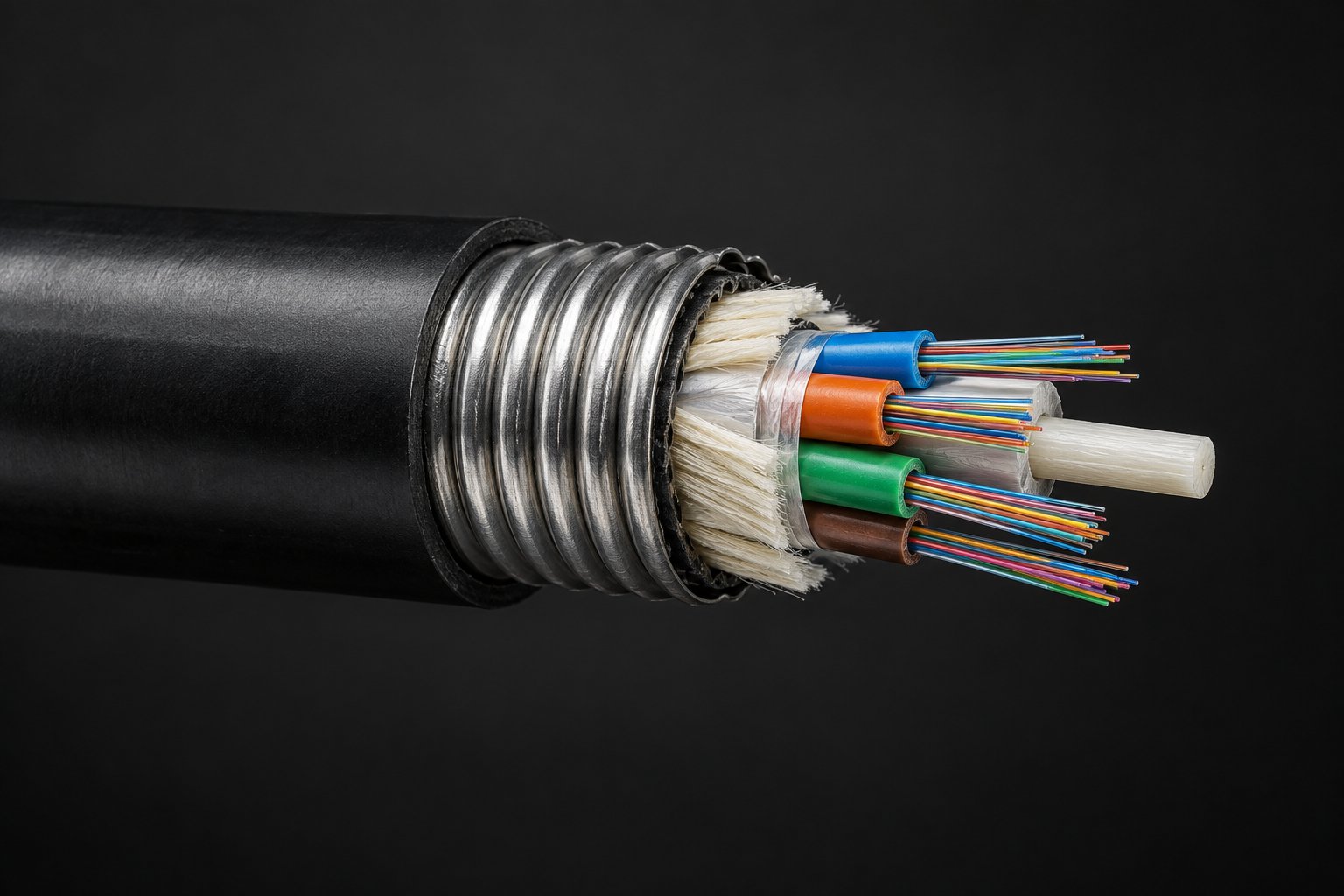
A cross-section like this one is what a trained splicer sees when preparing armored cable: the outer jacket, the armor layer, and the color-coded buffer tubes underneath. Recognizing each layer, stripping to the right depth, and dressing the tubes into a splice tray without exceeding bend limits are exactly the hands-on skills that separate a certified, practiced crew from one that is learning on your project.
Test Equipment and Tools a Qualified Crew Should Carry
A crew's certification tells you what they were taught; the tools they actually carry tell you whether they can prove quality on site. Before awarding a contract, inspect the crew's instrument inventory. At minimum, an installation crew should carry the six instruments below, calibrated and with trained operators. Remember that any measured values on your project should be compared against the design loss budget and the cable datasheet; treat typical figures as typical and confirm against the product datasheet: how to read a fiber optic cable datasheet.
| Instrument | What it is used for | Notes for buyers |
|---|---|---|
| OTDR | Locating splices, breaks, and reflective events along the route; documenting trace length and event loss for acceptance | Require saved trace files for every fiber, not printed screenshots. See our OTDR acceptance guide for what a good trace record contains. |
| Light source and power meter | Measuring end-to-end insertion loss of each link against the calculated loss budget | Published insertion loss figures are typical; confirm against the datasheet. Our light source and power meter guide explains the test reference method. |
| Visual fault locator (VFL) | Fast visual check for macro-bends, broken fiber, and bad connector ends before formal testing | Cheap, fast, and indispensable for troubleshooting; see our VFL guide. |
| Fusion splicer | Producing low-loss permanent splices in closures, ODFs, and drop points | Typical fusion splice loss figures vary by operator; confirm against the datasheet and require the splicer's loss estimate to be logged per splice. |
| Connector inspection microscope | Inspecting ferrule end faces for contamination and scratches before mating | The single highest-ROI tool in the kit; most unexplained link failures trace back to dirty connectors. |
| Cable pulling tension monitor | Recording actual pulling force during underground pulls so the crew can stop before exceeding the cable limit | Limit values are typical; confirm against the product datasheet before each pull. |
Three practical notes on these tools. First, ask that every acceptance test pair be documented with a saved OTDR trace and a power meter reading, following the methods in our OTDR acceptance testing guide and our light source and power meter guide. Second, a VFL is the crew's fastest diagnostic during troubleshooting, and our VFL troubleshooting guide shows what it can and cannot reveal. Third, insist that all test jumpers be known-good reference cords kept separately from field cables. A degraded reference patch cord silently corrupts every measurement the crew makes; dedicated reference cords such as our SC/SC single mode patch cord or LC/LC duplex single mode patch cord should be labeled, inspected before each use, and replaced when their end faces degrade.
Crew quality shows in the combination of trained people, the right instruments, and documented test records. A subcontractor who can show you all three is far more likely to hand over a network that passes acceptance the first time and stays reliable afterward.
Writing Crew-Qualification Clauses Into Your RFQ
A cable datasheet tells you what the product can do. It tells you nothing about who will actually pull, splice and test it on your route. That gap is where most FTTH and enterprise rollouts go wrong: the cable arrives to spec, but the crew mobilizes with no named technician, no mockup test, and no documented acceptance thresholds. The fix is contractual, not verbal. When you prepare your request for quotation, extend it beyond cable and equipment - our guide on what information to include in a fiber optic cable RFQ covers the procurement side - and add explicit crew-qualification clauses to the installation scope. A subcontractor who resists these clauses is telling you something useful before mobilization, not after the first failed OTDR trace.
The six clauses below are the ones that consistently separate professional crews from improvisers. They are written so you can adapt them directly into an RFQ or work order.
| Clause to include | Why it protects your project |
|---|---|
| Certification evidence - crew members hold a recognized first-level credential such as FOA CFOT, with specialist credentials (CFOS/O for outside plant, CFOS/T for testing) named per role; copies submitted before mobilization. | Turns "experienced crew" from a sales claim into a verifiable fact. You can match each credential to each task on your route before anyone arrives on site. |
| Named crew with substitutions only by equal credentials - the quoted crew is named person-by-person; any replacement must hold equal or higher credentials, notified in writing before substitution. | Prevents the common bait-and-switch where a certified lead splicer bids the job and an untrained laborer performs the splicing. Credential parity is objective and checkable. |
| Mockup test before mobilization - the crew terminates and tests a sample link (typically two splices and two connectors on your actual cable and hardware types) and submits results for approval before site work begins. | Reveals workmanship problems on a few hundred meters of scrap cable instead of across a 40 km route. Also verifies the crew can work with your specific cable construction, connector types and splicing equipment. |
| Acceptance test thresholds per datasheet - the RFQ states the pass/fail values (attenuation, splice loss, connector insertion loss, ORL) referenced to the product datasheet, not to the installer's "standard practice." | Removes disputes at handover. If the datasheet is the reference, the installer cannot argue a loose internal threshold after the fact. |
| As-built documentation deliverables - OTDR traces, insertion-loss results, splice schedules, closure and slack-storage photos, and route/length records delivered in a defined format within a defined number of days after each section is completed. | Documentation is the only evidence you will have when a link degrades two years later. Requiring it per section - not as one package at project end - keeps records honest and complete. |
| Safety and laser-safety compliance - the crew acknowledges IEC 60825 laser-safety practice (never look into an unterminated fiber end or a connector on an active link), works under local job-site safety regulations, and names a safety lead. | Fiber crews work near live traffic, energized enclosures and active transmitters. Making safety practice contractual protects your people, the installer's people, and your liability position. |
None of these clauses is expensive for a genuinely qualified crew to comply with. That is precisely the point: they cost the qualified contractor paperwork and cost the unqualified contractor the job.
Acceptance Criteria That Reflect Crew Performance
Acceptance testing is where crew quality becomes measurable. Well-trained crews do not just pass tests - they produce test data that is complete, traceable and reproducible. When you review acceptance results, look at the documentation as much as the numbers.
Test Documentation You Should Receive
For every fiber and every link, a professional crew should deliver three categories of evidence. First, bidirectional OTDR traces showing the full event map of the link - splice losses, connector losses, fiber attenuation and total length - with wavelength, pulse width and reference settings recorded. Our guide on using an OTDR to accept a new fiber optic cable installation explains what a clean trace looks like and which anomalies to challenge. Second, insertion-loss and return-loss measurements taken with a light source and power meter; the light source and power meter method remains the definitive end-to-end pass/fail test because it measures what the transceiver actually sees. Third, a link loss budget calculation showing that measured loss fits the designed budget - the link loss budget method gives you the framework to check this yourself.
As for the numbers themselves: treat all thresholds as typical industry values and confirm them against the product datasheet before they go into the RFQ. As a sanity frame, fusion splice losses on G.652D single mode are typically around 0.05 dB or better with good workmanship, mechanical splices and connector insertion losses typically fall in the 0.3-0.5 dB range per mated pair, and fiber attenuation is typically around 0.35 dB/km at 1310 nm and 0.22 dB/km at 1550 nm. These are reference points for judging workmanship, not guarantees - the governing values come from the datasheet and your link design. Bidirectional OTDR measurement is standard practice for splice acceptance because splice loss readings differ with direction of measurement.
One practical reviewer tip: reject documentation with suspiciously uniform results. Real splices scatter around the typical value; a splice schedule where every entry reads exactly 0.01 dB usually means the data was typed, not measured.
Warranty and After-Sales Positioning
Keep two warranties clearly separated in your contract. The cable manufacturer's warranty covers the supplied product: for Nexora cables, patch cords, adapters and pigtails, the warranty is 12 months from shipment date. What that warranty does and does not cover - and how claims work - is explained in our article on what a 12-month warranty really covers for fiber optic buyers. Installation workmanship is a different matter entirely: it is a contract matter between you and your installer, governed by the clauses above and your installation agreement. A failed splice, a crushed cable from poor pulling practice, or a closure that leaks are workmanship issues, not product defects, and no manufacturer warranty will absorb them. Writing the installer's rectification obligation, response time and defect-liability period into the contract closes this gap. If a defect genuinely traces to the supplied product, the warranty path applies - contact the Nexora team with the batch and delivery details to start the process.
Frequently Asked Questions
Does every installer on a crew need a certification?
No - and requiring it for every member would shrink your contractor pool without improving outcomes. A practical model is one certified lead technician per crew (FOA CFOT level at minimum, with CFOS/O for outside plant work) who directs the work and signs the test results, supported by crew members trained in specific tasks: pulling, duct work, closure preparation, documentation. The certification matters most where judgment is involved - interpreting OTDR traces, setting splice parameters, deciding whether a marginal reading is a real fault. Repetitive physical tasks can be safely delegated with supervision. What you should insist on is that the person whose name goes on the acceptance report is the person who did the work.
How long does it take to train a fiber optic technician?
Expect a range depending on the starting point and the role. A candidate with cabling or electrical background can typically reach CFOT-level competence through a structured course of several days plus hands-on practice, and FOA's free online learning at Fiber U supports the theory portion before or alongside practical training through approved schools. But classroom time is only the start: most trainers and experienced project managers consider a technician genuinely production-ready after roughly 50-100 splices and several supervised closures on real cable. For specialist roles - outside plant, testing - the FOA specialist credentials assume additional experience beyond the base CFOT. Budget three to six months from first course to independent crew member for a typical outside plant technician.
Can the cable supplier train my crew?
A supplier can add real value, but know the boundary. Manufacturers like Nexora can provide product-specific guidance: how a particular cable construction behaves in pulling and bending, how to prepare buffer tubes for a given closure, what the datasheet values mean for your pulling plan, and what storage and handling practices protect cable before installation. Formal certification, however, comes from independent bodies - FOA through its approved schools, or BICSI through its credential tracks - and that independence is exactly what makes the credential credible in an RFQ. The practical division: use the supplier for product knowledge and application support, use accredited training for certifiable skills. If you are planning an in-house crew, ask the Nexora team what product documentation and guidance we can supply alongside your cable order.
What single skill prevents the most installation failures?
Connector and splice end-face hygiene. Contaminated or scratched fiber ends cause a disproportionate share of field failures - links that pass on day one and degrade within weeks as debris migrates into the mated surface. Crews trained to inspect every connector end-face with a scope before mating, and to clean and re-inspect until it passes, eliminate the most common root cause in the industry. The practice costs seconds per connector; the failure mode costs a truck roll per incident. Our guide on cleaning and inspecting fiber optic connectors details the inspection-and-cleaning routine a competent crew should follow. A close second is disciplined bend-radius handling during pulling and slack storage - both are trainable habits, and both separate trained crews from improvised ones.
How do I verify a certificate is genuine?
Three checks, in increasing order of effort. First, ask for the certificate number and the issuing body - FOA and BICSI both operate credential verification, and a legitimate holder can produce the certificate plus the credential reference. Second, ask the candidate to explain their credential in practice: a CFOS/O holder should be able to describe closure preparation, slack storage and pulling-tension limits without notes; a CFOS/T holder should be able to walk you through OTDR setup and bidirectional measurement. Talk-through interviews filter fake certificates quickly. Third, for crew-level claims on a large project, request the credential list before mobilization and spot-check one or two holders directly with the issuing body. Certificates from named approved schools can also be confirmed with the school. Verification takes minutes; discovering an uncertified splicer mid-route costs far more.
Key Takeaways
- Certify the lead, train the crew. A recognized first-level credential (FOA CFOT) per crew, with specialist credentials (CFOS/O, CFOS/T) for outside plant and testing roles, covers the judgment-heavy tasks; supervised task training covers the rest.
- Match training to the installation method. Aerial, buried, indoor and FTTH drop work each demand different skills - build the training ladder around the methods your routes actually use.
- Put crew qualifications in the RFQ, not the handshake. Certification evidence, named crews, mockup tests, datasheet-based thresholds, documentation deliverables and laser-safety compliance all belong in writing.
- Acceptance testing proves the crew, not just the cable. OTDR traces, insertion-loss results and loss budgets, delivered per section, are your only durable evidence of workmanship quality.
- Keep warranties in their lanes. Product warranty is 12 months from shipment date; installation workmanship is a contractual matter with your installer - write both down separately.
If you are planning an FTTH rollout, an enterprise backbone or an industrial fiber route and want to discuss cable selection, datasheet details or installation guidance for your specific route conditions, contact the Nexora team. We can supply product datasheets and packing details on request, and help you align cable choice with the crew skills and acceptance criteria described in this guide.