
Nexora
FTTH Drop Cable
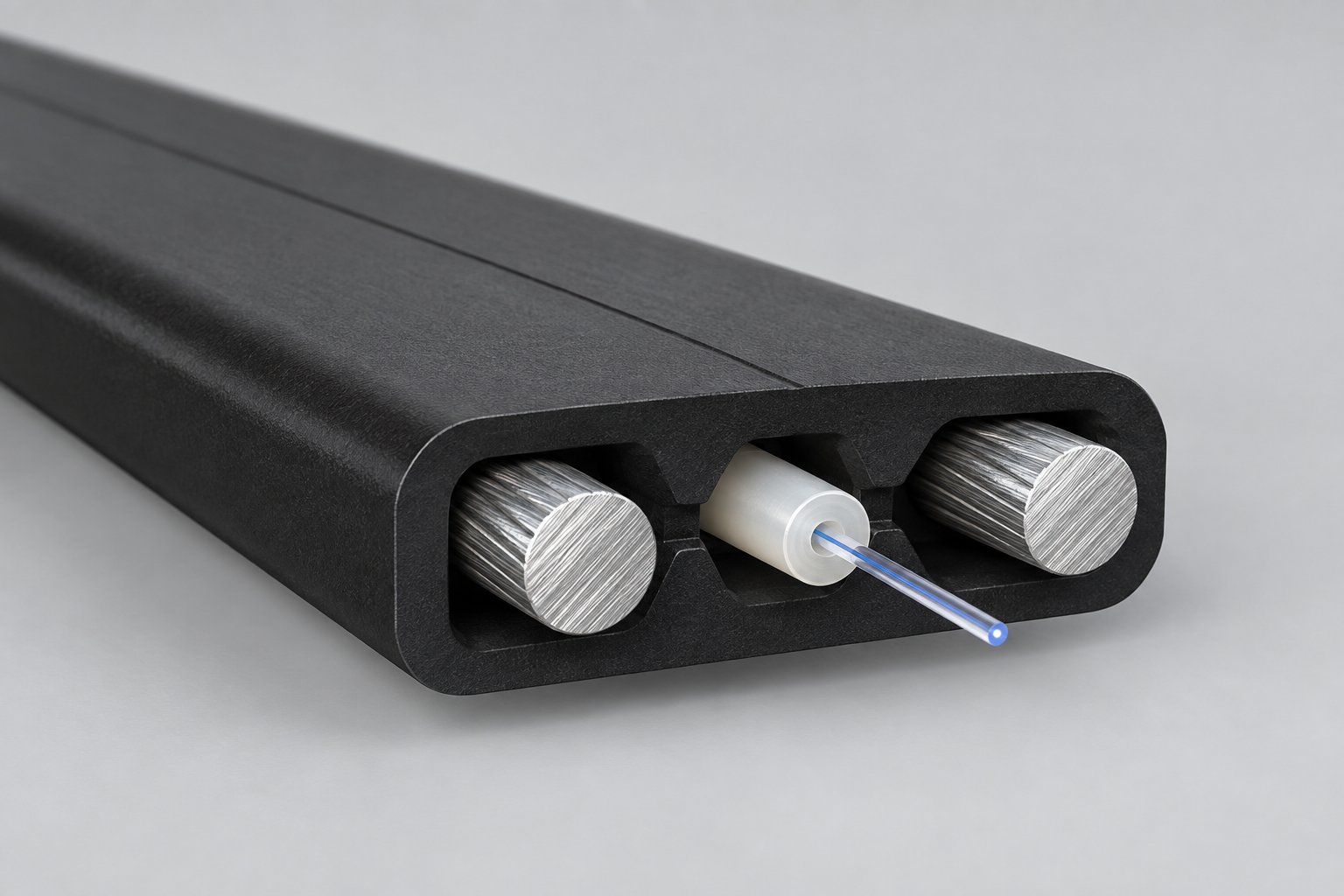
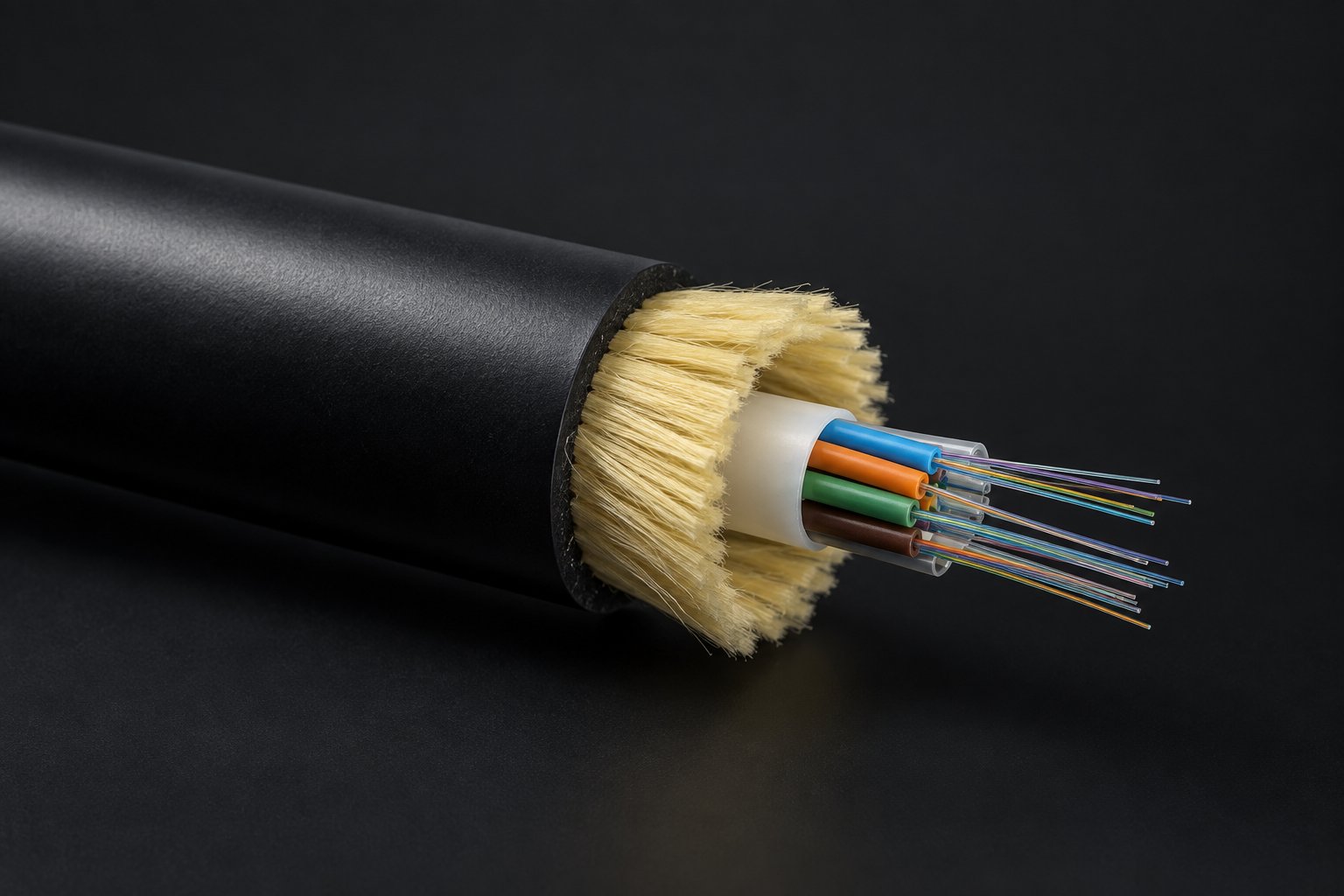
Flat bow-type FTTH drop cable with G.657A bend-insensitive single mode fiber, 1-4 fibers, steel or FRP strength members, and LSZH or PE sheathing for indoor-outdoor subscriber drops.
G.657A single mode (standard)
Product Notes
- Bow-type flat profile
- Indoor and outdoor use
- Easy field termination
- LSZH jacket option
Specifications
Fiber type, connector, test data, packaging proof and sample-kit notes are kept in the same quote sheet.
| Fiber type | G.657A single mode (standard) |
|---|---|
| Fiber count | 1-4 cores |
| Structure | Bow-type (flat) |
| Strength member | Steel wire or FRP |
| Jacket | LSZH or PE |
| Application | FTTH drop, indoor/outdoor transition |
Application Notes
The FTTH Deployment Bottleneck: Slow, Costly Last-Meter Connections
Every FTTH project ends at the same choke point: the drop segment between the distribution point and the subscriber. Installers working with round cables must strip, bend, and terminate stiff constructions in tight wall entries, ceiling corners, and shallow raceways. A round drop cable resists the flat routing that indoor walls demand, so crews waste time forcing bends the cable was never designed to take. Worse, when a single cable type cannot cross the indoor-outdoor boundary, contractors buy two products, hold two inventories, and train crews on two termination methods.
The commercial impact is direct. Labor is the largest cost line in FTTH drop installation, and every extra minute per subscriber multiplies across thousands of homes in a rollout. Misrouting a stiff cable also risks macro-bending loss on the fiber, which shows up later as subscriber complaints and repeat truck rolls. For operators and contractors bidding on FTTH projects, the drop cable choice quietly decides both the bid margin and the subscriber experience.
Our Solution: Bow-Type Flat Drop Cable Built for One-Pass Installation
Nexora's FTTH drop cable solves this with a flat bow-type construction: optical fibers lie in the center, flanked by two parallel strength members, all under one flat outer sheath. The flat profile lies naturally against walls and inside narrow slots, following the building's geometry instead of fighting it. Because the cable is engineered for both indoor and outdoor drop runs, one product family covers the full path from the distribution closure to the subscriber's optical network unit.
Buyers configure the bow-type drop cable to the project: 1 to 4 fibers in single mode G.657A, with steel or FRP (fiber reinforced plastic) strength members, and LSZH or PE sheathing. Steel strength members suit standard aerial and wall-mounted drops where rodent exposure is a concern; FRP versions serve all-dielectric routes near power lines or where metal-free construction is specified. LSZH sheathing meets indoor fire-safety requirements, while PE handles outdoor UV and weather exposure.
Technical Basis: G.657A Fiber and Bend-Insensitive Design
The cable uses G.657A bend-insensitive single mode fiber, the fiber class developed specifically for access networks where tight bends are unavoidable. G.657A tolerates the small bend radii found at wall entries, connector panels, and ONT terminations while keeping attenuation and splice performance compatible with standard G.652.D outside plant fiber. This means the FTTH drop cable splices cleanly onto the feeder network without special handling.
The parallel strength members give the flat cable its tensile performance for aerial spans and wall clips, while the compact cross-section keeps the cable easy to strip and prepare for connectorization or splicing. Production runs on Nexora's 12 manufacturing lines in our 16,000 m² facility, where more than 30 QC staff inspect fiber geometry, strength member placement, and sheath concentricity across the 2.8 million fiber-km annual capacity that also serves our 3,500+ specification range for customers in 50+ countries.
What This Delivers for FTTH Contractors and Operators
- Faster installation: the flat profile routes flat against walls and through narrow entries without forcing bends, cutting per-subscriber labor time.
- One SKU for the whole drop: indoor-outdoor capability removes the two-cable inventory and the two-method training burden.
- Lower callback risk: G.657A bend-insensitive fiber keeps signal margins intact through the tight routing that real buildings demand.
- Project-matched configuration: fiber count, strength member type, and sheath material are selected to the route, not forced onto it.
Procurement FAQ
Which fiber count should I order for residential drops? Single-fiber drops cover standard FTTH subscriptions; 2-4 fiber versions serve multi-dwelling entries or subscribers who want spare capacity. Confirm your network design before ordering.
Steel or FRP strength members — how do I choose? Steel suits typical aerial and wall-mounted drops and adds rodent resistance. FRP is the choice for all-dielectric requirements, such as routes near power infrastructure. Both are standard options from our production line.
LSZH or PE sheath? LSZH for indoor runs where fire safety codes apply; PE for outdoor exposure. For a single cable crossing both environments, tell us the route profile and we will confirm the appropriate construction.
Can you supply custom lengths or printing? As an OEM/ODM manufacturer with 500+ customization projects delivered, we support custom lengths, sheath colors, and cable printing. Share your project specification for a configuration proposal.
What information do you need for a quotation? Fiber count, strength member preference, sheath type, and estimated quantity. Our export team responds with pricing and lead time for your market.
Planning an FTTH rollout? Request a quote with your drop cable specification and target quantity, and our team will confirm the right configuration for your network.
Tags
Related Fiber Products
Get A Quote
Send fiber type, connector, quantity, application and packaging requirement. The response can include test data and sample-kit notes.