
Nexora
Fiber Optic Pigtail
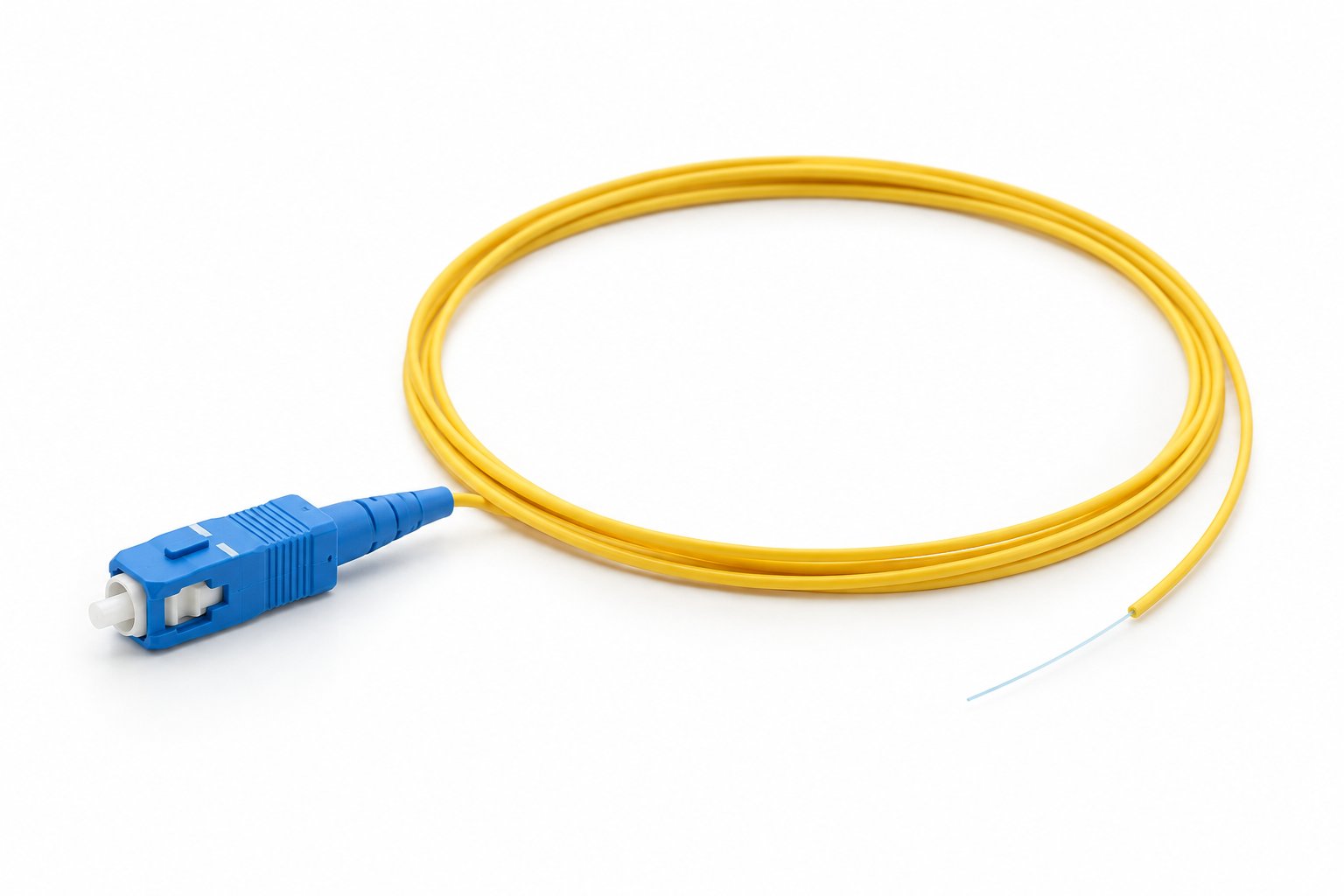
Fiber optic pigtail with one connector and one bare fiber end for fusion splicing in ODF and patch panels.
SC, LC or FC
Product Notes
- One connector + one bare fiber
- For fusion splicing
- SC/LC/FC options
- Single or multimode
Specifications
Fiber type, connector, test data, packaging proof and sample-kit notes are kept in the same quote sheet.
| Connector type | SC, LC or FC |
|---|---|
| Fiber type | Single mode or multimode |
| Type | Pigtail (one connector + one bare fiber) |
| Length | Custom |
| Application | ODF, patch panels, fusion splicing |
Application Notes
Why a Fusion-Spliced Fiber Optic Pigtail Is the Backbone of ODF and Patch Panel Builds
Every fiber optic distribution frame and patch panel ends at the same decision point: how to bring a factory-terminated connector to a field cable that was cut to length on site. A fiber optic pigtail answers that with one pre-polished connector on one end and a bare fiber on the other, ready to be fusion-spliced to the incoming cable. When installers skip this step and try to field-terminate connectors directly, they trade a controlled factory process for a manual one that depends on cleave angle, polish quality and the technician's hands. The result is a splice point that is harder to reproduce and a connector that is more likely to drift out of specification over time.
For a buyer who manages ODFs, patch panels or distribution frames, the fiber optic pigtail is the component that decides how cleanly the network can be maintained. A pigtail that is cut to the right length, spliced with a clean cleave and labeled correctly saves hours of rework on every rack. A pigtail that arrives with a damaged ferrule, a mismatched end face or the wrong fiber type turns a routine build into a troubleshooting session.
What This Fusion Splice Pigtail Provides
This fiber optic pigtail is a single-fiber assembly with one factory-terminated connector and one bare fiber end intended for fusion splicing. It is available with SC, LC or FC connectors, in single mode or multimode fiber, and with a UPC or APC end face. Length is custom, so you order the pigtail to the splice point rather than coiling excess slack into the tray.
| Attribute | Value |
|---|---|
| Connector type | SC, LC or FC |
| Fiber type | Single mode or multimode |
| Type | Pigtail (one connector + one bare fiber) |
| End face | UPC or APC |
| Length | Custom |
| Application | ODF, patch panels, fusion splicing |
The connector is terminated and polished in the factory, which is where the end face quality is controlled. The bare end is what your technician splices to the field cable, so the finished link inherits the factory polish on one side and the fusion splice on the other.
Choosing the Right Pigtail for Your Build
Three choices decide whether a fiber optic pigtail fits your network: connector type, fiber type and end face.
Connector Type: SC, LC or FC
SC is a push-pull connector common in patch panels and ODFs. LC is the smaller duplex-friendly connector used in high-density racks where port count per panel matters. FC uses a threaded coupling and is favored in test equipment and vibration-sensitive links. Match the pigtail connector to the adapter and patch cord already in your panel; mixing connector families forces an extra adapter and adds a connection point.
Fiber Type: Single Mode or Multimode
Single mode pigtails are used for long-haul, backbone and access links where the signal travels on a narrow core. Multimode pigtails suit shorter runs inside buildings and data centers where the larger core accepts multiple modes. The fiber type of the pigtail must match the field cable it splices to; a mismatch at the splice point adds loss and can make the link unstable.
End Face: UPC or APC
UPC (ultra physical contact) has a flat end face and is the common choice for most single mode and multimode links. APC (angled physical contact) has an 8-degree angled end face that lowers return loss, which matters in CATV, FTTH and other links sensitive to reflections. The pigtail end face must match the adapter and the connector on the far side of the link; mixing UPC and APC in one path is a common cause of high return loss.
How to Order and What to Confirm
Because length is custom, give the distance from the splice point to the connector landing position, plus a small service loop for the tray. State the connector type, fiber type, end face and the number of fibers you need. If the build mixes single mode and multimode, or UPC and APC, list each group separately so the factory terminates the right combination.
Before you order, confirm the splice method your crew uses. A fiber optic pigtail is designed for fusion splicing; if your team plans a mechanical splice or a field-polish termination instead, the bare-end preparation differs and the pigtail may not be the right product for that workflow.
Installation and Handling Notes
Keep the dust cap on the connector until the moment it is plugged in. A clean ferrule is what preserves the factory polish; a single touch of a finger or a scrape against a panel edge can degrade the end face and raise insertion loss. When splicing, follow the fusion splicer's recommended cleave length and protect the splice with the appropriate splice sleeve. Label each pigtail with its fiber number and destination so the ODF stays traceable during commissioning and later maintenance.
Procurement FAQ
Can I get a pigtail with a specific connector on one end only?
Yes. A fiber optic pigtail is defined by having one connector and one bare fiber end. You choose the connector type (SC, LC or FC), and the bare end is what gets spliced to the field cable.
Do I need to match the end face to my existing network?
Yes. The UPC or APC end face must match the adapter and the connector on the far side of the link. Mixing UPC and APC in one path raises return loss and can destabilize the link.
Can the length be made to my requirement?
Yes. Length is custom. Provide the distance from the splice point to the connector landing position plus a small service loop, and the pigtail is cut to that length.
Is this pigtail for fusion splicing only?
This fiber optic pigtail is designed for fusion splicing. If your crew plans a mechanical splice or field-polish termination, confirm the bare-end preparation with us before ordering, because the workflow differs.
How do I confirm the fiber type and connector combination?
State the connector type, fiber type, end face and quantity when you request a quote. If your build mixes single mode and multimode, or UPC and APC, list each group separately so the factory terminates the correct combination.
Request Product Details
Tell us the connector type, fiber type, end face, length and quantity you need, and we will confirm the configuration and lead time for your project.
Request product detailsTags
Related Fiber Products
Get A Quote
Send fiber type, connector, quantity, application and packaging requirement. The response can include test data and sample-kit notes.