
Fiber optic cable prices rose several-fold in 2026 as AI data-center demand outran supply. This guide reviews the reported market data behind the gap, why preform capacity is the bottleneck, which cable types face the most pressure, and nine practical moves B2B buyers can use to plan 2026-2027 orders.
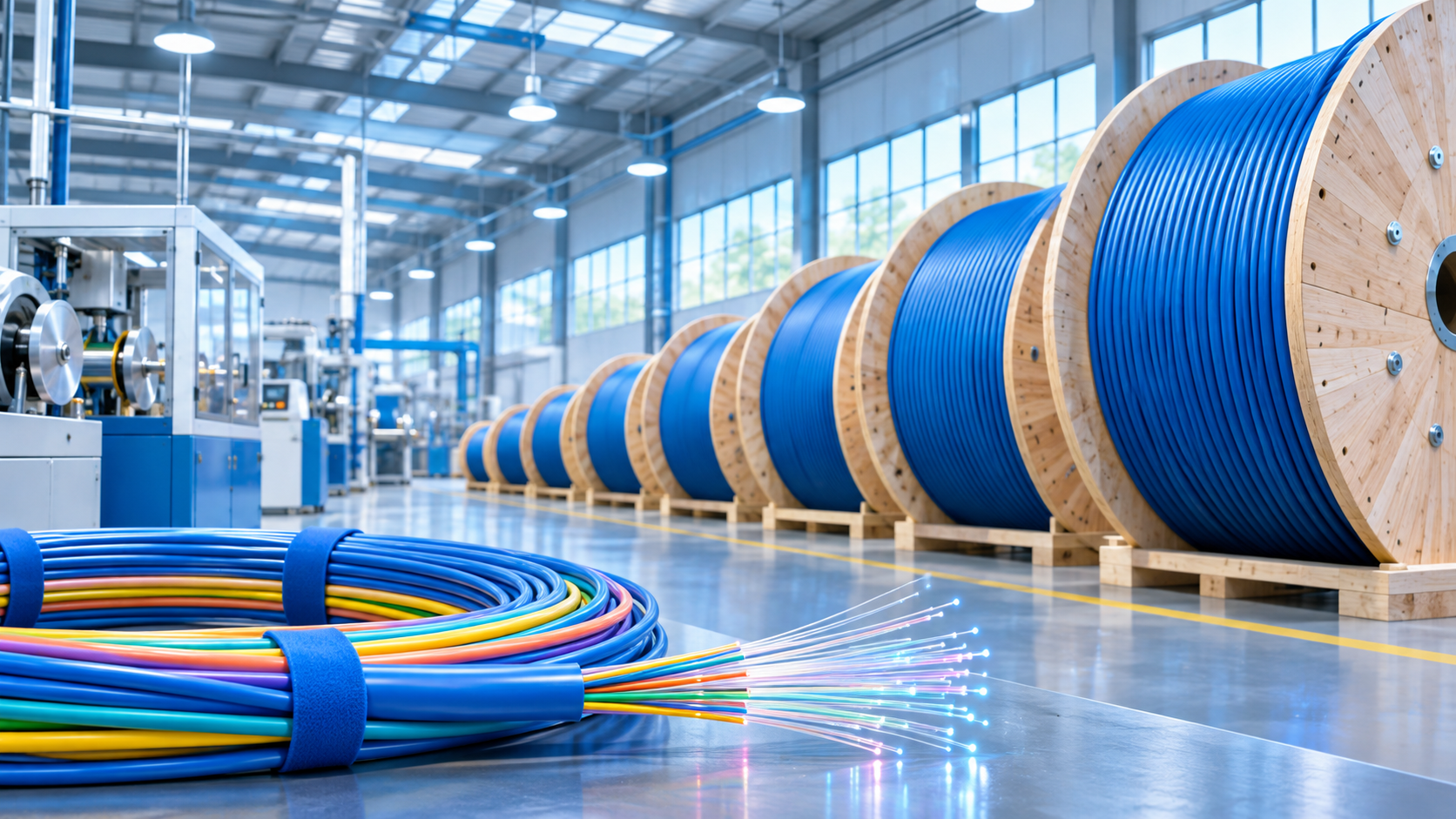
What Changed in the Fiber Optic Cable Market in 2026 - and Why It Caught Many Buyers Off Guard
For most of 2024 and 2025, fiber optic cable buyers operated in a buyer's market. Capacity was ample, lead times were predictable, and pricing negotiations tended to move in fractions of a percent. That environment ended in 2026. According to optical market research firm TrendForce, in a press release published in October 2026, spot prices for optical fiber rose several-fold during the year, and the data-center-driven supply-demand imbalance is expected to persist through 2028.
The practical consequence for B2B buyers is straightforward: quotations that were valid three months ago no longer hold. Distributors who quoted projects on 2024-2025 price benchmarks are discovering that manufacturers either re-quote at significantly higher levels or decline firm-price commitments altogether. Telecom contractors bidding on fixed-price builds face margin risk if cable was not locked in at contract signature. Standard items - ordinary outdoor single-mode cable that shipped largely from stock in 2024-2025 - are among those most affected, because when a tender of nearly 70 million fiber-km cannot be awarded, the fiber behind ordinary designs gets re-allocated to higher-value orders and delivery commitments stretch accordingly.
What makes this cycle different from previous price swings is the source of demand. This is not primarily a telecom rollout cycle. It is a structural shift driven by AI data centers, whose fiber consumption per project is an order of magnitude larger than what the industry was used to, and whose buyers - the hyperscale cloud and AI companies - have the balance sheets to lock up supply years in advance. When the largest buyers secure multi-year volume contracts, the remaining supply flows to spot markets and tenders, where prices re-set upward quickly.
This guide walks through the numbers behind the 2026 gap, explains why AI data centers are absorbing so much fiber, and then turns to what buyers can actually do: how to structure orders, what to specify, and how to plan purchases when both prices and lead times are unstable. If your immediate task is product selection rather than procurement strategy, our guide on how to choose fiber optic cable and our article on choosing the right fiber count cover the specification side in detail.
One point worth stating up front: none of the market figures below are Nexora's own. They come from named research firms, financial media reports, and company filings, and they are estimates - useful for understanding direction and scale, not as price guarantees. Anyone who quotes you a firm 2027 price today is making a prediction, not reporting a fact.
The 2026 Supply-Demand Gap in Numbers
The core of the 2026 problem is a simple imbalance: demand for optical fiber is running well ahead of effective manufacturing supply. CRU estimates reported by financial media in early November 2026 put 2026 global demand at about 577 million fiber-km, against effective supply of about 397 million fiber-km. That leaves a shortfall of roughly 180 million fiber-km - about a 16.4% gap. For context, the last time the market ran with heavy overcapacity, in 2019-2020, ordinary fiber prices fell to historic lows.
The demand side may be even higher than the CRU figure suggests. Fiber maker YOFC's interim report indicated that full-year 2026 demand could exceed 670 million fiber-km. The spread between the two estimates reflects different assumptions about data-center build-out pace, but both point in the same direction: a structural deficit, not a temporary bottleneck.
The shift did not happen overnight. In 2025, global fiber-optic cable demand grew about 4.1% year on year - modest by historical standards - but the data-center segment within that grew about 75.9%. In other words, total demand looked stable while its composition changed rapidly underneath. In 2026, that data-center demand is estimated at about 132 million fiber-km, up about 76% year on year, representing the largest share of the year's incremental demand. A segment that was a rounding error in telecom-dominated demand models a few years ago is now the swing factor for the entire market.
| Metric | Estimated figure | Source |
|---|---|---|
| Total global fiber demand, 2026 | ~577 million fiber-km (YOFC interim report suggests possibly >670 million) | CRU estimates reported by financial media, early November 2026; YOFC interim report |
| Effective supply, 2026 | ~397 million fiber-km | CRU estimates reported by financial media, early November 2026 |
| Shortfall | ~180 million fiber-km | Derived from CRU figures |
| Shortfall rate | ~16.4% | Derived from CRU figures |
| 2025 demand growth | +4.1% overall; data-center segment +75.9% | Industry estimates for 2025 |
| 2026 data-center demand | ~132 million fiber-km, up ~76% year on year | Industry estimates for 2026 |
Note: all figures in this table are industry estimates and vary by analyst. CRU, YOFC and other sources use different methodologies and assumptions, so treat the numbers as a range rather than precise values.
Two structural facts explain why supply cannot simply catch up in a quarter or two. First, about 70% of industry profit is concentrated at the preform stage - the high-purity glass rod from which fiber is drawn - and a mature preform production line typically takes more than 2 years from planning through capacity ramp. Second, the industry expansion cycle is commonly estimated at 18-24 months. Even with capacity announcements made in response to current prices, fiber drawn from a new line will not reach the market before late in the period TrendForce expects the imbalance to persist. In China, effective preform capacity utilization was reported at about 84.3%, leaving limited headroom to squeeze more output from existing lines.
Price data makes the imbalance concrete. Reported spot prices for standard G.652.D fiber moved from below RMB 20 per fiber-km in early 2025 to RMB 83.4 spot in March 2026. A2-grade preform used for AI data-center fiber moved from RMB 22-30 per equivalent fiber-km in early 2025 to about RMB 160 in 2026 - an increase of more than 550%. In Europe and the United States, G.657.A1 spot prices rose to about USD 13.4 and USD 13 respectively. These are spot-market figures and they move; the point is the direction and magnitude, not the exact number.
Why AI Data Centers Are Absorbing So Much Fiber
The scale of fiber consumption inside AI facilities surprises people who think of data centers primarily in terms of servers and optics. Industry estimates suggest a 100,000-GPU AI cluster needs roughly 200,000 km of fiber for internal interconnect - and much of it is high-spec bend-insensitive fiber, not commodity G.652.D. That is a single project consuming fiber equivalent to a meaningful share of a mid-sized country's annual telecom demand. Multiply by the number of AI clusters under construction globally and the 132 million fiber-km data-center estimate for 2026 starts to look conservative.
Bend-insensitive specifications matter here, which is why the demand is not easily substituted. AI clusters pack fiber into dense trays and tight routing paths, so attenuation under bending is a hard requirement, not a nice-to-have. Buyers working on FTTH and indoor projects face the same specification logic at smaller scale - our article on choosing bend-insensitive cable covers the grade selection. For data-center interconnect and intra-facility runs, the fiber-count and cable-structure decisions also differ from outdoor telecom builds; see our comparison of single mode vs multimode fiber for the short-reach versus long-haul trade-offs.
The second change is how large buyers now procure. In 2026, cloud and AI companies - reported names include Meta, NVIDIA and Amazon - signed multi-year, multi-billion-dollar volume agreements with fiber maker Corning. Large buyers now lock fiber supply contracts the way they once locked semiconductor supply: ahead of need, at scale, with committed volumes. This behavior removes a large block of supply from the open market before smaller buyers even issue an RFQ.
The consequence showed up clearly in China. In July 2026, China Mobile's tender for about 69.2 million fiber-km of ordinary outdoor cable closed without an award. At that point, spot fiber prices exceeded RMB 100 per fiber-km, versus about RMB 18 a year earlier. A tender of that size failing to attract award-winning bids signals that suppliers either could not commit the volume at tender prices or preferred to hold material for higher-value orders - most likely data-center-related demand.
For buyers, the practical reading is this. Hyperscale and AI buyers secure multi-year supply through direct agreements with fiber and cable makers. Whatever capacity remains flows to spot buyers and tender participants, where pricing reflects the residual scarcity. Telecom operators issuing large tenders face higher bids because their suppliers' input costs - especially for A2-grade preform - have risen sharply. Mid-size buyers - distributors, contractors, integrators - sit lowest in the allocation queue, competing for fiber-km that larger players have already locked up.
This means procurement strategy now matters as much as product selection. If your projects depend on ordinary outdoor cable, expect tender prices to rise and delivery windows to stretch; reviewing your RFQ structure and locking volumes earlier in the project cycle is now a financial decision, not an administrative one. If you are planning infrastructure intended to last well beyond the current cycle, our guide on planning a campus fiber backbone that lasts 15 years addresses the longer-horizon sizing question - and in a tight-supply market, oversizing fiber count on day one is often cheaper than a second construction phase during a shortage.
The next sections of this article look at how manufacturers are responding on the supply side, what the price environment means for specific product categories, and how B2B buyers should sequence their orders and contract terms through 2027 and 2028.
Why the Preform Stage Holds the Key to Cable Prices
If you want to understand why cable quotes changed so dramatically in 2026, start with preform. The industry's profit pool is heavily concentrated at this stage: about 70% of industry profit is captured in preform manufacturing, while the cable-drawing, stranding and sheathing stages that turn preform into finished cable carry far thinner margins. When demand outruns supply, it is the preform stage that determines who gets fiber, at what price, and when.
The structure of the supply chain explains the bottleneck. A mature preform production line typically takes more than 2 years from planning through capacity ramp, and the industry expansion cycle is commonly estimated at 18-24 months even for incremental additions. Preform-making is a precision chemical and thermal process - vapor deposition of glass layers onto a glass rod, followed by drawing into fiber - and it does not scale the way cable assembly does. Cable plants can add a stranding or sheathing line in months; preform capacity cannot be switched on to meet a tender deadline.
Utilization figures confirm how tight the system is. China's effective preform capacity utilization was reported at about 84.3%, which leaves very little headroom. At that level of utilization, a sudden surge in orders from the data-center segment does not get absorbed by idle capacity - it gets rationed by price and by lead time.
Local capacity has grown, but unevenly. China's preform localization rate rose from about 65% in 2023 to over 80% by 2026, yet structural gaps remain in specific grades, notably G.657.A2 preform - the type used for bend-insensitive fiber in AI data-center cabling - and specialty preforms such as those destined for hollow-core fiber. In other words, the shortage is not uniform. Standard G.652.D supply is strained, but the highest-value grades are where the squeeze is sharpest, and that is precisely where AI clusters are pulling hardest.
For a cable assembler without in-house preform and fiber-drawing capacity, the consequence is direct: their raw material cost is set by the spot market, not by their own production cost. During 2026, many cable manufacturers found fiber allocation shrinking and spot fiber prices rising faster than their own quoted prices could be adjusted. Buyers who understand this dependency can read a supplier's behavior more accurately - when a cable maker quotes with a long validity period in this market, either they have secured fiber inventory or the quote carries hidden risk. This is also why lead times and MOQ terms shifted so visibly in 2026; our guide to MOQ and lead time when ordering fiber optic cable covers how these terms move when raw material supply tightens.
The same logic explains why new capacity arrives slowly. Even if a preform project started in early 2026, on an 18-24 month cycle it would not reach effective output before late 2027, and a full line from planning would take past 2028. Meanwhile the demand driver - data-center construction - is already contracting multi-year volumes. Supply and demand are moving on different clocks, and that mismatch is the fundamental reason prices did not mean-revert quickly in 2026.
What Spot Prices Actually Did Through 2026
The reported numbers are stark. Standard G.652.D fiber traded below RMB 20 per fiber-km in early 2025; by March 2026 the spot price had reached RMB 83.4. A2-grade preform - the grade behind bend-insensitive fiber used in AI data centers - moved from RMB 22-30 per equivalent fiber-km in early 2025 to about RMB 160 in 2026, an increase of more than 550%. Outside China, G.657.A1 spot prices in Europe and the United States rose to roughly USD 13.4 and USD 13 respectively, levels that would have been unthinkable two years earlier.
The mid-year picture was even more revealing. In July 2026, China Mobile's tender for approximately 69.2 million fiber-km of ordinary outdoor cable closed without an award, because bidders at that point faced spot fiber prices exceeding RMB 100 per fiber-km - against about RMB 18 a year earlier. When an operator of that scale declines to award, it signals that spot raw material costs and tender pricing had simply crossed. For buyers, the practical reading is that fixed-price tenders written against old reference prices became unsignable for suppliers carrying spot-market fiber cost.
The table below collects the reported movements. Note: these are reported market data, in RMB per fiber-km unless noted; exact levels vary by region, grade and quarter.
| Product | Early 2025 | 2026 level | Change |
|---|---|---|---|
| G.652.D fiber (spot, China) | Below RMB 20 / fiber-km | RMB 83.4 (March 2026); above RMB 100 by mid-2026 | Roughly 4-5x and rising through the year |
| A2-grade preform (per equivalent fiber-km) | RMB 22-30 | About RMB 160 | More than 550% increase |
| G.657.A1 fiber (spot, Europe) | Pre-cycle levels not comparable | About USD 13.4 / fiber-km | Multi-fold increase |
| G.657.A1 fiber (spot, United States) | Pre-cycle levels not comparable | About USD 13 / fiber-km | Multi-fold increase |
| Ordinary outdoor cable tender (China Mobile, ~69.2M fiber-km) | Fiber input around RMB 18 / fiber-km | July 2026: closed without an award at spot >RMB 100 | Tender pricing crossed below raw material cost |
Three things stand out for a purchasing manager. First, the acceleration is grade-specific: A2 preform rose faster than standard G.652.D, which means quotes for bend-insensitive products - FTTH drop cable, indoor cable, data-center-grade patch cords - moved on a different curve than ordinary outdoor cable. If your specification allows a choice of fiber grade, this is worth revisiting; our guide on which bend-insensitive fiber optic cable to specify explains where the bend-insensitivity premium actually buys performance. Second, spot and contract markets have decoupled: large hyperscale buyers such as Meta, NVIDIA and Amazon signed multi-year, multi-billion-dollar volume agreements with Corning in 2026, locking fiber the way they once locked semiconductor supply. Everyone else competes for what remains. Third, the failed China Mobile tender shows that even the largest and most price-disciplined buyers had to pause and re-baseline rather than transact at spot-inflated levels - a signal to structure your own orders with price-adjustment mechanisms instead of assuming fixed pricing holds for the duration.
The Cost Layers Beyond Fiber: Materials, Energy, Freight and Currency
Fiber is the headline cost, but a cable quote has several other line items that moved in 2026, and knowing which of them is volatile changes how you evaluate a supplier's price. The practical question to ask any manufacturer is simple: which components of this quote are indexed to market prices, and which are fixed?
Start with polymer sheathing compounds and filling gel. Outer sheath, inner jacket, water-blocking gel and tape materials are all petrochemical derivatives, so their cost tracks polymer feedstock. On long outdoor cables these compounds are a meaningful share of material cost per kilometer, and a swing in polymer prices shows up on the quote within one production cycle. They do not swing as violently as fiber did in 2026, but they do move, and they move globally.
Metal armor is the next layer. Armored cable designs use corrugated steel tape, steel wire and aluminum tape for rodent, moisture and mechanical protection, and steel and aluminum prices are set on commodity markets with their own volatility. For armored products the armor layer is not a rounding error - it is one of the largest material inputs after the fiber itself. If your project uses direct-buried or ducted armored designs, the armored fiber optic cable buyer's guide explains where armor is actually necessary and where a lighter design removes a volatile cost component; our armored fiber optic cable page shows typical constructions. Over-specifying armor is one of the few places where a buyer can cut cost without touching fiber at all.
Self-supporting designs add aramid yarn, and aramid is its own story. ADSS and figure-8 cables depend on aramid strength members or on the strength of the messenger wire, and aramid supply is concentrated among a small number of producers, so its price is less transparent and can move independently of both polymer and metal markets. For ADSS (ADSS cable) and figure-8 self-supporting cable (figure-8 self-supporting cable), the span length in your specification directly determines the aramid loading - which means the engineering decision and the cost exposure are the same decision.
Then come energy and labour. Fiber drawing towers and preform furnaces run continuously at high temperature, so energy cost is a real component of fiber supply cost, and it compounds with the raw-glass cost discussed earlier. Labour cost is steadier but matters for labour-intensive constructions such as high-fiber-count loose tube and drop cable termination work.
Logistics is the layer buyers most often underestimate. Cable is heavy and voluminous - wooden reels, steel drums for long lengths, and export packing that cannot be compressed. Ocean freight rates and container availability swing with trade-lane conditions, and on a shipment of outdoor cable the freight line can move by double-digit percentages between quote and delivery. Our guide to how fiber optic cable is packed and shipped for export details reel options and inspection points at delivery. One mitigation is contractual: agree in the RFQ whether freight is quoted on current rates with an adjustment clause, or locked at booking.
Finally, currency. If you quote in USD and the manufacturer produces against RMB costs, exchange-rate movement transfers directly into the margin gap between quotation and production - and in 2026, with raw material prices moving several-fold, suppliers became noticeably less willing to absorb that gap. A quote valid for 90 days in a flat market and a quote valid for 90 days in a spot-market squeeze are very different commitments.
Put together, the buyer's checklist is: ask which cost components are indexed; ask for the validity period and any adjustment mechanism in writing; and where engineering allows, reduce exposure to volatile materials by right-sizing armor, aramid loading and fiber grade. The fiber price itself you cannot negotiate away in a 16%-short market - but you can stop paying twice for risk that the supplier will pass through anyway.
Which Cable Types Face the Most Price Pressure
Price pressure in 2026 is not uniform across the product catalog. It tracks the fiber grade inside the cable, the density of the design, and the end market pulling demand. The data points to a clear hierarchy, anchored in the gap between standard and bend-insensitive fiber supply that CRU's figures and the reported preform numbers expose.
The tightest supply sits in the G.657.A2 class. Fiber maker YOFC's interim report pointed to full-year 2026 demand possibly exceeding 670 million fiber-km, and a large share of that incremental demand is data-center fiber, much of it bend-insensitive. The reported price movement confirms where the squeeze lands: A2-grade preform used for AI data-center fiber moved from RMB 22-30 per equivalent fiber-km in early 2025 to about RMB 160 in 2026 - a more than 550% increase, according to reported spot figures. Fiber for FTTH drop and indoor applications draws on the same A2-class preform pool, so telecom buyers and data-center buyers are competing for the same raw material. The same structural gap shows up on the supply side: China's preform localization rate rose from about 65% in 2023 to over 80% in 2026, but gaps remain specifically in G.657.A2 and specialty preforms such as those for hollow-core fiber.
Standard G.652.D fiber is up sharply too - reported spot prices moved from below RMB 20 per fiber-km in early 2025 to RMB 83.4 spot in March 2026, and European and US G.657.A1 spot prices reached about USD 13.4 and USD 13 respectively. But because G.652.D preform capacity is broader and more mature, the increase is less extreme than the A2 class. For backbone, aerial and duct projects, G.652.D remains the workhorse, and buyers of outdoor G.652D cable face elevated but not catastrophic input costs.
High-fiber-count designs add a second pressure layer: duct congestion. The AI buildout means routes that once carried 288-fiber cable now need far more capacity, and Chinese cable maker ZTT showcased a 17,280-fiber ultra-high-density cable - about 60 times the capacity of mainstream 288-fiber designs with about 92% less duct space - as one industry response. High-count cables concentrate more fiber per km of cable, so any fiber-km price increase compounds within a single reel. Specifying higher counts is often the right answer to congested ducts, but it raises the cost per delivered cable length, which our guide on choosing the right fiber count helps you balance.
Multimode OM3/OM4 for data halls is affected by the same data-center pull. AI cluster builds consume enormous lengths of internal interconnect - roughly 200,000 km of fiber for a 100,000-GPU cluster, per the widely reported estimate - and much of that is high-spec fiber, which includes the multimode grades used inside halls alongside single-mode runs. If you are deciding between grades for a hall, our OM3 vs OM4 vs OM5 comparison covers the trade-offs.
Armored and self-supporting outdoor designs - ADSS, figure-8, direct-buried - carry a fiber cost layer plus armor steel, aramid yarn and jacket polymer layers. Their increases are moderated by the fact that fiber is only one of several cost components, though the fiber layer still moves with the market.
| Cable category | Typical fiber type | Pressure in 2026 | Main driver |
|---|---|---|---|
| AI/data-center and FTTH bend-insensitive cable (drop, indoor tight-buffered) | G.657.A2 class | Highest | A2 preform shortage; competing data-center and FTTH demand |
| High-fiber-count duct and backbone cable | G.652.D / G.657.A1 | High | Fiber-km cost compounded per reel; duct congestion response |
| Data-hall multimode cable | OM3/OM4/OM5 | High | Same data-center interconnect pull |
| Standard outdoor backbone (duct, direct-buried) | G.652.D | Elevated | Fiber spot prices up, but broader preform capacity |
| Armored and self-supporting outdoor (ADSS, figure-8) | G.652.D / G.657.A1 | Elevated | Fiber layer plus steel/aramid/polymer cost components |
Note: the pressure levels above are a qualitative reading of the reported market data, not a price index. Exact movement varies by region, volume and specification.
Nine Practical Moves for Planning Your 2026-2027 Orders
The imbalance is expected to persist through 2028 according to TrendForce, so waiting for prices to revert is not a plan. These nine moves are what disciplined buyers are doing instead.
1. Re-baseline your budget with current market data, not last year's PO
If your 2026 budget still assumes early-2025 fiber pricing, it is wrong by a wide margin. Standard G.652.D fiber moved from below RMB 20 to RMB 83.4 spot between early 2025 and March 2026, per reported figures. Rebuild project estimates against current quotes and published market reports before committing bid prices to your own customers - especially for FTTH and data-center work where A2-class fiber drives the cost.
2. Ask for price validity windows on every quote
In a market where spot prices moved several-fold within a year, a quote without a stated validity date is close to meaningless. Ask each supplier explicitly: how long does this price hold, what volume does it cover, and what happens if spot fiber moves before production? Get the answer in writing on the quotation itself, not in a side conversation.
3. Discuss indexed pricing for repeat programs
For ongoing supply programs, an index-linked mechanism is often more realistic than a fixed price nobody can honour. The components that move are the fiber itself, jacket and buffer polymers, armor steel and aramid yarn for armored designs, and ocean freight. Agree in advance which components are indexed, against which reference, and how often the price resets. This keeps both sides honest when raw material costs swing.
4. Move from one-off POs to forecast-based scheduling
Large buyers have changed behaviour: in 2026, cloud and AI companies including Meta, NVIDIA and Amazon signed multi-year, multi-billion-dollar volume agreements with Corning, as reported. You do not need a billion-dollar contract to copy the logic. Sharing rolling 6-12 month volume forecasts with your manufacturer lets them schedule preform and fiber allocation ahead of your order, which shortens lead times and stabilizes your pricing. Our guide to choosing a manufacturer for long-term B2B supply covers what to look for in a partner for this model.
5. Split large projects into phased deliveries with agreed price points per tranche
A single giant PO at a fixed price is risky for both sides when the input market is this volatile. Phased deliveries let you lock price per tranche as you go: the first tranche at today's quote, later tranches re-quoted at agreed intervals. You keep budget visibility, the manufacturer keeps material risk manageable, and delivery schedules align with your construction phases rather than your warehouse capacity.
6. Qualify a second cable structure or fiber grade where the project allows
If G.657.A2 allocation is tight, check whether G.657.A1 or G.652.D genuinely meets your installation conditions - bend radius, duct type, splice points - before paying the A2 premium. At the same time, do not over-spec: requiring bend performance or fiber class the route never exercises wastes money in any market and inflates cost most when A2 is scarce. Our guide on how to read a fiber optic cable datasheet before you buy shows which parameters to check against your actual installation, and our bend-insensitive cable guide covers the G.657 grade choices for FTTH and indoor runs. For indoor distribution, indoor tight-buffered cable and FTTH drop cable product pages show typical construction options at each grade.
7. Plan around realistic lead times instead of assuming old ones
Lead times quoted a year ago no longer apply when China Mobile's tender for about 69.2 million fiber-km closed without an award in July 2026 - when demand outruns supply at that scale, smaller orders queue behind allocation. Build your project schedule on current, written lead time commitments, including buffer for customs and inland transport. Our MOQ and lead time guide explains what drives both numbers and what to confirm before you sign.
8. Keep a small strategic buffer stock for critical spares
Repair stock is the worst thing to buy at spot prices mid-outage. Hold a modest buffer of the cable types your network cannot operate without - repair lengths, drop cable for the FTTH plant, critical patch cords - bought during scheduled replenishments rather than emergencies. Correct storage matters as much as the stock itself; our guide on warehouse storage of fiber optic cable covers reel handling and conditions that prevent the buffer from becoming waste.
9. Diversify suppliers without dropping quality gates
Dual-sourcing is a reasonable hedge in a shortage market, but a second supplier without verified quality is a liability, not a hedge. Keep the same gates for every candidate: require documented certifications before ordering (our checklist of certifications to require lists them), audit datasheets line by line, and start with trial volumes before moving production quantities. The supplier qualification process in our long-term supply guide applies whether you are qualifying your first supplier or your third.
How to Evaluate a Supplier Quote When Prices Are Moving
When fiber prices are climbing, the quote that looks cheapest is often the one with the most holes in it. In a fast-moving market, suppliers hedge with short validity windows, conditional lead times and vague specifications — and buyers who compare offers on the price line alone end up re-qualifying suppliers mid-project. The discipline that matters most right now is making sure every quote you evaluate describes exactly the same product and the same commercial terms.
Start with the technical side. Before you put two quotes side by side, confirm that the following are stated identically in each one:
- Exact fiber type and grade — G.652.D, G.657.A1 or G.657.A2 are not interchangeable, and in 2026 the A2-grade fiber used in AI data-center builds has been repriced far above standard fiber. If one quote just says "single mode," that is not a specification.
- Fiber count — check both the fiber count and whether counts are stated as filled or usable fibers.
- Cable structure — loose tube, ribbon, figure-8 self-supporting, ADSS or armored each carry different material costs and different installation behavior. A structured comparison of these options is in our guide to choosing fiber optic cable.
- Sheath material — PE, LSZH or AT jacketing changes price and fire performance. Do not let a quote substitute one for another.
- Armor type — corrugated steel tape, steel wire or aluminum tape are priced differently; state the exact armor construction.
- Test requirements — specify attenuation, tensile and crush acceptance tests, and whether you require 100% reel testing or sampling.
Then compare the commercial terms, which in this market separate serious suppliers from opportunistic ones:
- Price validity window — with spot fiber prices rising through 2026, a quote valid for a few days is a different instrument from one valid for 30 days. Ask explicitly what happens if validity expires before your award.
- Currency — fiber trades globally in multiple currencies; agree the settlement currency and whether an exchange-rate clause applies.
- Incoterms — FOB, CIF and DDP quotes are not comparable numbers until you normalize them to the same delivery point.
- Lead time commitment — ask whether the lead time is contractual or indicative, and whether the supplier has fiber allocation secured for your volume.
- Payment terms — in a supply-constrained market, some suppliers ask for advance payment; weigh that against what it says about their raw material position.
Warranty deserves a written answer before you award, not after delivery. All Nexora products carry a 12-month warranty from shipment date, and we explain exactly what that covers — and what it does not — in our article on what a 12-month warranty really covers. Ask every bidder to state warranty scope in the same terms so the comparison is honest.
One more caution on numbers: performance values quoted verbally or in marketing text are typical values and must be verified against the datasheet before you commit. Our guide to reading a fiber optic cable datasheet walks through which parameters to check line by line. If your RFQ itself is thin, quotes will be thin too — see our checklist on what to include in a fiber optic cable RFQ so every bidder answers the same questions. Finally, build delivery dates backward from your installation schedule and include reel packing and shipping time: our guide to export packing and shipping explains how packing choices affect delivery planning and on-site handling.
What the Outlook Through 2027-2028 Means for Your Purchasing Calendar
According to market research firm TrendForce's October 2026 press release, the data-center-driven supply-demand imbalance behind this year's price increases — spot fiber prices rose several-fold during 2026 — is expected to persist through 2028. That forecast should shape how you schedule orders, not whether you order at all.
The supply side will not fix itself quickly. Per industry estimates, a mature preform production line takes more than two years from planning through capacity ramp, and the fiber industry expansion cycle is commonly estimated at 18-24 months. Capacity announced today reaches the market gradually, in waves, not all at once. Meanwhile, demand keeps adding pressure: 2026 data-center fiber demand is estimated at about 132 million fiber-km, up roughly 76% year on year and the largest share of the year's incremental demand. Large buyers have already moved to secure supply the way they once secured semiconductors — in 2026, cloud and AI companies reported to include Meta, NVIDIA and Amazon signed multi-year, multi-billion-dollar volume agreements with fiber maker Corning. Those contracts remove tonnage from the open market before it reaches distributors and contractors.
Product innovation helps in specific places but does not create preform capacity. Chinese cable maker ZTT, for example, showcased a 17,280-fiber ultra-high-density cable carrying about 60 times the capacity of mainstream 288-fiber designs while occupying about 92% less duct space. That is a genuine answer to duct congestion in dense routes — but the fiber inside still competes for the same constrained preform supply. Higher-density designs reduce duct cost and splicing points per fiber-km; they do not lower total fiber demand in a market running, per CRU estimates reported in early November 2026, a shortfall of roughly 180 million fiber-km against demand of about 577 million.
Against that backdrop, a quarterly watch-list is more useful than a single-year forecast. Each quarter, review:
- Spot fiber price direction — track reported spot levels for your fiber grades rather than relying on last year's contract prices.
- Your supplier's fiber allocation policy — ask how orders are prioritized when fiber is short, and whether existing customers have allocation protection.
- Freight rates — shipping costs move independently of fiber prices and can erase or inflate apparent savings between quotes.
- Currency movements — if you buy in USD from RMB-cost suppliers, exchange rates affect the final number.
- New capacity announcements — expanded preform capacity is the single event most likely to soften prices; know when announced lines are expected to ramp.
Re-test your budget assumptions every quarter. A unit price that was defensible in your January budget may be unobtainable in your July tender, and a project with fiber budgeted at 2025 prices may need re-approval. Treat your fiber cost line as a rolling estimate with an explicit validity date, not a fixed figure.
Planning a Fiber Optic Cable Order in 2026: Frequently Asked Questions
Are current price increases permanent?
No one can guarantee direction, and history argues against assuming they are. This market is cyclical: overcapacity in 2019-2020 drove fiber prices to historic lows, and the 2026 shortage has reversed them just as sharply. Prices reflect supply and demand, and both are moving — new preform capacity is being planned while data-center demand continues to build. Plan with validity windows and re-quote rather than betting on either outcome.
Should I sign a long-term agreement now?
Be clear about what an LTA can and cannot fix. Realistically, an LTA can lock volume ranges, a price mechanism or cap, and lead time commitments — that last one is often the most valuable in a supply-constrained market, because delivery certainty can be worth more than price certainty. What it cannot fix is absolute price in a market where spot fiber has moved several-fold in a year; suppliers will price protection into the mechanism. Assess whether the volume range you commit to is genuinely forecastable before signing.
Does a higher fiber price change which cable I should choose?
Usually not, if you take a total project cost view. Cable is one line item alongside installation labor, duct work and splicing. Changing your spec to save cable cost — for example, reducing fiber count below what your growth plan needs, or substituting a lighter structure — can raise installation cost, because pulling, splicing and duct occupancy dominate the budget. Our comparison of fusion versus mechanical splicing shows how termination choices affect project economics; apply the same logic to the cable itself. Buy the cable your network plan needs.
How much notice should I give my supplier for a large order?
More than you did last year. Our guide to MOQ and lead times for fiber optic cable and patch cords explains typical cycles, but in 2026 the difference between a forecast and a spot order is material: a supplier holding allocated fiber can commit to a scheduled forecast that a spot order cannot get. Share rolling forecasts with your supplier, put volumes against quarters rather than a single lump, and expect forecast-based orders to carry better lead time commitments.
Will prices differ by region?
Yes, and reported spot prices show it: in 2026, G.657.A1 spot prices in Europe and the United States were reported at about USD 13.4 and USD 13 respectively, while Chinese spot pricing followed its own trajectory, with standard G.652.D fiber at RMB 83.4 per fiber-km in March 2026 after sitting below RMB 20 in early 2025. Freight costs, local demand conditions and currency movements explain part of the spread. If you buy across regions, compare offers on a landed, same-Incoterm basis before concluding one region is cheaper.
What documents should I require with every shipment?
At minimum: factory test reports for each reel, datasheet compliance confirmation, packing lists and clear reel labels. Reel labeling and packing details matter for delivery inspection as covered in our export packing and shipping guide, and on-site verification is faster when your crews can cross-check reels against the fiber optic color code. Making documentation a contractual requirement in the RFQ keeps every supplier on the same standard.
Plan Your 2026-2027 Fiber Purchases with Nexora
Nexora Communications manufactures fiber optic cables, patch cords and connectivity products in Shenzhen, with OEM/ODM support for global customers. In a market where fiber allocation and lead times move faster than prices, transparent lead times, stable specifications and a 12-month warranty from shipment date on every product matter as much as the number on the quote.
If you are planning projects through 2027, send us your fiber plan — cable types, fiber counts, delivery schedule — and request a quotation with a clear price validity window so you can evaluate it on the terms described above. Our outdoor G.652.D single mode fiber optic cable and SC-SC single mode G.652.D patch cord product pages show the specification detail we quote from. All performance figures cited in this article are industry typical values and remain subject to datasheet.