
Nexora
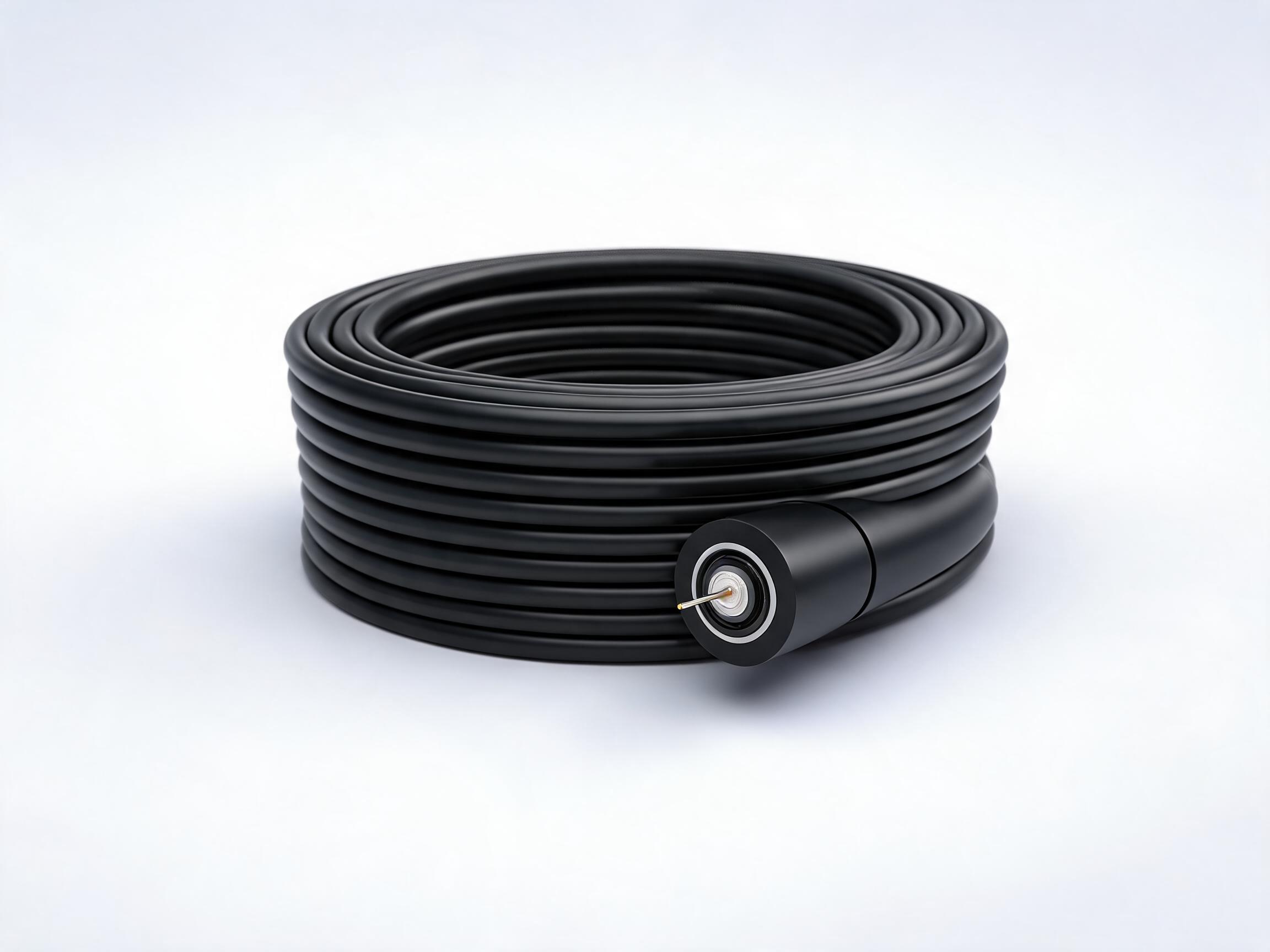
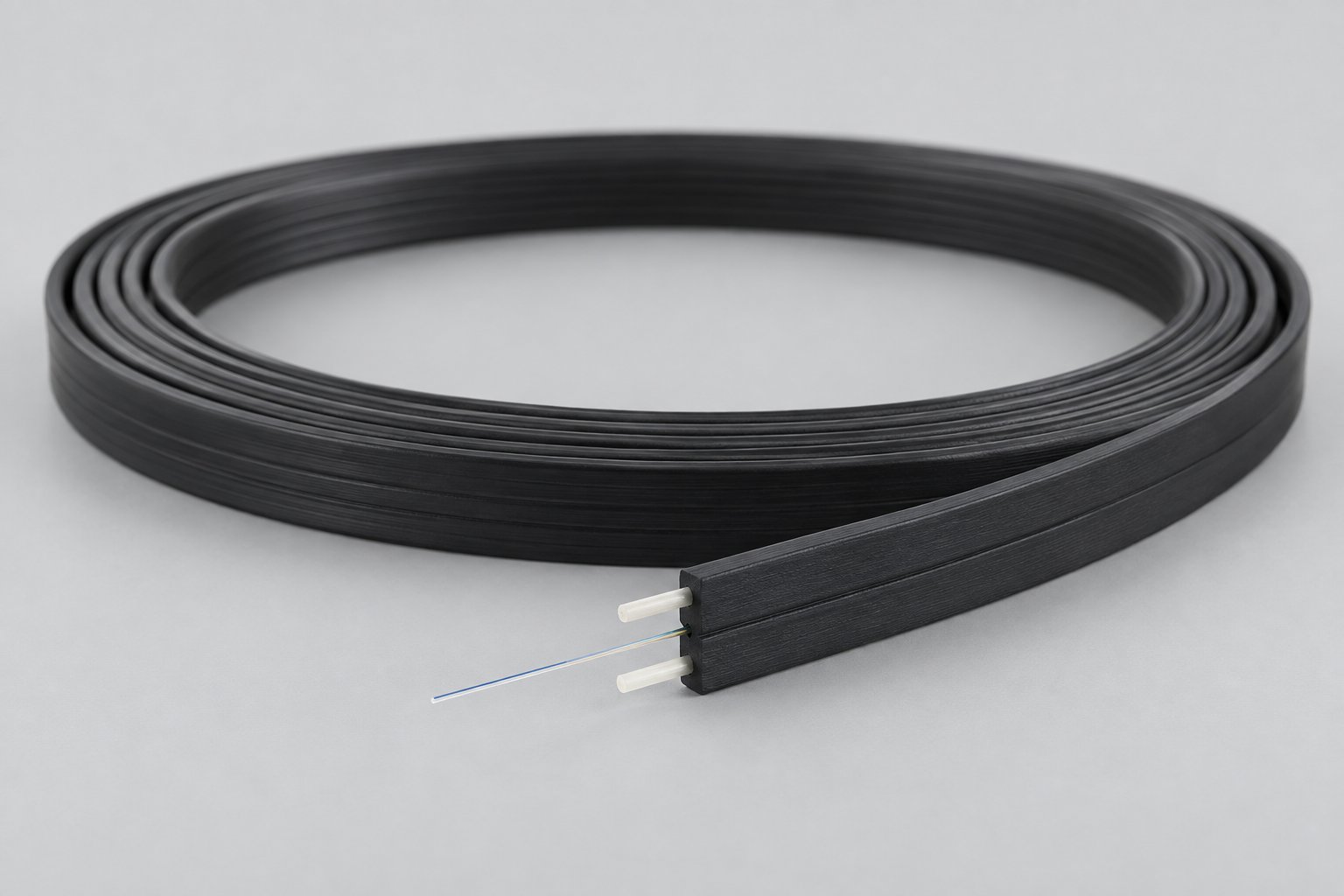
Outdoor G.652D Single Mode Fiber Optic Cable
Loose-tube outdoor single mode fiber optic cable for long-haul and metro backbone links, with water-blocking protection and a robust PE jacket.
Fiber Type
Single mode
Application
Backbone, metro, access networks
Outer Jacket
Black PE
Product Notes
- Low attenuation G.652D fiber
- Water-blocking loose tube design
- Custom fiber counts and lengths
Specifications
Fiber type, connector, test data, packaging proof and sample-kit notes are kept in the same quote sheet.
| Fiber Type | ITU-T G.652D single mode |
|---|---|
| Fiber Count | 2-288 cores |
| Attenuation (1310 nm) | <= 0.36 dB/km |
| Attenuation (1550 nm) | <= 0.22 dB/km |
| Cable Structure | Loose tube, gel-filled |
| Strength Member | Steel wire / FRP |
| Outer Jacket | Black PE |
| Application | Backbone, metro, access networks |
Application Notes
Outdoor G.652D Single Mode Fiber Optic Cable for Backbone and Metro Routes
This is a loose-tube, gel-filled outdoor fiber optic cable built around ITU-T G.652D single mode fiber, supplied in 2-288 core counts for backbone, metro and access routes. It is the cable you size first when a route has to survive direct burial, duct or aerial installation without losing optical budget.
The Pain: One Water-Damaged Section Can Take Down a Whole Route
On a long outdoor route, the failure that hurts most is not a single bad connector — it is water reaching the fiber. A sheath nick during pulling, an incompletely sealed splice closure, or a low point in a duct run lets moisture migrate along the cable. Once water reaches the fiber, attenuation climbs gradually rather than failing at once, so the fault surfaces months later as a link that no longer meets its loss budget. Locating it means excavating or re-stringing a section, and the repair cost is dominated by civil work rather than by the cable itself. Because the damage is progressive, it is usually invisible during acceptance testing and only appears after the route is in service.
The Solution: Block Water at the Tube, Then Keep It Out of the Core
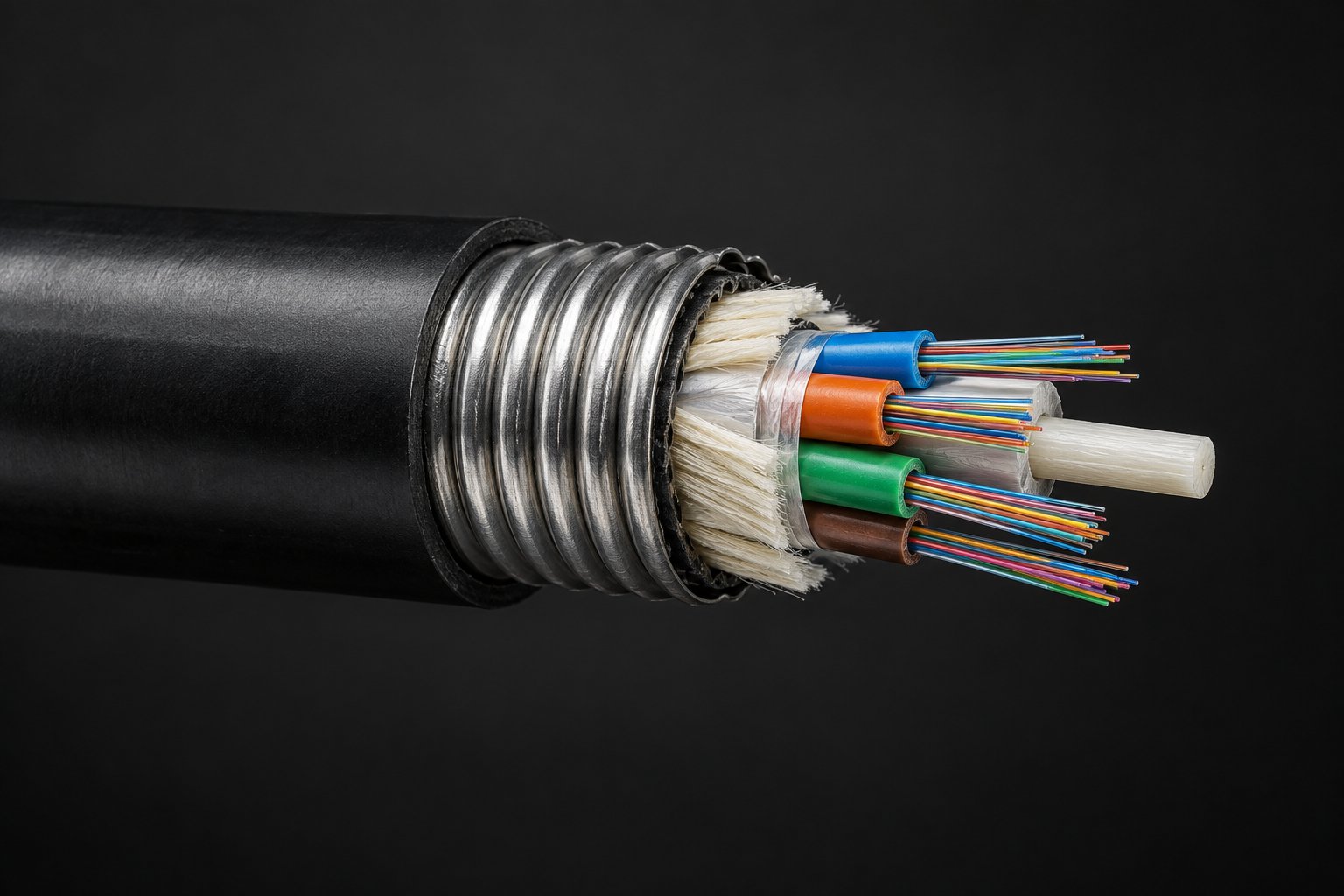
This cable is built so that moisture has to cross two barriers before it can reach a fiber. Each fiber sits inside a gel-filled loose tube, and the tube filling blocks water from travelling along the tube even if the outer sheath is breached at one point. The tubes are stranded around a central strength member — steel wire or FRP — with water-blocking material in the cable core, and the whole assembly is covered by a black PE jacket that resists UV, abrasion and water ingress. The result is a cable that keeps water damage local instead of letting it spread along the route.
The optical side is equally predictable. ITU-T G.652D fiber holds attenuation to ≤0.36 dB/km at 1310 nm and ≤0.22 dB/km at 1550 nm. A 40 km span therefore consumes roughly 14.4 dB at 1310 nm and about 8.8 dB at 1550 nm from fiber attenuation alone; this figure excludes splice loss, connector loss, cable margin and any temperature-related allowance, so add those items for your own route before comparing it with the transceiver budget.
Specifications
| Parameter | Value | Test Reference |
|---|---|---|
| Fiber Type | ITU-T G.652D single mode | ITU-T G.652 |
| Fiber Count | 2-288 cores | — |
| Attenuation (1310 nm) | ≤ 0.36 dB/km | IEC 60793-1-40 |
| Attenuation (1550 nm) | ≤ 0.22 dB/km | IEC 60793-1-40 |
| Mode Field Diameter (1310 nm) | 9.2 ± 0.4 µm | IEC 60793-1-45 |
| Cladding Diameter | 125 ± 1 µm | IEC 60793-1-20 |
| Coating Diameter | 245 ± 10 µm | IEC 60793-1-21 |
| Cladding Non-Circularity | ≤ 1.0 % | IEC 60793-1-20 |
| Zero Dispersion Wavelength | 1300-1324 nm | IEC 60793-1-42 |
| Cable Cutoff Wavelength | ≤ 1260 nm | IEC 60793-1-44 |
| Attenuation Uniformity | ≤ 0.05 dB | IEC 60793-1-40 |
| Cable Structure | Loose tube, gel-filled | — |
| Strength Member | Steel wire / FRP | — |
| Outer Jacket | Black PE | — |
| Application | Backbone, metro, access networks | — |
| Deployment | Direct burial, duct, aerial | — |
| Warranty | 12 months from shipment date | — |
Mechanical and Installation Limits by Core Count
Mechanical values below are typical for this loose-tube construction with a steel wire strength member, tested to IEC 60794-1-21 (tensile), IEC 60794-1-21 method E3 (crush) and IEC 60794-1-21 method E4 (impact). FRP builds carry about 20-25% lower tensile ratings at the same core count; the figures for your exact configuration are restated on the specification sheet issued with the order.
| Core Count | Tensile, Short Term | Tensile, Long Term | Cable Diameter | Cable Weight |
|---|---|---|---|---|
| 2-12 | 1,500 N | 600 N | 9.0-10.5 mm | 85-110 kg/km |
| 24-48 | 1,800 N | 700 N | 10.5-12.0 mm | 110-150 kg/km |
| 72-144 | 2,200 N | 850 N | 12.0-14.5 mm | 150-210 kg/km |
| 216-288 | 2,700 N | 1,000 N | 14.5-16.5 mm | 210-260 kg/km |
| Parameter | Typical Value |
|---|---|
| Min. bend radius (installation) | 20 × cable diameter |
| Min. bend radius (in service) | 10 × cable diameter |
| Crush resistance | 1,000-3,000 N/100 mm |
| Impact resistance | 3 N·m |
| Operating temperature | -40 °C to +70 °C |
For direct burial, lay the cable at 0.8-1.2 m depth below the local frost line with a 100 mm sand or fine-soil bedding layer and protective backfill; for duct runs, keep pulling tension below the short-term limit, monitor it with a dynamometer at the winch, and use a swivel to avoid twisting; for aerial spans, keep sag within the pole line design and stay below the long-term tensile rating. Where a route needs a non-standard sheath or strength member, that configuration is quoted separately.
How to Choose the Right Configuration
Fiber count is the first decision, and it is driven by the number of fibers you need at the far end plus spare capacity for future splits. A 12-core cable suits a small access spur, while a 144-core or 288-core cable serves a backbone bundle feeding several distribution points. The second decision is the strength member: steel wire suits routes with higher tensile demand, while FRP is chosen where a non-metallic cable is required. Tell us the deployment method, core count and route length when you request a quote, and we will confirm the matching sheath and strength configuration.
Quality Control and Factory Testing
Every reel is tested for attenuation and continuity before dispatch, and the test report can be supplied with the shipment on request. Quality control runs through the whole process at our 30+ QC stations, covering incoming material, component, in-process, functional, visual, final and packaging inspection. Nexora operates a 16,000+ m² facility in Shenzhen with 180+ employees and 12 production lines. Our fiber optic cable lines run an annual capacity of 2.8M+ units and a monthly capacity of 230K+ units, where one unit is one standard product piece; cable orders are scheduled in drum kilometres, and the drum length and delivery schedule for your route are confirmed with the quotation. We have delivered 500+ OEM/ODM projects and supply customers in 50+ countries, with 3,500+ product configurations available across our fiber optic range.
Packaging, Delivery and Warranty
Cable is supplied on wooden drums in standard lengths of 2 km, 4 km and 6 km, wrapped in moisture-barrier film and secured with steel strapping, with drum dimensions and gross weight confirmed with the quotation so that freight and handling can be planned. Custom printing on the jacket and custom drum lengths are available for OEM and ODM orders. Standard configurations are typically dispatched within 15-20 working days after order confirmation, and custom core counts or sheath options are scheduled individually. All Nexora fiber optic cables carry a 12-month warranty from shipment date covering manufacturing defects. A claim is raised by sending the reel number, test report and fault description; confirmed manufacturing defects are replaced or credited, with a response within 5 working days and replacement stock typically dispatched within 15 working days of claim confirmation. Damage caused during installation or by third-party civil work is outside the warranty scope.
Buyer FAQ
What is the MOQ for this outdoor fiber optic cable?
MOQ is set per configuration. For standard core counts the typical minimum is 10 km per order, and custom core counts or non-standard sheath options are quoted from 20 km. Share your core count and drum length and we will confirm the exact MOQ with the quotation.
Can you print our brand on the cable jacket?
Yes. Jacket printing and custom drum lengths are available for OEM and ODM orders. Send us the artwork and the required marking format.
What payment terms do you accept?
We commonly work on T/T, with a 30% deposit on order confirmation and the balance before shipment; L/C at sight is also accepted for larger orders. The applicable terms are stated on the proforma invoice.
Can I get a sample before placing a bulk order?
Yes. Short cable samples for evaluation are supplied free of charge, with freight collected; sample lead time is typically 5-7 working days. Tell us the core count and sheath option you want to evaluate.
How is the cable packed for shipping?
Cable is wound on wooden drums in standard lengths of 2 km, 4 km and 6 km, wrapped in moisture-barrier film and secured with steel strapping. Drum dimensions and gross weight are confirmed with the quotation.
What warranty applies?
All Nexora fiber optic cables carry a 12-month warranty from shipment date covering manufacturing defects. Send the reel number, test report and fault description to raise a claim; confirmed defects are replaced or credited, with a response within 5 working days and replacement stock typically dispatched within 15 working days of claim confirmation.
Tags
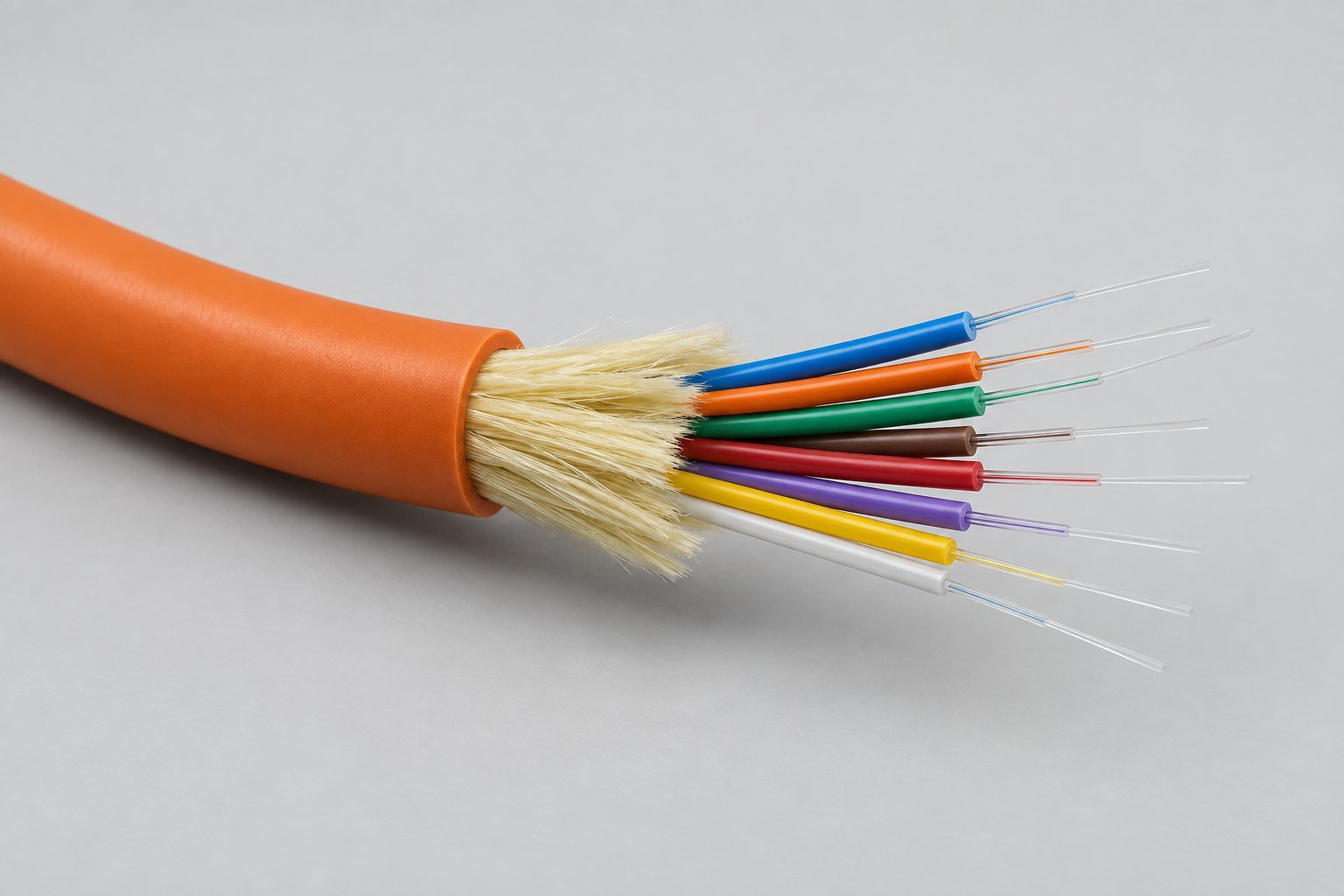
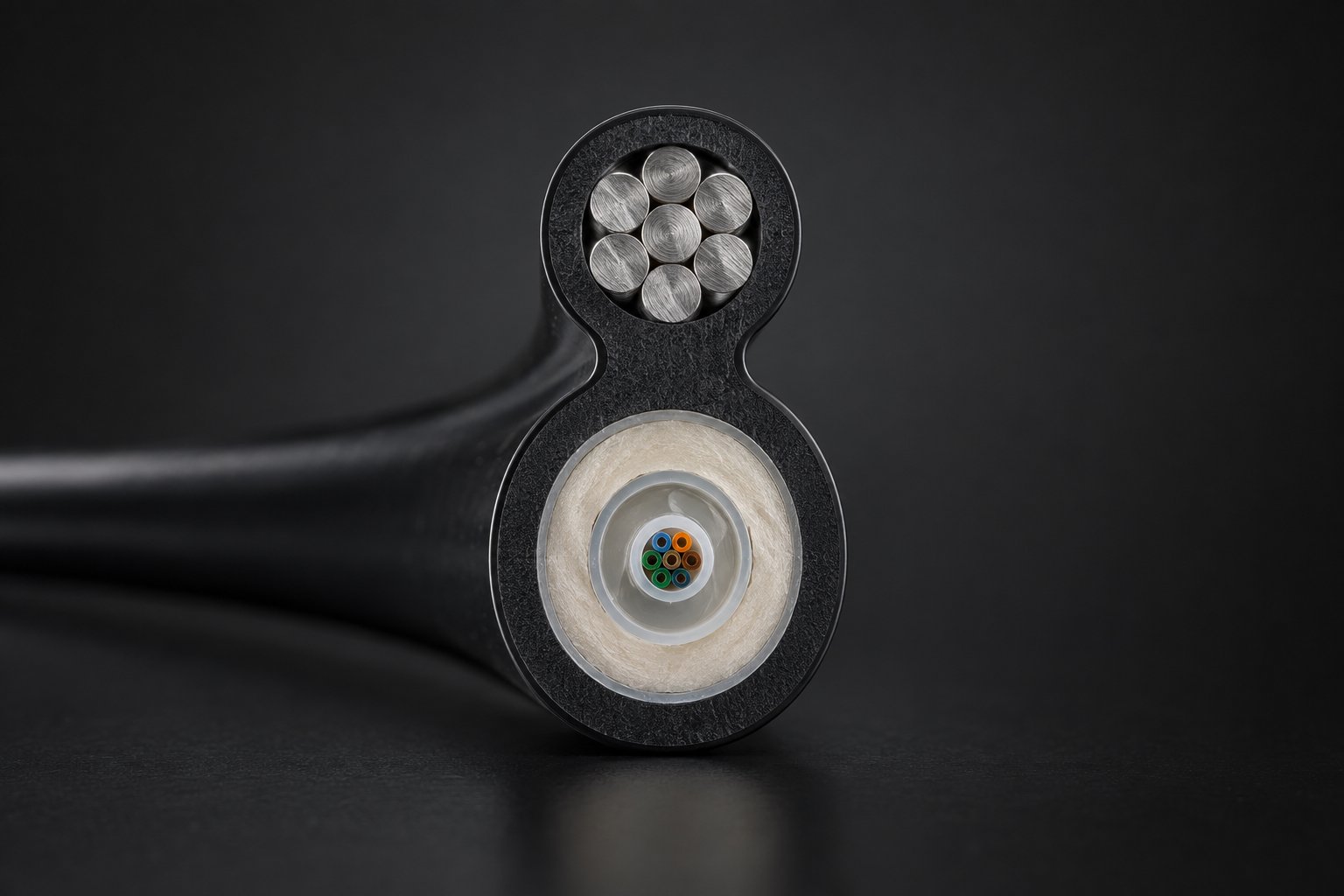
Related Fiber Products
Get A Quote
Send fiber type, connector, quantity, application and packaging requirement. The response can include test data and sample-kit notes.
OEM & Customization
Connector types, fiber counts, cable lengths, jacket materials and packaging can be configured to your project specification.
Technical Support
Our engineering team helps you confirm product selection, installation details and documentation before you place the order.
Quality & Testing
Every order is inspected before shipment, and test data or inspection reports can be provided with the goods on request.