
A practical B2B guide to storing fiber optic cable: drum handling, humidity and UV control, FIFO inventory, warranty documentation, and pre-installation inspection.
Why Warehouse Storage Decides How Your Fiber Optic Cable Performs Later
Most fiber optic cable problems that show up six months after delivery do not start in the network. They start in the warehouse. A drum that sat outside under direct sun through one hot summer, a reel that got dropped by a forklift, a cable end that was left unsealed for three weeks in a humid coastal depot — none of these produce an immediate, visible failure. The cable still looks new, the drum still turns, and the jacket still smells like fresh polyethylene. But the attenuation curve has quietly shifted, the armor has started to corrode from the inside, or water has crept between the fibers and the water-blocking yarn. By the time the installation crew pulls the cable and the acceptance test fails, the root cause is already a memory nobody can reconstruct.
For B2B buyers — distributors stocking multiple cable families, installers holding project inventory between milestone payments, and network operators maintaining spares — storage and inventory management is not a back-office topic. It is a direct performance and cost topic. You paid for cable that meets a datasheet; poor storage is one of the few ways that investment can be destroyed without anyone touching the network. This guide covers what actually damages optical cable in storage, how to handle drums and reels correctly, how to set up FIFO and traceability for cable inventory, how storage requirements differ between loose-tube outdoor cable, tight-buffered indoor cable, and pre-terminated assemblies, and what to confirm with your supplier before cable sits on your shelves for months.
Everything below is written from the perspective of the decisions a purchaser or warehouse manager actually makes: where to put the drums, how to stack them, how to rotate stock, and what documentation to demand. Wherever numbers appear, treat them as typical industry practice, and confirm the exact values against the datasheet of the specific cable you ordered.
What Actually Damages Fiber Optic Cable in Storage
Fiber optic cable is mechanically tougher than most people assume — the glass fiber itself is protected by multiple layers of buffer, strength member, and jacket. But the design assumes the cable is stored properly. The recurring damage modes in real warehouses are unglamorous and almost always preventable:
- Water ingress through unsealed ends. Loose-tube cable relies on water-blocking gel, yarn, or tapes to stop longitudinal water migration. If the cable ends are cut open or the sealing caps fall off, humidity and liquid water enter the structure. Water alone rarely breaks fiber instantly, but in freeze-thaw climates, trapped water expands and can crush tubes; over time it also degrades the water-blocking materials and makes future splicing harder because the gel is contaminated.
- UV exposure. Standard PE and LSZH jackets are formulated for specific exposure conditions. Outdoor-grade PE handles years of sunlight on a pole; the same jacket stacked outdoors in direct sun, flat on hot concrete, ages far faster than the manufacturer intended, because heat and UV attack it from below as well as above. Indoor-rated jackets can chalk and embrittle within weeks of outdoor storage.
- Crush damage from bad stacking. A 3 km drum of 96-fiber cable can weigh well over a tonne. Stack drums higher than the manufacturer allows, or store them flat on their side so the cable weight bears on the lower flange edge, and you can deform the cable layers near the drum barrel. Crushed buffer tubes and fiber macrobending at the same position along several hundred meters of cable are a classic "mystery loss spike" later.
- Kinks and over-bend during handling. Every time someone pulls a few meters off a drum for a sample, lets the end whip, or drags the cable around a sharp corner, the minimum bending radius — which for many cables is 15 to 20 times the cable diameter in storage conditions, per typical datasheet practice — is exceeded locally. Microbending and macrobending at that point persist for the life of the cable.
- Temperature extremes. Attics and unshaded containers routinely exceed 60°C in summer; unheated sheds in continental winters sit below -20°C. Repeated cycling through these extremes stresses jacket materials, gels, and adhesives. Most outdoor loose-tube cables are rated for installation climates spanning roughly -40°C to +70°C as a typical range, but "rated for" describes the installed cable, not unlimited abuse in storage.
- Rodents and insects. Rodents chew cable jackets for nesting material and to wear down teeth. An armored cable resists them; a flat FTTH drop cable or an unarmored indoor cable does not. In rural or warm-climate warehouses, rodent damage is one of the top causes of scrap.
- Theft and mix-ups. Less dramatic but equally real: cable ends get stolen for the copper-free but still saleable fiber, or two similar drums get swapped, and a project ordered as G.652D receives G.657 — or the reverse. Label discipline is a storage topic too.
Notice that none of these require exotic conditions. They are the normal consequences of an ordinary yard that has never set explicit rules for optical cable. That is the core message of this guide: the failure modes are known, and the countermeasures are procedural, not capital-intensive.
The Cable Drum Is Part of Your Storage System
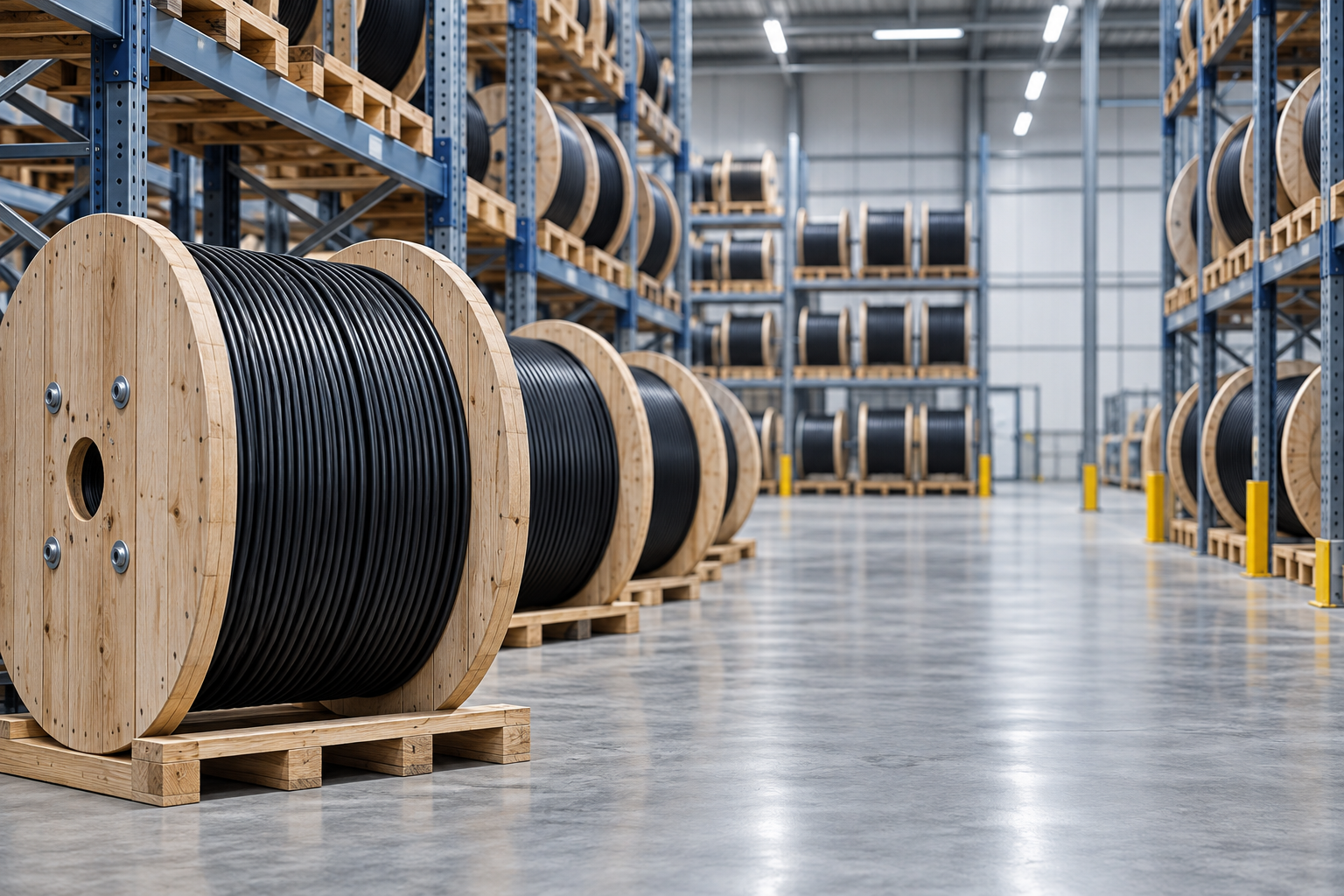
Before talking about the warehouse, look at the packaging the cable arrives on. Most outside plant cable ships on wooden or steel-reinforced wooden reels (drums), typically with lengths from 2 km up to 6 km or more per drum depending on cable diameter and drum size. The drum does three jobs: it carries the cable's weight without exceeding bend radius, it protects the cable layers during transport, and it presents the cable ends in a controlled way for testing and pulling.
Several features of a well-specified delivery matter directly for storage:
- Sealed cable ends. Both cable ends should leave the factory sealed with end caps or heat-shrink seals so that water-blocking performance is preserved. Confirm this at receiving — a missing seal on arrival is a claim, not a housekeeping note.
- Drum lagging and flange condition. The wooden lagging between cable and flanges should be intact. Flanges take all the stacking and handling loads; a cracked flange can allow the outer cable layers to loosen and snag later during payoff.
- Payoff direction marking. Reputable manufacturers mark the correct payoff rotation direction with an arrow on the flange. Rolling a drum "backward" by a few meters to read a label may seem harmless, but unwinding against the lay can introduce twist into the cable structure.
- Drum schedule and labels. Each drum should carry a durable label with cable type, fiber count, length, drum number, and production batch. Photograph these labels at receiving; they are the backbone of your inventory records.
If you are comparing suppliers, ask specifically how drums are prepared for export: whether ends are double-sealed, whether drums are wrapped or bagged for sea freight, and whether drum schedules are provided per shipment. A supplier who treats drum preparation as part of quality control — rather than as packaging — is also likely to treat the rest of the process the same way. For example, when reviewing a manufacturer's pre-shipment verification process, it is worth checking what is actually tested on each drum before it ships, as described in How Does Nexora Verify Fiber Optic Cable and Patch Cord Quality Before Shipment?
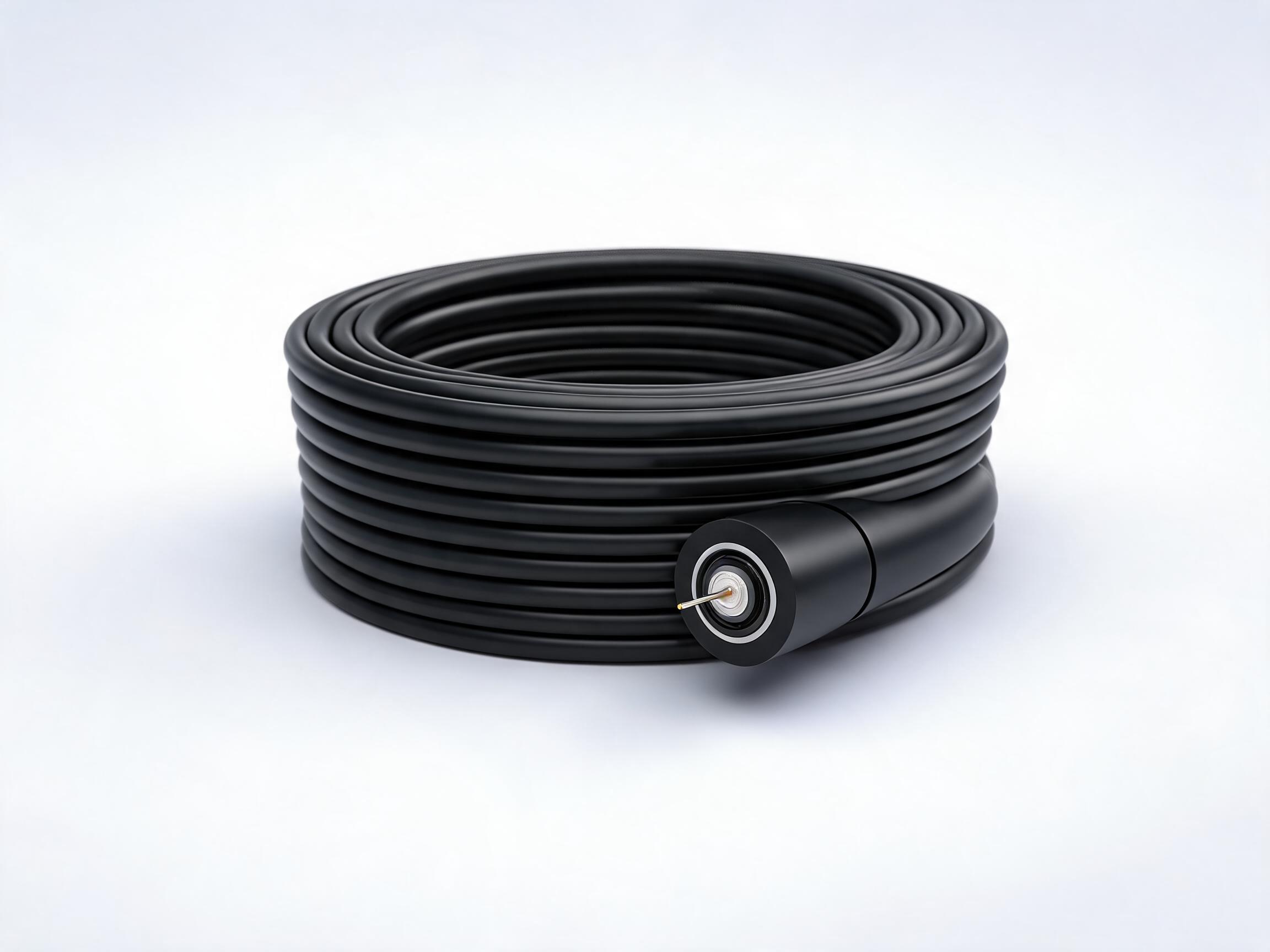
The finished coil you receive on smaller products follows the same logic at a different scale. Order-length pieces of distribution or breakout cable often arrive as tightly coiled coils rather than drums, with the coil itself wrapped and the ends sealed. Treat a coil as a small drum: keep it wrapped until installation day, store it on its widest face, and never hang it from a hook that concentrates the whole weight on a few turns of jacket.
Where and How to Store Cable Drums: Layout That Prevents Damage
Once the drums are on your premises, storage layout decisions determine whether they leave the warehouse in the same condition they arrived. The rules below reflect common industry practice for optical cable; always check the specific manufacturer's storage guidance for reel dimensions, weight limits, and stacking heights.
Indoors first, outdoors only with protection
The default answer is simple: store drums indoors, in a dry, ventilated space out of direct sunlight. If indoor space is genuinely unavailable, drums can be stored outdoors temporarily, but they should remain wrapped in the factory wrapping or an opaque cover, placed on pallets or dunnage rather than directly on soil or grass, and kept away from standing water. Outdoor storage is a degradation schedule you did not plan; indoor storage is a shelf.
Concrete floors deserve one specific warning: a drum left directly on sunlit concrete combines UV from above with radiated heat from below, and the bottom cable layers sit against a surface that can reach 50–60°C in direct summer sun. Pallets or timbers under the drum flanges create an air gap that costs almost nothing and removes the problem.
Drum orientation: on the flanges, not on the side
Most wooden cable drums are designed to rest on their flanges (standing on edge), with the cable wound horizontally around the barrel. This orientation keeps the cable weight carried by the drum structure rather than pressing the lower cable layers against the floor or against each other under load. Laying a heavy drum flat on its side for a long period risks flattening the lower cable layers, especially for larger fiber counts with softer jackets. Some manufacturers permit short-term flat storage for small drums; unless the datasheet says otherwise, keep drums standing.
Stacking height: fewer layers than you think
Stacking is where well-intentioned warehouses get into trouble. As typical practice, a single layer is always safe, two layers are acceptable for small-to-medium drums on firm ground or racking, and anything above that requires the drum manufacturer's stacking guidance and dunnage boards between layers to spread the load. Do not stack drums of different diameters directly on each other; a small drum nested on a large drum's cable winding is a crush machine. When in doubt, the space you save by stacking is never worth the scrap cable you buy back later.
Clearances, aisle planning, and payoff access
Drums need to be reachable with the handling equipment you actually own. Plan aisles so a forklift can approach drum flanges squarely, and so a drum jack or spindle can be positioned for controlled payoff. Cramming drums into dead-end corners guarantees rough handling later — most kinks and scrapes are born as "we had to shuffle five drums to get to the one we needed." Leave at least enough clearance to roll one drum out without touching its neighbors, and keep heavy drums at floor level rather than on high racking unless the racking is explicitly rated for the point loads drum flanges create.
Temperature, Humidity, and Light: Setting Sensible Storage Limits
Warehouses rarely have climate control tuned for cable, and they do not need it. What they need is a set of limits that keep the cable within the envelope its materials were designed for, plus awareness of the two or three situations that break that envelope.
Temperature: avoid the extremes, watch the cycling
As a typical working envelope, most outdoor loose-tube optical cable tolerates storage between roughly -40°C and +70°C, and indoor cable between roughly -20°C and +60°C — but the storage rating for your specific cable is a datasheet question, and the values on your datasheet always take precedence over any general guide, including this one. In practice, the bigger enemy is not a single extreme but repeated cycling: a metal container or an uninsulated warehouse corner that swings from 5°C at night to 45°C by mid-afternoon will age gels, tapes, and jacket material faster than a stable 30°C. If you cannot control temperature, at least control cycling by choosing the most thermally stable corner of the building and keeping drums out of direct sun through glass or roofing panels.
One special case: cable stored in freezing conditions with unsealed or damaged ends can take on water, and freezing water expands. If your warehouse regularly drops below 0°C, end sealing is not optional housekeeping — it is the difference between sellable cable and a splice-timing problem for whoever installs it.
Humidity and condensation
Aim for a dry, ventilated space. Persistent high humidity (consistently above roughly 80% RH) accelerates corrosion of any metallic elements — armor, strength members, drum hardware — and promotes mold on wooden drums and labels. Condensation is the sharper risk: when drums move from a cold warehouse into a warm, humid room, moisture condenses on the cable and soaks into label paper and wooden lagging. If drums travel between temperature zones, let them acclimate before unwrapping. Desiccant in the shipping wrap helps during sea freight; it does not protect cable that will sit for months, so the real answer remains a dry room and intact packaging.
Light: UV is a slow but certain degrader
Standard polyethylene outdoor jackets include carbon black or other UV stabilizers designed for above-ground service; that protection assumes the cable is moving air on a pole or in a duct, not baking motionless on a yard. Indoor-grade jackets (LSZH, PVC) have little or no UV package at all. Sunlight through a warehouse window, an open yard, or the glass roof of a showroom display area will chalk and embrittle any jacket over time. Keep drums and coils away from windows, use opaque covers for any outdoor storage, and never use cable as a visual display piece for months at a time — that is what sample cuts are for.
Chemical exposure and contamination
Warehouses are shared spaces, and cable shares them with solvents, fuels, fertilizers, and cleaning chemicals. Hydrocarbon solvents and some oils attack polyethylene and LSZH jackets over time; battery charging areas produce acid mist. Store cable away from chemical storage zones, and if a drum has visibly been splashed or soaked in something other than clean water, treat it as suspect and inspect the jacket before releasing it to a project. A jacket that has swelled, discolored, or developed a sticky surface in one zone has taken damage you cannot see from the outside.
Handling Drums and Coils Without Creating Next Year's Fault
Most storage damage happens in the last three meters — the moment the drum moves. Handling discipline costs nothing but attention:
- Lift by the drum, never the cable. Forklifts should engage the drum's pallet or use drum attachments; cranes should lift through the drum's center with a spreader bar through the spindle hole. Never sling a drum by hooking the cable itself or loop a strap over the cable winding — that concentrates the entire drum weight on a few turns of jacket and kinks the cable underneath.
- Roll only in the payoff direction. The arrow on the flange exists because rolling against the lay introduces twist. If you must move a drum a short distance by rolling, go with the arrow; for anything longer than a gentle slope, use proper handling equipment.
- Never drop a drum. Even a 30 cm drop onto concrete can crack flanges and shift cable layers. A drum that has taken a serious impact should be rolled out and inspected — the outer wrap can hide jacket abrasion and layer displacement.
- Keep cable ends sealed and secured. Ends should be anchored to the flange so they cannot unwind and whip, and sealed so humidity stays out. When a sample is cut for testing, re-seal the remaining end the same day and record the new remaining length on the drum label.
- Respect the minimum bend radius everywhere. The minimum bend radius that applies during installation (typically around 20 times cable diameter for loaded bending, and 10–15 times for static conditions as typical values — confirm on the datasheet) applies even more strictly to cable at rest under its own weight. Coils tossed into a pickup with a tight loop around a tie-down point have already taken their permanent bend.
Train the warehouse team on these points once, put the arrow-and-seal rules on a laminated card at the drum storage area, and most handling damage simply stops happening. The failure pattern across the industry is remarkably consistent: warehouses that mark payoff arrows and re-seal ends after sampling have almost no storage-related cable claims; warehouses that treat drums as furniture see recurring losses they attribute to "bad cable."
Storage Differences by Cable Family: One Warehouse, Several Rules
A distributor's rack may hold loose-tube outdoor cable, armored cable, self-supporting aerial cable, flat drop cable, and tight-buffered indoor cable side by side. They are all "fiber optic cable," but their storage weak points differ:
| Cable family | Storage priority | Watch out for |
|---|---|---|
| Loose-tube outdoor cable (duct / direct-buried) | Sealed ends, dry storage, drum on flanges | Water ingress; gel contamination at ends; jacket UV aging outdoors |
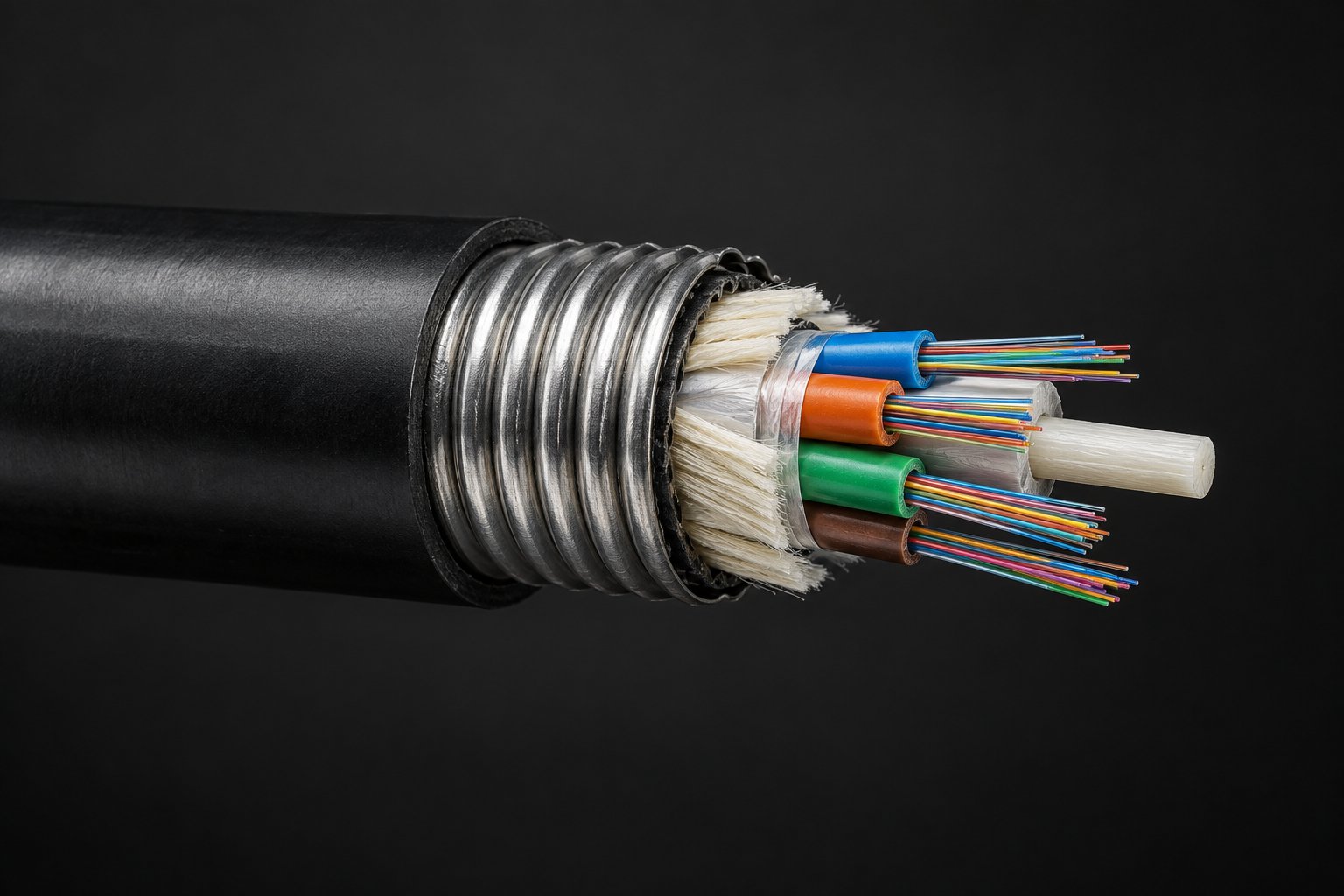
| Armored cable | Dry storage to prevent armor corrosion; end sealing | Corrosion of corrugated steel tape if ends open; heavy drums needing firm stacking |
| ADSS / figure-8 self-supporting aerial cable | Protect the outer sheath and (for figure-8) the messenger; keep drums upright | Messenger wire kinking; sheath abrasion against rough concrete; larger drums, higher weight |
| FTTH drop cable | Flat coils stored flat or standing on edge in boxes; away from rodents | Sharp bends in flat profile; crushing under other stock; rodent damage on non-armored design |
| Indoor tight-buffered / distribution cable | Indoor-only storage, away from windows and chemicals | UV embrittlement; LSZH jacket damage from solvents; smaller bend radius margins during handling |
The common thread is that armored and moisture-protected designs forgive handling sloppiness far more than drop cable and indoor cable do. If your team handles everything the way they handle armored cable, the thin flat products and indoor cables will pay for it. Conversely, an armored cable left with open ends in a humid warehouse will quietly corrode its steel tape from the cut edge inward — the armor that resists rodents in the field cannot protect a structure it is no longer sealing.
Patch Cords, Pigtails, and Pre-Terminated Assemblies: A Different Storage Problem
Everything above applies to bare cable on drums. Factory-terminated products — patch cords, pigtails, cassette-loaded MPO trunks — fail in storage for different reasons, and the difference matters because these products are the ones most often stocked in quantity by distributors and pulled from shelves daily:
- Connector protection. Every factory-terminated connector leaves with a dust cap. The cap is not a permanent seal; it keeps dust and fingers off the ferrule for a reasonable shelf period. Cords stocked without caps — or with caps that were removed, lost, or swapped between connector types — arrive at the customer with contaminated end faces, which is how "new" patch cords fail insertion loss tests. If you stock cords without retail packaging, make cap discipline explicit.
- Bend radius in the box. A patch cord coiled tightly to fit a small polybag can take a set. Respect the product's bend radius even in storage packaging; if the supplier packs cords coiled and bagged, keep them that way until use rather than re-rolling them tighter.
- Temperature and humidity. Connector assemblies tolerate the same general environments as cable, but their cable-boot adhesive joints and, for some designs, their ferrule epoxies prefer stable temperatures. A dry office-style stockroom is ideal; a hot steel container is not.
- Traceability of test results. Quality cords ship with individual test results for insertion and return loss. Keep those records linked to your batch — they are your evidence that a cord which later fails in the field left the factory within specification, and they speed up any warranty discussion.
For a deeper look at how cord specifications translate into field performance, the spec-reading guide in How Do You Read Fiber Optic Patch Cord Specs: Insertion Loss, Return Loss, and Polish Types Explained? pairs well with this article: storage protects the numbers the factory already verified.
Inventory Management for Cable: FIFO, Traceability, and Reel-Level Records
Storage prevents physical damage; inventory management prevents commercial damage. Cable sits in stock for months, ships in odd lengths, and is easy to mix up — a 48-fiber G.652D drum and a 48-fiber G.657 drum look nearly identical from two meters away. A purchasing team that buys well but manages stock poorly ends up with expired shelf life, mystery partials, and claims it cannot document. Three practices fix most of it.
Reel-level records, not SKU-level records
Track inventory at the level of the drum, not the product code. Each drum has its own length, production batch, and test documentation, and two drums of the same SKU are not interchangeable once one has been partly paid off. At minimum, record for each drum: product name and order code, fiber count and fiber type, jacket and construction type, total length, remaining length (updated every time cable is taken off), drum number, production date, goods-in date, supplier and batch reference, and the location code where it sits. A spreadsheet works; a barcode or QR label on each flange tied to that record works better. The point is that anyone in the warehouse can answer "what exactly is on this drum, how much is left, and where did it come from?" in under a minute.
FIFO with a cable-specific twist
First-in, first-out is standard advice, but cable has a wrinkle: a partly used drum is worth less than a full one, and not just because it holds less cable. Remaining lengths that are too short for the next project become dead stock that eventually gets scrapped or sold at a loss. Two adjustments make FIFO work for cable:
- Allocate whole drums to projects when possible. Whenever a project can absorb the remaining length of a part drum, schedule that drum before opening a new one — even if the part drum arrived later. This "project-driven FIFO" keeps partials from accumulating.
- Track residual lengths explicitly. Below a certain remaining length (say, under 10–15% of the original drum length, depending on your typical order profile), flag the drum as "residual" and route it to small jobs, samples, and emergency repairs rather than letting it occupy prime rack space for years.
Batch traceability end to end
Keep the chain from production batch to project installation intact. When a fiber type question, attenuation question, or warranty question arises a year later, the documents that resolve it are the batch test report from the manufacturer, your goods-in record, the drum schedule, and the project allocation record. Companies that can produce this chain in an hour resolve disputes quickly and keep customer trust; companies that cannot end up renegotiating from a weak position. If you are evaluating manufacturers on this point, the questions to ask about long-term supply reliability are covered in How Do You Choose a Reliable Fiber Optic Cable Manufacturer for Long-Term B2B Supply?
Shelf Life, Warranty, and Documentation: What to Confirm Before Cable Sits in Stock
Two questions come up in almost every discussion about storing cable for months: does fiber cable "expire," and what happens to the warranty while it sits on my shelf? The honest answers are less dramatic than buyers fear, but they depend on documentation.
Optical cable does not spoil — but its packaging and seals do
The optical fiber itself is glass and does not degrade on a shelf. What ages is the packaging system around it: end seals, drum wrapping, wooden lagging, and the jacket's exposure history. Cable stored dry, sealed, and shaded for two years is usually optically indistinguishable from fresh production; cable stored the same two years outdoors in the sun is a different story. So the working rule is: cable does not have a universal expiry date, but every month of improper storage consumes real margin you cannot see. Confirm with your supplier how they define shelf life for their products, and record goods-in dates so any future discussion starts from facts.
Warranty terms while stock is in your warehouse
Warranty coverage is a contract question, and it varies between suppliers, so confirm the exact terms in writing before you stock. As a baseline practice at Nexora, products carry a warranty of 12 months from shipment date — a definition worth understanding precisely, because it means the clock starts when goods leave the factory, not when you install them. Cable you hold in stock for six months before a project has, in warranty terms, half of its coverage remaining when it goes into the ground. For distributors, this is one more reason to keep goods-in dates, storage condition records, and drum documentation organized: if a failure claim arises, the supplier's quality team will ask when it shipped, how it was stored, and what the installation tests showed. Clean records turn a warranty conversation into a quick resolution; missing records turn it into an argument.
A practical note for resellers: align your own customer-facing warranty handling with the upstream term. If you sell on with the same 12 months from shipment date, the arithmetic is simple. If you offer your customers longer terms, understand that you are carrying the difference yourself — and price for it.
The document set worth keeping per drum
- Factory drum schedule and batch test report (attenuation, and where applicable, geometric and screening data)
- Goods-in inspection record, including arrival condition photos of drums and seals
- Storage location history, if the drum has moved between buildings or sites
- Residual length log after each payoff
- Installation and acceptance test results after the cable leaves stock
This is not bureaucracy for its own sake. It is the complete evidence chain that lets you prove — to a supplier, an end customer, or an insurer — that a fault was not caused by storage neglect on your side.
Buying for Stock vs Buying for a Project: Two Different Storage Plans
How you buy should shape how you store. Distributors buying for stock need durable storage economics: standard lengths that rotate well, packaging that survives a warehouse environment, and supplier lead times that make holding inventory rational. Project buyers need precision: cable arriving close to the installation window, sequenced so that early-phase cable is not sitting for months while later-phase cable has not shipped.
Stock buyers should pressure-test their order profile against their actual turnover. A drum family that turns once every 18 months is not inventory; it is a storage liability with a SKU number. Where turnover is slow, consider buying a spread of shorter standard lengths rather than maximum drum lengths — shorter payoffs match smaller jobs and leave fewer dead partials. Where turnover is fast, negotiate standard drum lengths and consistent batch documentation so receiving becomes a routine scan rather than an inspection project.
Project buyers should use the ordering conversation to plan the storage window explicitly. Lead times, minimum order quantities, and shipping arrangements shape how long cable sits where — the practical trade-offs are laid out in What Is the MOQ and Lead Time When Ordering Fiber Optic Cable and Patch Cords from a Manufacturer? If a project schedule forces long on-site storage, budget for it: covered storage space, end-seal checks on a schedule, and drums staged on pallets rather than on soil. For OEM and project-specific requirements, the options are broader than most buyers assume, as outlined in How Can Nexora Support Your OEM and ODM Fiber Optic Projects?
Pre-Installation Inspection: Catching Storage Damage Before It Becomes a Network Fault
However good the storage routine, the moment that actually protects your project is the inspection between the warehouse and the pull. A short, structured pre-installation check catches almost every storage-related problem while it is still cheap:
- Verify the drum against its label and your records. Right product, right fiber count, right length remaining, right batch. This five-second check prevents the most expensive mistake in the list.
- Inspect the drum and wrap. Cracked flanges, broken lagging, or water staining on the wooden drum all tell you something happened in transit or storage. Photograph anything unusual before unwrapping.
- Check both end seals. Seals intact and ends anchored? If an end was opened for sampling, was it re-sealed and the residual length updated?
- Inspect the exposed jacket. Look for abrasion through the jacket, cuts, crush marks, kinks, and any swelling or discoloration from chemical contact. Run a gloved hand along the first and last few meters of exposed cable — the places handling concentrates.
- Confirm the jacket printing is legible. Sequential meter marks and cable identification printed on the jacket are your as-built record. If the jacket marking has worn off or was never present where expected, note it — it affects documentation later.
- OTDR-test anything suspicious before installation. If the drum shows impact damage, water staining, or an unknown history, test before you pull. A drum-scale OTDR check takes minutes; discovering the problem after pulling 2 km through ducts takes days. The acceptance-testing workflow in How Do You Use an OTDR to Accept a New Fiber Optic Cable Installation? applies directly to this situation.
Put the results on a one-page record tied to the drum ID. That single page — combined with the goods-in photos and the installation tests — is the complete condition history of that cable, and it is worth more than any argument if a question ever arises.
A Warehouse Checklist You Can Put on the Wall
The whole guide compresses into a short list. If you manage cable storage, this is the version worth laminating:
| Area | Rule |
|---|---|
| Location | Indoors, dry, ventilated, out of direct sunlight; drums on pallets, never on soil or sunlit concrete |
| Orientation | Drums standing on flanges; small coils on their widest face; no drum flat on its side without manufacturer's guidance |
| Stacking | One layer by default; two layers only for small/medium drums with dunnage; never mixed diameters; respect rated stacking heights |
| Ends | Both ends sealed at all times; ends anchored to the flange; re-seal the same day after any sample cut |
| Handling | Lift by the drum only; roll in payoff-arrow direction; never drop; never sling by the cable |
| Environment | Away from chemicals, battery chargers, and heat sources; watch condensation when moving between temperature zones |
| Terminated products | Dust caps on at all times; cords in original coiling; test records kept with the batch |
| Inventory | Reel-level records with remaining length; FIFO with project-driven allocation; residual flags for short drums |
| Documents | Batch reports, goods-in photos, storage history, payoff log, acceptance tests — kept per drum ID |
| Inspection | Structured pre-installation check on every drum; OTDR test before installation for any suspect history |
Frequently Asked Questions About Storing Fiber Optic Cable
How long can fiber optic cable be stored before it goes bad?
There is no universal expiry date for properly stored fiber optic cable. Sealed, dry, shaded storage preserves cable for years; the degrading factors are unsealed ends, moisture, UV, and temperature cycling, not the passage of time itself. What you should confirm with your supplier is how their warranty and shelf-life guidance apply to your storage conditions, and record goods-in dates so that any later discussion starts from documented facts.
Can I store fiber optic cable drums outside?
Only as a temporary measure with protection: keep the factory wrapping or an opaque cover on, keep drums on pallets clear of soil and standing water, and get the drums indoors as soon as practical. Long-term outdoor storage exposes jackets to UV and temperature cycling that no packaging fully blocks, and it invites handling damage in wet or icy conditions.
Should cable drums be stored on their side or standing up?
As typical industry practice, drums stand on their flanges so the drum structure carries the cable weight; long-term flat storage risks flattening the lower cable layers, especially on large, heavy drums. Some manufacturers allow short-term flat storage for small drums — when your supplier's guidance differs from the general rule, follow the supplier's guidance.
What happens if water gets into a loose-tube cable?
Water inside an unsealed end migrates along the cable between the tubes and the water-blocking elements. The immediate optical effect is often small, but trapped water degrades the water-blocking system, complicates future splicing at that end, and in freezing conditions expands and can damage tube geometry. If water ingress is discovered, cut back to dry structure before termination and re-seal, then test the affected span before release.
Do patch cords and pigtails need special storage?
Yes, but a simpler version: keep dust caps on, keep cords in their original coiling and packaging, store them dry and away from heat, and keep the factory test records with the batch. Most "bad new cords" are actually good cords with contaminated or damaged end faces from capless storage.
Does storage affect the warranty?
Warranty terms are set by the supplier and should be confirmed in writing. The key date to understand is when coverage starts — at Nexora it is 12 months from shipment date, not from installation. That makes disciplined storage documentation valuable: goods-in dates, storage conditions, and pre-installation test results together establish whether a fault belongs to production, storage, or installation.
How do I manage partial drums left over from projects?
Record remaining lengths at drum level, re-seal ends immediately after use, and flag drums below roughly 10–15% residual length for small jobs, samples, and repairs. Actively matching part drums to upcoming small requirements keeps them from becoming dead stock.
Bringing It Together: Storage as Part of Cable Quality
Cable quality is often discussed as a factory property — attenuation, geometry, materials, testing. But between the factory and the fiber, cable passes through a supply chain where the weakest link is usually the warehouse nobody assigned to think about it. The encouraging news is that the disciplines above cost little: pallets instead of bare concrete, sealed ends re-checked on a schedule, drums standing on flanges, records kept at drum level, and one structured inspection before installation. Together they protect the performance you already paid for.
If you are building or reviewing your cable supply arrangement, it is worth also looking at how packaging and inspection are handled before the drums ever reach your warehouse, and what information a supplier needs from you to quote accurately — both topics are covered in depth in the guides linked throughout this article. And if you want a supplier conversation that starts from your actual storage and project conditions, the team at Nexora works with distributors, installers, and network operators to match cable families, drum lengths, and packaging to real-world handling — with a straightforward warranty of 12 months from shipment date. Start from the specifications that matter for your next project, such as the Outdoor G.652D Single Mode Fiber Optic Cable and Armored Fiber Optic Cable product pages, or send your storage and deployment questions directly and get answers grounded in your project, not in a catalog.