
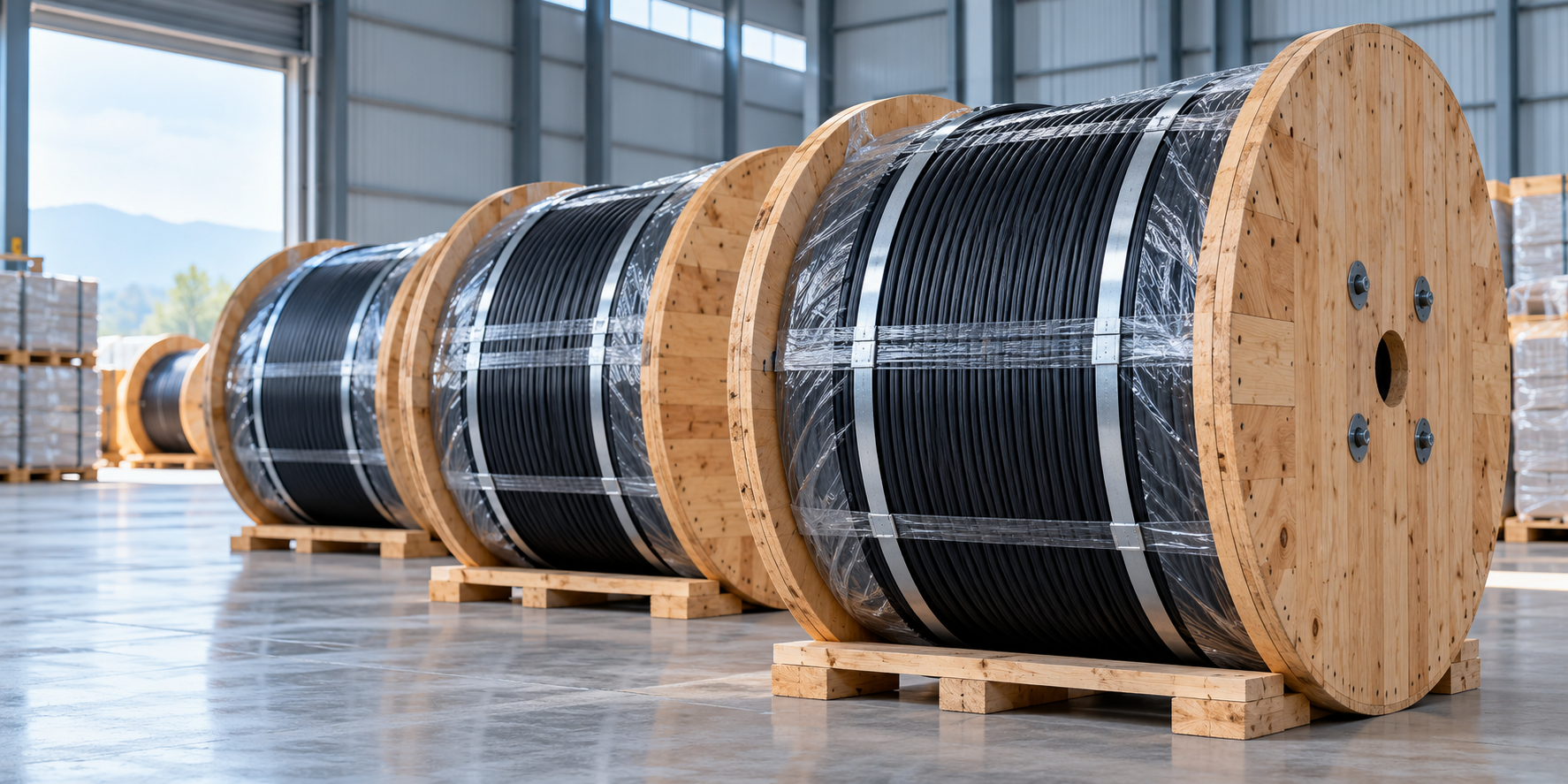
A buyer's guide to how fiber optic cable and patch cords are packed and shipped for export: wooden drums with moisture-barrier film and steel strapping, 100 pcs per bag carton packing for cords, export documentation, lead times, arrival inspection and the 12-month warranty.
When procurement teams compare fiber optic suppliers, most of the attention goes to attenuation figures, fiber counts and unit prices. Packing and delivery rarely receive the same scrutiny. Yet packing is exactly where a technically excellent cable can still arrive as a problem: a drum crushed during container handling, a carton of patch cords opened by customs and resealed without care, or a shipment that reaches the port on time but sits there because the paperwork did not match what the freight forwarder expected. None of these failures show up in a datasheet, and all of them cost time that a project schedule does not have.
This guide is written for the buyer side of that conversation: network engineers, integrators, distributors and procurement managers who order fiber optic cable, patch cords and related connectivity products from a manufacturer in China and who want the goods to arrive complete, dry, undamaged and documented. It explains how outdoor cable is typically packed on export drums, how patch cords and pigtails are bagged and cartoned, which protective measures matter most in transit, what documentation and labeling to expect, how lead times are counted, and how to run a receiving inspection that protects your warranty position. Throughout the guide, specific figures come from published Nexora product information; where a number depends on your exact configuration, it is marked as typical and you should confirm it against the datasheet issued with your order.
Why Packing and Delivery Deserve a Line Item in Your RFQ
The cheapest way to think about packing is as insurance for the most fragile part of your project schedule. A fiber optic cable route or a data center fit-out is planned around delivery dates: crews are booked, permits have windows, closures are scheduled. If a shipment arrives with damaged drums or undocumented contents, the cable itself may be perfectly fine, but the installation stops while someone inspects reels, negotiates a claim or waits for replacements. The cost of that delay is almost always larger than the cost of the goods, and it lands on your side of the table, not the supplier's.
Packing quality is also one of the most readable signals of how a factory actually works. A manufacturer that winds cable on sound wooden drums, wraps them in moisture-barrier film, secures the ends so they cannot unwind in transit, and labels each drum with traceable information is a manufacturer that has shipped to demanding buyers before. A factory that improvises packing per order is a factory whose process discipline you cannot verify from the product page. You do not need to visit the workshop to see this difference; you can see it in what the supplier is willing to state about packing in writing, and in how precisely they answer packing questions before you place an order.
There is a customs and freight dimension as well. Wooden packaging entering many countries must comply with ISPM 15 heat-treatment or fumigation rules, and drums that arrive on non-compliant pallets or with unclear markings can be held at the border. Cartons that are packed to inconsistent weights complicate clearance and receiving. None of this is difficult to manage in advance, but all of it is much harder to fix after the vessel has sailed. This is why the request-for-quotation stage is the right moment to settle packing details: at that point the supplier can state drum dimensions, gross weights, carton quantities and document sets as part of the offer, and you can plan container space, receiving labor and inspection windows against real numbers instead of assumptions.
Finally, packing is where your incoming inspection and warranty position begin. Batch references printed on inner bags and carton labels are what allow a patch cord claim to be traced back to a production record. A reel number and a factory test report are what allow a cable fault to be investigated against the right manufacturing run. If packing arrives without that traceability, or if your team discards labels before inspection is complete, a legitimate warranty claim becomes much harder to support. Buyers who treat packing information as part of the product documentation, and who preserve it until inspection is closed, systematically get faster claim resolution than buyers who treat it as waste.
How Outdoor Fiber Optic Cable Is Packed: The Wooden Export Drum Explained
Outdoor loose-tube cable is packed on wooden drums, and the drum is not a commodity detail: it is the load-bearing structure that protects kilometers of cable through road transport, port handling, ocean freight and yard storage. Understanding what a well-prepared export drum includes helps you judge quotations and receiving checks with confidence.
What a standard export drum looks like
An export drum consists of two wooden flanges connected by barrel staves, with the cable wound evenly between them. A steel or plastic hub passage allows the cable end to be sealed and secured, and the outer end is typically anchored so it cannot unwind when the drum is moved. Nexora supplies outdoor cable on wooden drums wrapped in moisture-barrier film and secured with steel strapping, so the cable leaves the factory sealed against humidity and mechanically restrained against shifting. The film is the barrier that matters most on long ocean routes, where a container can pass through tropical humidity on the way to a temperate destination and back again across seasons.
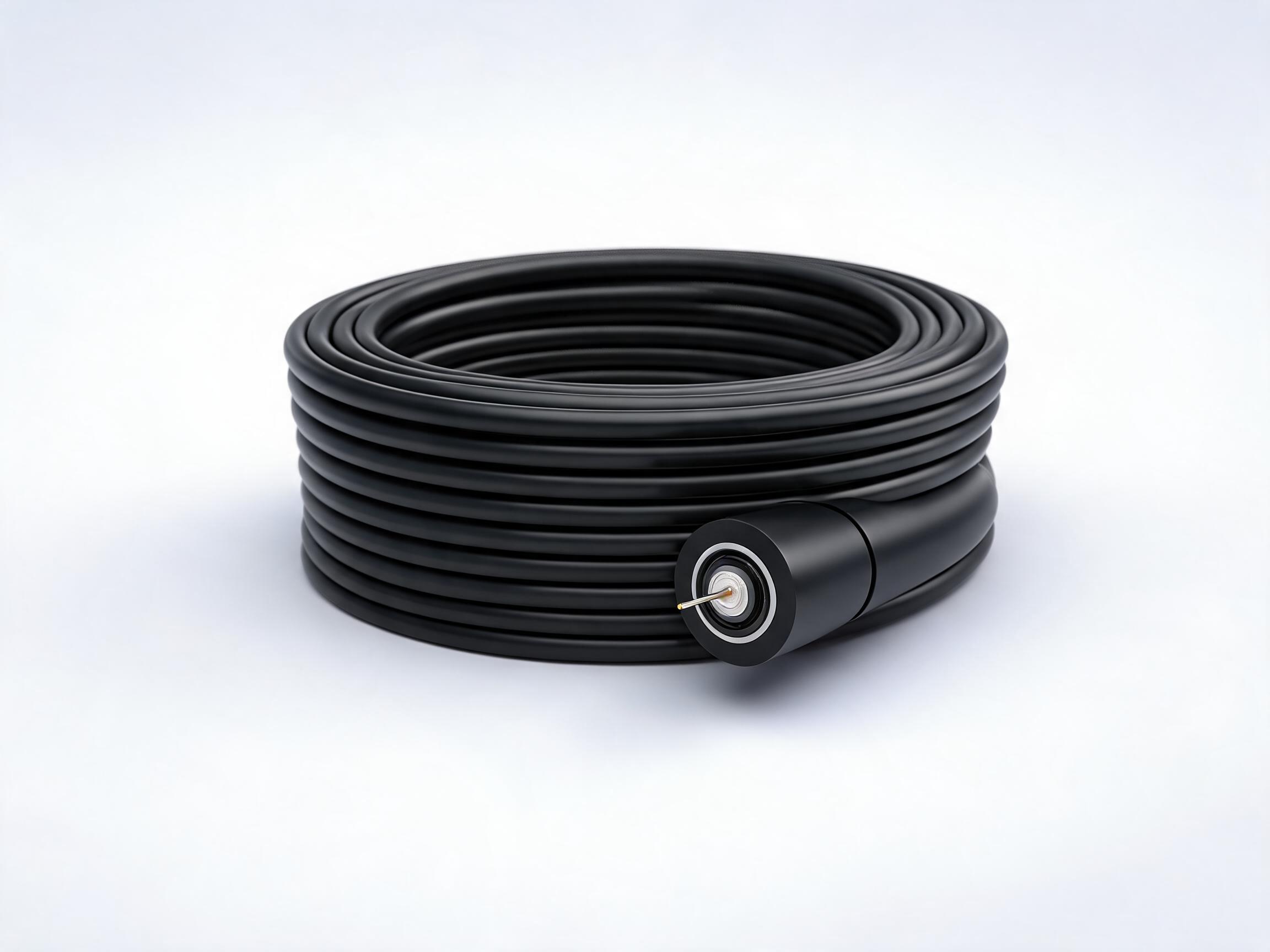
When you receive drums, three visual checks tell you most of what you need to know before the cable is even tested: the flanges should be sound and undamaged, the film should be intact, and the strapping should hold the winding tight. A cracked flange does not automatically mean the cable is damaged, but it does mean the drum took an impact, and it justifies opening the film and checking the outer wraps of cable before you accept the delivery into your project inventory.
Standard drum lengths: 2 km, 4 km and 6 km
Nexora supplies standard drum lengths of 2 km, 4 km and 6 km, and the choice affects more than price. Longer lengths mean fewer drums, fewer splices and less joining hardware on a route, which is why backbone projects often prefer 4 km or 6 km drums. Shorter drums are lighter, easier to handle with smaller equipment, and easier to distribute across a site where long continuous pulls are not possible. Drum length also interacts with drum diameter and width: the same drum family carries different fiber counts at different lengths, so a 288-core 4 km drum is a substantially heavier object than a 12-core 4 km drum.
The practical advice is to decide drum length at the quotation stage, together with your installation plan. Tell the manufacturer your route section lengths and pulling equipment limits, and ask them to confirm the drum length they will wind. Custom drum lengths are available for OEM and ODM orders, which matters when a project needs non-standard section lengths to match vault spacing or to reduce on-site waste.
Drum dimensions and gross weight: plan freight from real numbers
Drum dimensions and gross weight are confirmed with the quotation rather than guessed from a catalog. This matters because freight is planned in volumes and weights: a 20-foot container has practical weight limits that a load of large drums can reach long before it is full, and a shipment planned on assumed dimensions can arrive at the container yard as a problem. When the quotation states drum diameter, width and gross weight per drum, your forwarder can compute the load plan, and your team can plan unloading equipment: a 6 km drum of high-count cable is not a two-person lift.
The same numbers feed customs paperwork. Gross weight per drum, number of drums and net cable length appear on the packing list, and consistency between the packing list and what physically arrives is one of the first things an inspector checks. Ask for the packing list format when you request the quotation, so that your receiving team knows in advance what each line item will look like.
Coil, Spool or Carton? Matching the Packing Format to the Product
Not every fiber optic product ships on a drum, and the format is matched to the product's mechanical sensitivity and order size. The main formats you will encounter are summarized below.
| Product type | Typical export packing | Why this format |
|---|---|---|
| Outdoor loose-tube cable | Wooden drums, moisture-barrier film, steel strapping | Long lengths and high weight need a load-bearing reel; film controls humidity in transit |
| Indoor tight-buffered and distribution cable | Wooden drums for long runs; smaller reels or coils in cartons for short runs | Indoor runs are shorter; smaller units are easier to move inside buildings |
| Patch cords | Individual bagging with dust caps; 100 pcs per inner bag; 1,000 pcs per carton | Protects end faces; standard quantities make receiving and counting fast |
| Pigtails | Individually sleeved and bagged; cartons in standard quantities | Bare fiber end is fragile; sleeving prevents snagging and breakage |
| Adapters and accessories | Polybags in inner boxes; master cartons | Small rigid parts; density makes carton-level packing efficient |
The format is a purchasing decision as well as a logistics one. If your crew receives 40,000 patch cords for a data center project, cartons of 1,000 with inner bags of 100 let a two-person receiving team verify quantities in hours rather than days, and let the site issue cords to installers in controlled batches. If you receive the same quantity loose in mixed cartons, the same verification takes days and errors are far more likely. This is why standard packing quantities belong in the order confirmation, not as a surprise on arrival.
It also works in reverse: tell the manufacturer how your warehouse issues material. If your site works in 50-piece kits, packing quantities can sometimes be adjusted as an OEM/ODM arrangement, and inner bag labels can carry your own part numbers so that your inventory system recognizes the goods without repacking. Nexora supports custom packing marking and private label arrangements on OEM/ODM orders; the practical route is to state the requirement in the RFQ and confirm the packing specification together with the price.
How Patch Cords and Pigtails Are Packed for Export
Patch cords and pigtails are packed with a different priority: not mechanical strength for kilometers of cable, but protection of connector end faces and traceability of small parts in large quantities. The two risks that dominate are contamination and confusion, and good packing addresses both.
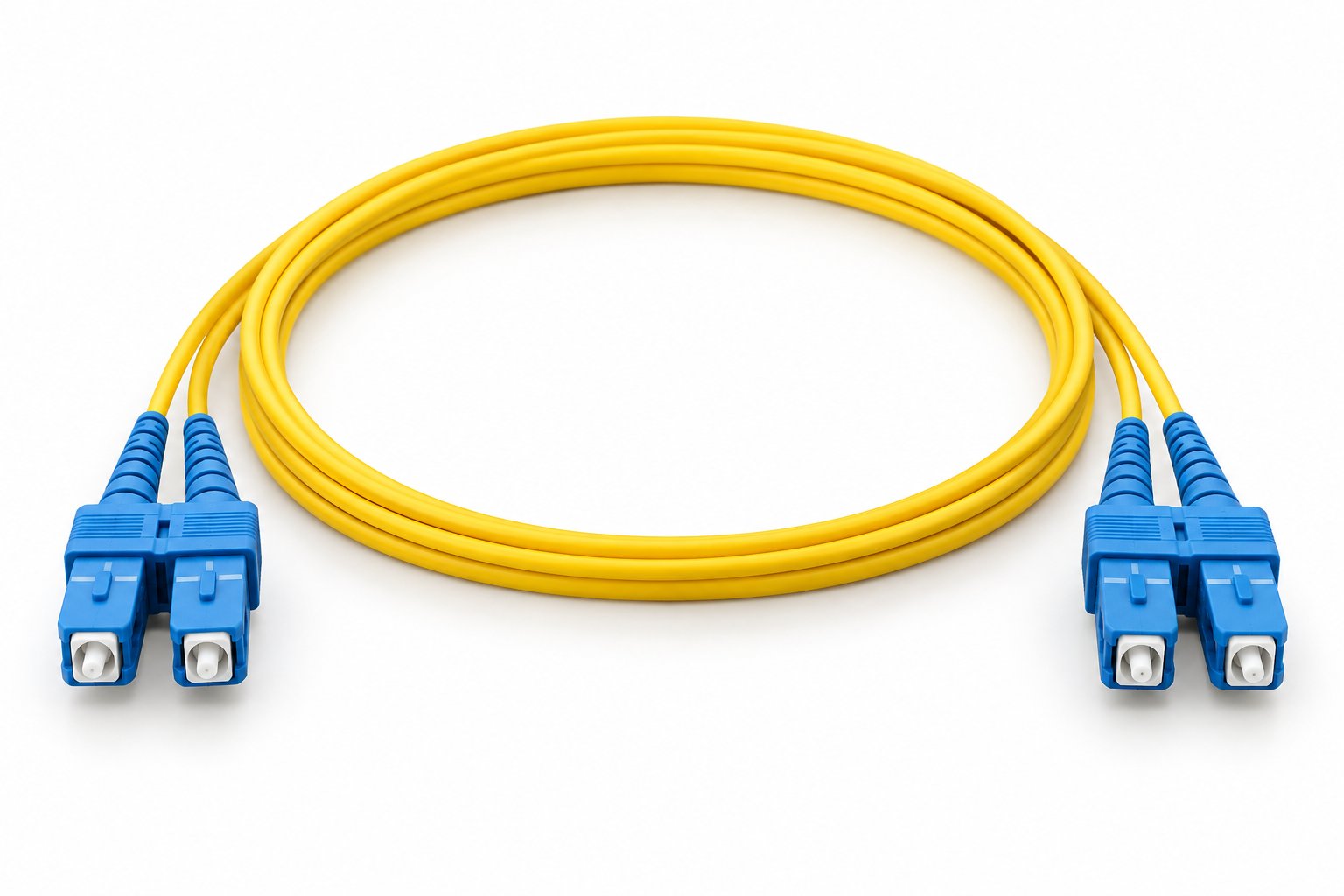
Contamination is handled one cord at a time. Nexora packs each cord individually with the dust cap fitted and the connector protected, then groups the cords per the ordered quantity: the standard packing is 100 pcs per inner bag and 1,000 pcs per carton. The dust cap is not a formality. A connector end face that sits exposed in a bag for weeks collects debris that no field cleaning may fully remove, and an end face pressed against a rough surface can be scratched in ways that only appear later as elevated insertion loss or poor return loss. Individual capping plus bagging means the end face that was inspected and measured at the factory is the end face that arrives at your rack.
Confusion is handled with labels. Inner bags and cartons carry batch references and configuration details: connector type, fiber type, polish, length, jacket and quantity. On a mixed order — say three lengths and two polish types across one purchase order — the labeling is what allows your warehouse to separate configurations without opening every bag. Nexora states that the minimum order quantity is counted per configuration, so a mixed order of three configurations starts at 300 pcs in total; on such an order, per-configuration labeling is not a nicety, it is the mechanism that keeps 300 cords sortable.
Why batch labels matter for incoming inspection and claims
The batch reference printed on the inner bag and carton labels is the key that connects a physical cord to a production record. If a cord fails your incoming test, the batch reference is what lets the manufacturer pull the measurement history for that run instead of treating your complaint as an isolated anecdote. Nexora asks buyers to raise patch cord claims within 30 days of receiving the goods, with the batch reference, the quantity affected and a test record showing the measured value. In practice, buyers who keep the labels with the goods until incoming inspection is complete resolve claims in days; buyers who discard packaging often cannot identify the batch at all. Treat the labels as part of the product until inspection is closed.
There is a quiet commercial benefit as well: batch labeling makes partial deliveries manageable. If a large order ships in several lots over several weeks, each lot carries its own references, and your records can show which lot is installed where. When a field issue appears months later, that mapping is often the difference between a targeted replacement and a blanket re-inspection.
Moisture, Temperature and Handling Protection in Transit
Between the factory floor and your warehouse, a shipment can cross a summer dock in a coastal city, several weeks on the ocean, a winter rail yard and a truck ride over mountain roads. The packing measures that matter are the ones that keep water, shock and improper handling from reaching the fiber.
Moisture control starts at the cable structure itself — the loose tubes in an outdoor cable are gel-filled and the core contains water-blocking elements, so incidental moisture exposure does not instantly ruin the cable — but the packing still minimizes what the cable has to withstand. The moisture-barrier film around each Nexora drum keeps humid air away from the cable surface and from the drum wood, which matters because wet wood is heavy, prone to staining and slower to clear inspection at destination. For indoor products, sealed polybags do the same job at carton scale, keeping dust and humidity away from connectors and buffer coatings.
Temperature extremes during transit are generally survivable for fiber optic products within their specified operating ranges — the outdoor cable family is rated for a typical operating window of -40 °C to +70 °C, with exact ratings confirmed on the datasheet — but repeated condensation cycles are a different stress than steady cold. This is another reason the barrier film and sealed bags matter: they prevent condensation from forming directly on surfaces that matter.
Handling is the least controllable variable, which is why packing should assume rough handling. Steel strapping on drums prevents the winding from shifting when a drum is moved by forklift; sound flanges absorb the impacts that a drum inevitably receives; cartons sized to consistent weights stack predictably and do not crush the boxes beneath them. On the receiving side, your part is to plan the unloading: drums should be lifted with a proper drum spine or forklift through the center, never rolled off a truck tailgate and never stacked on their sides in a way that loads the flange edges. Most transit damage stories involve improvised unloading rather than ocean freight.
How Packing Is Checked Before the Shipment Leaves the Factory
Packing is a formal step in Nexora's quality control sequence, not an afterthought once production is finished. Quality control runs through the whole process across 30+ QC stations — incoming material inspection, component inspection, in-process inspection, functional test, visual inspection, final inspection and packaging inspection. For a patch cord, that final packaging step confirms that each cord ships capped and bagged with the right labels; for cable, it confirms drum condition, film integrity, strapping and drum marking before the drum leaves the production floor.
This matters to buyers because packaging inspection is the step that turns factory test results into an arrival condition you can verify. Every drum of cable is tested for attenuation and continuity before dispatch, and the test report can be supplied with the shipment on request. Every patch cord is measured for insertion loss and return loss before packing, with a per-cord release limit of ≤0.5 dB insertion loss (≤0.3 dB typical across production, measured at 1310 nm and 1550 nm; confirm exact figures against the datasheet) and return loss of ≥50 dB for UPC or ≥60 dB for APC end faces. When the test record travels with the shipment and the batch labels travel on the goods, the two documents can be matched on arrival — which is precisely what a serious incoming inspection should do.
Scale supports consistency here. The Shenzhen facility covers 16,000+ m², runs 12 production lines with 180+ employees, and delivers an annual capacity of 2.8M+ units with a monthly capacity of 230K+ units, across more than 3,500 product configurations and more than 500 delivered OEM/ODM projects for customers in 50+ countries. Packing specifications that work at that volume are documented procedures rather than individual habits, which is what you want when your second and third orders need to arrive exactly like the first.
Export Documentation, Labeling and Traceability
Documentation is the part of delivery that buyers think about least until it fails. A complete export set for a fiber optic shipment typically includes the commercial invoice, the packing list, transport documents issued by the carrier, and — where required for clearance or the buyer's own compliance — certificates of origin and product documentation. The practical failure modes are predictable: weights on the packing list that do not match the goods, configurations on the invoice that do not match the cartons, or marking that customs officers cannot reconcile with the paperwork. All of them cost days at the border.
Three habits prevent most of it. First, agree the document set at the quotation stage, including who issues what and when each document is sent. Second, keep configuration descriptions consistent between the purchase order, the invoice and the carton labels; if your company uses internal part numbers, ask for them on the labels under an OEM/ODM arrangement. Third, ask for digital copies of the packing list and drum/carton markings before the shipment departs, so your receiving team and broker can prepare while the goods are in transit instead of after they arrive.
Traceability runs through the same documents. A drum carries identifying marking that ties it to its test report; inner bags and cartons carry batch references that tie them to production and test records for the run. If you need test records in a particular format — per cord or as a batch summary for patch cords, per reel for cable — state the format when you request the quote. Nexora confirms record format requirements at the quotation stage; this is also the moment to say whether your incoming inspection team needs certificates in a specific language or layout.
Container Loading and Freight Planning for Cable Drums
Cable drums are dense, heavy and unforgiving of bad stowage, and freight planning rewards buyers who work from the drum dimensions and gross weights stated in the quotation. A few practical points shape a good load plan.
Drums normally travel standing on their flanges, on pallets or cradles, chocked so they cannot roll, and loaded so that handling equipment can reach each drum in sequence. Weight distribution matters: drums are placed so the container stays within axle and floor load limits, and heavy drums generally go low and toward the center. The number of drums that fit a 20-foot or 40-foot container is determined by drum diameter and width, not just by weight — large 6 km drums of high-count cable can reach a container's practical weight limit with space to spare, while small drums of light cable may be volume-limited instead. Your forwarder can compute the exact plan from the quotation figures, which is the real reason those figures are stated per drum.
Cartoned products — patch cords, pigtails, adapters — are the easy complement to drums in a mixed load: they fill the space around and above drum cradles where cartons are safe from compression. If your order mixes cable and connectivity products, ask the manufacturer to confirm how the mixed load will be stowed and which items ship palletized. Mixed orders are also scheduled differently: standard patch cord configurations ship in 7 to 15 working days, mixed or high-volume orders in 15 to 25 working days, and standard cable configurations in 15 to 20 working days after order confirmation (transit time additional; confirm your configuration's schedule with the quotation).
Insurance is the last piece of freight planning. Packing quality reduces the probability of transit damage, but ocean freight carries residual risk that belongs to whoever holds title under the agreed Incoterms rule. Confirm with your insurer that drum-packed cable and cartoned connectivity products are covered at their commercial value, and photograph the drums and cartons at the container opening — dated photos are the evidence that makes a freight claim fast if anything is visibly wrong before unloading.
Lead Times: How the Clock Is Counted
Lead time disputes usually come down to the start date, not the duration. A quoted lead time that counts from purchase order date is a very different promise from one that counts from order confirmation and deposit receipt, because production scheduling begins when the manufacturer has both the confirmed specification and the payment that releases materials. Nexora counts lead time from order confirmation and deposit receipt, and the quoted period covers production and packing — not the transit time of the shipment, which depends on the freight method you choose.
The published reference points for planning are as follows:
| Order type | Typical lead time | Notes |
|---|---|---|
| Patch cords, standard configurations | 7-15 working days | Counted from order confirmation and deposit receipt; transit excluded |
| Patch cords, mixed or high-volume orders | 15-25 working days | Multiple configurations scheduled together |
| Outdoor cable, standard configurations | 15-20 working days | Custom core counts or sheath options scheduled individually |
| Sample orders | Typically 5-7 working days for cable samples | Short evaluation samples free of charge, freight collected |
Two planning habits keep these numbers honest. First, freeze the configuration before you expect the clock to start: a lead time quoted for a defined configuration is invalid the moment a polish type, sheath option or drum length changes, and a change after deposit restarts scheduling. Second, add the freight leg explicitly. A 15-working-day production time followed by five weeks of ocean freight means the goods land more than eight weeks after the order — a figure worth writing into your project plan rather than discovering in week seven.
For repeat buyers there is a further option: scheduled or call-off orders. If your project consumes material over months, discussing phased deliveries with the manufacturer can keep factory slots reserved while spreading your warehouse burden. This is arranged at the quotation stage together with the delivery schedule, and it is much easier to negotiate before the first order than after.
Incoterms and Freight Options: Who Books What
Export shipments can be handed over under different Incoterms rules, and the rule you choose determines who books freight, who pays for it and where risk transfers. The most common patterns for fiber optic shipments are straightforward: under FOB the manufacturer delivers the goods on board the vessel at the Chinese port and you arrange the main carriage; under CIF the manufacturer arranges and pays for carriage and insurance to your destination port; under EXW you collect at the factory; and DAP-style arrangements push delivery further toward your door. Each has legitimate uses, and none is universally cheapest once you include your own forwarder's margins and destination charges.
The practical advice is to compare like with like. Ask the manufacturer to quote under at least two terms, with the freight components itemized, and ask your own forwarder to price the same movement. What matters for packing specifically is that drum shipments need lifting equipment at the point of transfer — a fact that is invisible in price comparisons until the truck arrives at your site without one. Whatever rule you choose, confirm in writing which party books the main carriage, which party insures the goods, and at which physical point the risk transfers. Those three sentences prevent most cross-border misunderstandings in this product category.
How to Inspect Fiber Optic Cable and Patch Cords on Arrival
A receiving inspection is not a full retest of the factory's work; it is a structured check that catches transit damage, quantity errors and documentation mismatches before the goods enter your inventory. Done well, it takes hours, not days, and it protects both your project and your warranty position. A practical sequence looks like this:
1. Photograph before opening. Photograph the container interior, each drum and each pallet of cartons before unloading. Dated photos establish arrival condition and are the evidence a freight or warranty claim needs if anything is visibly damaged.
2. Count against the packing list. Match the number of drums and cartons to the packing list, and check gross weights where the document provides them. Discrepancies are noted on the delivery documents immediately, while the carrier's responsibility is still easy to establish.
3. Check drums and cartons visually. For drums: flange condition, film integrity, strapping tension, and that the cable end is still secured. For cartons: crush damage, water staining, and intact seals. Open any suspect unit first, not last.
4. Verify markings and batch references. Confirm that drum marking identifies the cable type and length, and that patch cord inner bags carry the batch reference and configuration you ordered. Match configurations against the purchase order — polish, fiber type, jacket and lengths on mixed orders are where errors hide.
5. Test samples against the factory records. For cable, run continuity checks and compare against the reel test report supplied with the shipment; for patch cords, test a sample per configuration with your own meter and compare against the stated limits — insertion loss ≤0.5 dB max per cord (≤0.3 dB typical across production at 1310/1550 nm; figures per datasheet) and return loss ≥50 dB UPC / ≥60 dB APC. If a measurement fails, keep the batch labels and the failed units together.
6. Close inspection before releasing labels. Only after the inspection is complete should packaging be discarded — and even then, keep the batch reference list in your records. Nexora asks that patch cord claims be raised within 30 days of receipt with the batch reference, quantity affected and a test record; cable claims are raised with the reel number, test report and fault description. Inspection notes written on day one are what make those claims clean.
Then the goods move from receiving to storage, which is its own discipline: drums stored upright on firm ground, away from falling-object risk; cartons kept dry and off concrete floors; connectors never uncapped until installation. If storage will be long-term, the handling rules that protect cable on a reel in transit apply with even more force in a warehouse — a topic covered in detail in our guide to storing fiber optic cable in your warehouse.
What the 12-Month Warranty Covers and How Claims Work
All Nexora fiber optic cables and connectivity products carry a 12-month warranty from shipment date, covering manufacturing defects. For cable, covered issues are confirmed manufacturing defects found on the delivered reels; damage caused during installation or by third-party civil work is outside the warranty scope. For patch cords, covered defects include damaged ferrules, end faces that do not meet the specified insertion loss or return loss on arrival, and defects in the connector body or jacket present at delivery; damage from installation, cleaning or handling after delivery, and use outside the specified fiber type, polish or bend radius, are not covered.
The claims mechanics are designed to be fast when the traceability chain is intact. A claim starts with the identifiers that tie the goods to their production run: the reel number, test report and fault description for cable; the batch reference from the inner bag or carton label, the affected quantity and a test record for patch cords. Nexora replies within 5 working days, and confirmed defects are replaced or credited, with replacement stock typically dispatched within 15 working days of claim confirmation. For patch cords, claims should be raised within 30 days of receiving the goods.
Two disciplines on the buyer side keep this machinery working. First, preserve traceability — reel numbers and batch labels — until inspection is closed, as described above. Second, quantify claims with measurements rather than impressions: a test record showing a failed measurement turns a discussion into a disposition. Buyers who deliver both get the 5-working-day response the process is built for; buyers who deliver neither should expect the process to take longer, because the manufacturer must first identify which production run is in question.
Warranty terms are part of the order documents, and the 12-month period from shipment date is the standard across the product range; if your project requires different commercial terms, raise them at the quotation stage so they are agreed in writing before production. For a deeper walkthrough of what the warranty does and does not cover from a buyer's perspective, see our dedicated guide to what a 12-month warranty really covers.
Common Packing and Delivery Problems — and How to Avoid Them
Most delivery problems in this product category repeat a small number of patterns. The table below maps each one to the prevention step that belongs in your process, usually at the RFQ or order confirmation stage rather than after the shipment has left the factory.
| Problem on arrival | Usual root cause | Prevention |
|---|---|---|
| Drum flange cracked, winding shifted | Rough handling or improvised unloading | Plan lifting equipment; photograph before opening; inspect before acceptance |
| Patch cord fails incoming test | Configuration mix-up or genuine defect | Match batch labels to PO; test a sample per configuration; keep labels for claims |
| Quantity mismatch on receiving | Packing list inconsistent with cartons | Agree packing list format at quotation; count against it before unloading |
| Shipment held at customs | Documentation or wood-packaging compliance gaps | Confirm document set and wooden packaging treatment before dispatch |
| Wrong configuration in a mixed order | Ambiguous PO descriptions | Use per-configuration line items and per-configuration packing labels |
| Delay discovered in project week 7 | Transit time never added to the schedule | Write production + transit into the plan; confirm schedule with the quotation |
Notice the pattern: almost every row is cheaper to fix with a sentence in the RFQ than with a claim after arrival. Packing and delivery are unusual among purchasing topics in that the buyer's specifications — packing quantities, labeling formats, document sets, drum lengths — are fully within the buyer's power to state, and manufacturers generally follow a well-specified order more reliably than a vague one.
What to Specify in Your RFQ for Packing and Delivery
Use the following checklist when you request quotes for fiber optic cable and connectivity products. It converts this guide into a one-page requirement list that both sides can confirm in writing.
Product and packing format: product types and configurations, drum lengths for cable (2 km / 4 km / 6 km standard, or custom), and packing quantities for connectivity products (100 pcs per inner bag / 1,000 pcs per carton standard, or your own format).
Freight planning data: drum dimensions and gross weight per drum, carton dimensions and weights, palletization, and total shipment volume and weight — the numbers your forwarder needs for a container load plan.
Labeling and traceability: batch references on inner bags and cartons, drum marking content, and any OEM/ODM private label or your own part numbers on labels.
Documents: commercial invoice, packing list, transport documents, certificates of origin where required, and test records — per reel for cable, per cord or batch summary for patch cords, with your preferred format and language.
Schedule: lead time basis (order confirmation and deposit receipt), typical durations for your configurations, and the transit leg added separately so the project plan reflects the arrival date.
Commercial terms: Incoterms rule and named place, insurance responsibility, payment terms (commonly 30% deposit with 70% balance before shipment, as stated on the proforma invoice), and the warranty basis — 12 months from shipment date as standard.
If you are building the rest of the RFQ at the same time, our guide to what to include in a fiber optic cable RFQ covers the technical side — fiber count, sheath options and deployment method — that pairs with the packing and delivery items above.
Frequently Asked Questions
How is outdoor fiber optic cable packed for export shipping?
Outdoor cable is wound on wooden drums in standard lengths of 2 km, 4 km and 6 km, wrapped in moisture-barrier film and secured with steel strapping. Drum dimensions and gross weight are confirmed with the quotation so freight and handling can be planned. Custom drum lengths are available for OEM and ODM orders.
How are fiber optic patch cords packed?
Each cord is packed individually with the dust cap fitted and the connector protected, then grouped per order quantity — standard packing is 100 pcs per inner bag and 1,000 pcs per carton. Inner bags and cartons carry batch references and configuration details for traceability, and custom packing quantities or your own packing marking can be arranged as an OEM/ODM order.
Why do drum dimensions and gross weight matter for my freight costs?
Container loading is planned in volume and weight. Large drums can reach a container's practical weight limit before it is full, while light cable may be volume-limited instead. Real drum dimensions and weights let your forwarder build an accurate load plan and avoid surprises at the container yard, which is why they are stated with the quotation rather than estimated.
What documents should come with an export shipment of fiber optic products?
At minimum: the commercial invoice, the packing list and the transport documents issued by the carrier, plus certificates of origin where required. For quality records, reel test reports for cable and per-cord or batch test records for patch cords can be supplied with the order — confirm the format you need when you request the quote.
How long does production take before shipment?
Standard patch cord configurations ship in 7 to 15 working days after order confirmation; mixed or high-volume orders typically run 15 to 25 working days. Standard outdoor cable configurations are typically dispatched within 15 to 20 working days. Lead time is counted from order confirmation and deposit receipt and covers production and packing, not transit time.
What should I check when the goods arrive?
Photograph the shipment before opening, count drums and cartons against the packing list, check drum flanges, film and strapping and carton condition, verify batch labels and configurations against your purchase order, and test samples against the factory records. Keep batch references and reel numbers until inspection is complete — they are what make any later claim fast to resolve.
What does the 12-month warranty cover?
All Nexora fiber optic cables carry a 12-month warranty from shipment date covering manufacturing defects. Raise a claim with the reel number, test report and fault description for cable, or the batch reference, affected quantity and test record for patch cords within 30 days of receipt. Confirmed defects are replaced or credited, with a response within 5 working days and replacement stock typically dispatched within 15 working days of claim confirmation. Damage from installation, cleaning or handling after delivery is outside the scope.
Can you pack under our own brand and labeling?
Yes. Jacket printing and custom drum lengths are available for cable orders, and private label and custom packing marking are available for connectivity products as OEM/ODM arrangements. Send the label artwork and packing specification with your RFQ and the details will be confirmed with the quotation.
Do you provide samples before a bulk order?
Yes. Short cable samples for evaluation are supplied free of charge with freight collected, typically within 5 to 7 working days, and sample orders for patch cords are quoted separately from the bulk price. Samples let you verify polish, length, packing format and test records before committing to production quantities.
Plan Your Next Shipment Around the Packing, Not After It
Packing and delivery are where a good specification becomes a good arrival. The elements that matter are simple and verifiable: sound wooden drums with moisture-barrier film and steel strapping for cable, capped and bagged cords in labeled inner bags and cartons for connectivity products, drum dimensions and gross weights stated with the quotation, batch references that carry traceability from your receiving dock back to the production line, lead times counted from order confirmation and deposit receipt, and a 12-month warranty from shipment date with a claims process that works when the traceability chain is preserved.
None of these details are difficult to specify — and all of them are easiest to settle before the order is confirmed, when they cost a few lines in an RFQ instead of days of claims correspondence. Whether you are planning a backbone route on 6 km drums or a data center fit-out measured in tens of thousands of patch cords, send us your route or configuration list together with your packing and delivery requirements, and we will confirm the packing specification, drum and carton data, document set and schedule with the quotation.
Explore the products this guide draws on: outdoor G.652D single mode fiber optic cable supplied on export drums, and SC-SC single mode G.652D patch cords packed 100 per inner bag and 1,000 per carton. For the commercial side of ordering — minimum quantities and how lead times are structured — see our MOQ and lead time guide, and for the inspection work that precedes packing, see how fiber optic cable and patch cord quality is verified before shipment.