
Nexora
Armored Fiber Optic Cable
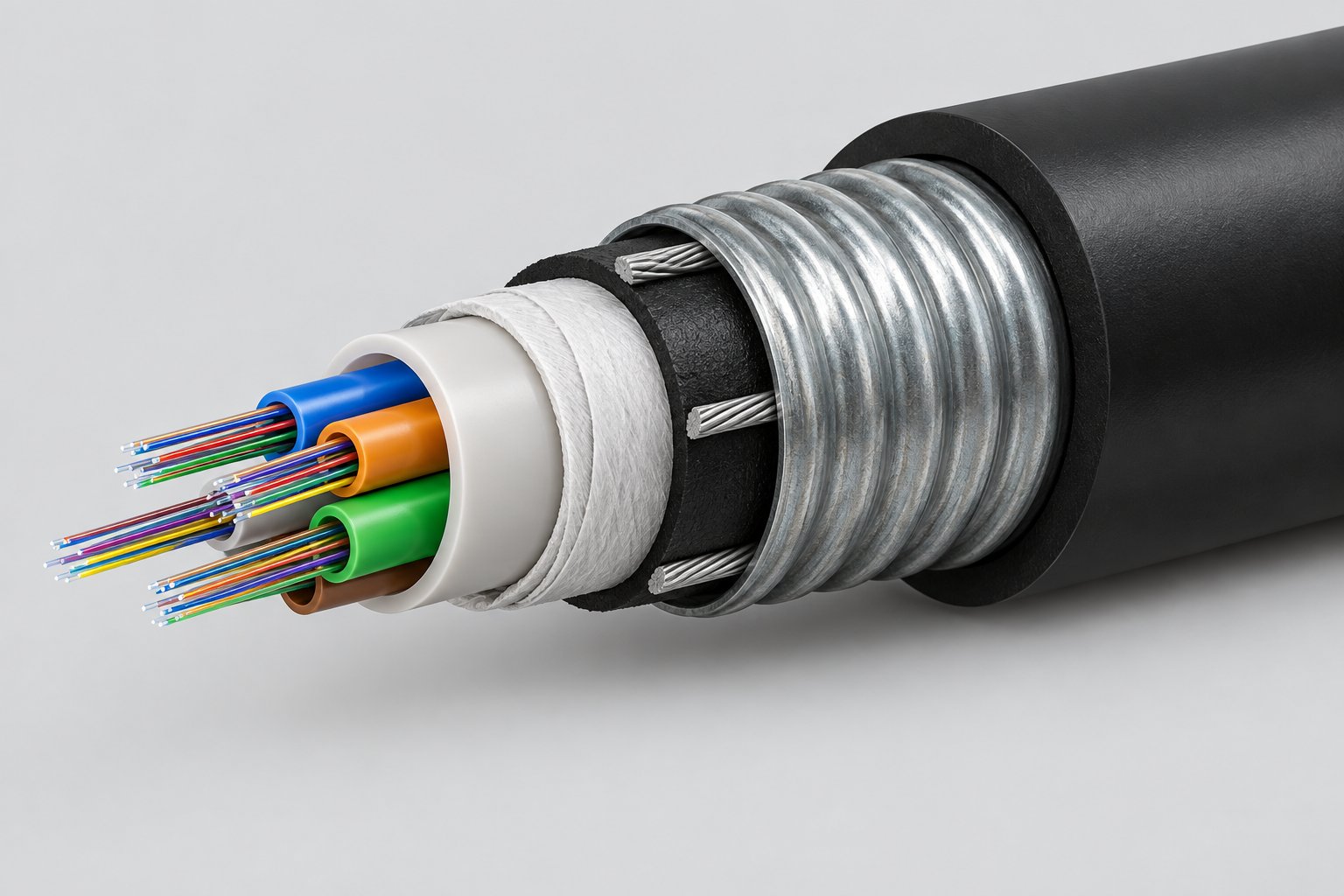
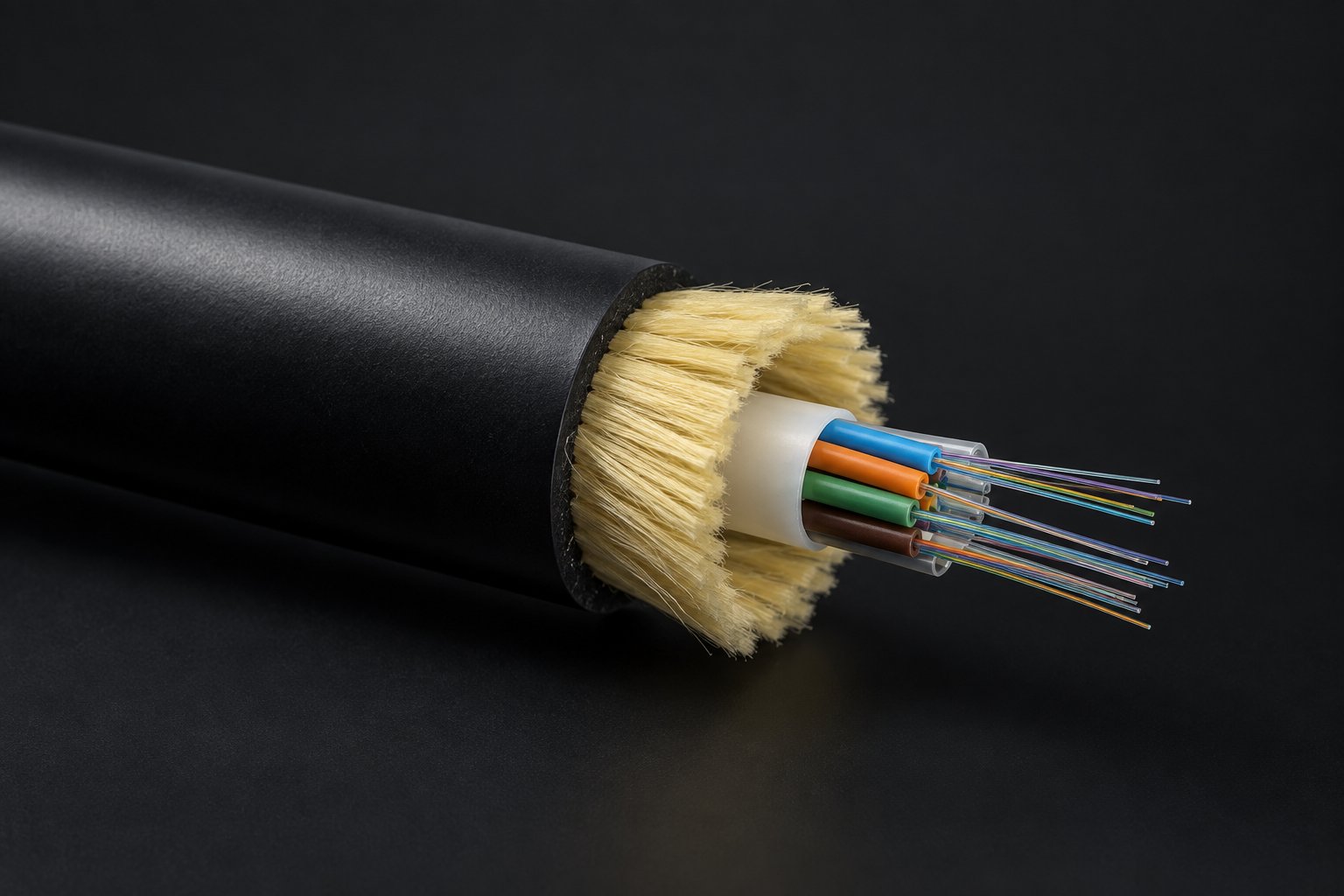
Armored fiber optic cable with steel tape or steel wire armor for direct burial, rodent protection and high crush resistance.
G.652D single mode (standard)
Product Notes
- Steel tape or steel wire armor
- Direct burial rated
- Rodent and crush protection
- Water-blocking protection
Specifications
Fiber type, connector, test data, packaging proof and sample-kit notes are kept in the same quote sheet.
| Fiber type | G.652D single mode (standard) |
|---|---|
| Fiber count | 4-288 cores (custom) |
| Jacket | PE, water-blocking |
| Application | Backbone, metro, harsh environments |
Application Notes
Why an armored fiber optic cable for direct burial and harsh routes
An armored fiber optic cable is the choice when the route cannot be protected by a duct, conduit or overhead support, and the cable itself must carry the mechanical load. Direct burial, rodent-prone areas and industrial sites put ordinary cables under crush, impact and gnawing pressure that a standard PE-jacketed cable is not designed to survive. This armored cable adds a steel tape or steel wire armor layer so the fibers keep working where a non-armored cable would fail.
The real problem buyers face
For a backbone or metro link, the most expensive part of a project is not the fiber itself but the cost of a failure after it is buried. A direct burial cable that is crushed by settling soil, struck by a digger, or chewed by rodents forces a re-dig, a splice and a service outage that can cost far more than the cable. Buyers who route cable directly in the ground or through rodent-prone industrial corridors need an armored cable that absorbs that mechanical risk before it reaches the fibers.
How the armor protects the link
The steel tape or steel wire armor sits between the cable core and the outer jacket. It is the layer that takes the crush and impact, and it is the physical barrier that stops rodents from reaching the fiber core. The water-blocking PE jacket keeps moisture from traveling along the cable, which matters for a direct-buried route where water ingress is a common cause of long-term attenuation drift.
What to specify for your route
Choose the armor type by the dominant risk. Steel tape armor is the common choice for direct burial and general crush protection. Steel wire armor adds more tensile and crush resistance and is often selected for routes with heavier mechanical loading or where the cable may be pulled through demanding sections. Fiber count is selected to the project: this armored fiber optic cable is built from 4 to 288 cores, so a small feeder and a large backbone can use the same armored construction.
Where an armored cable fits in the network
An armored fiber optic cable is most often used for the backbone and metro sections that carry many circuits, because a failure there affects the largest number of users. It is also the practical choice for the final approach into a site where the cable crosses a yard, a road crossing or a boundary that cannot be ducted. In each of these cases the armored construction trades a slightly larger and heavier cable for a much lower risk of a buried failure.
How it is made and checked
The cable is produced on our 12 production lines and passes through our 30+ QC staff before shipment. The armor layer is applied in a controlled process so the steel does not deform the fiber core, and the water-blocking jacket is applied over the armor to seal the assembly. Each reel is checked for continuity and jacket integrity as part of the standard release process before it leaves the 16,000 m² facility.
Buyer FAQ
Is steel tape or steel wire armor better for direct burial?
Steel tape armor is the standard choice for direct burial and general crush protection. Steel wire armor is selected when the route needs higher tensile and crush resistance, such as heavier mechanical loading or demanding pull sections. Tell us the route and we will confirm the right armor for it.
Does the armor affect the fiber performance?
The armor is applied outside the fiber core and does not change the G.652D single mode fiber characteristics. The steel layer protects the core mechanically; the optical performance is determined by the fiber itself.
Can the fiber count be customized?
Yes. The armored cable is built from 4 to 288 cores, and the fiber count is selected to the project. Confirm the core count and route with us and we will quote the matching construction.
What jacket options are available?
The standard jacket is PE with water-blocking protection, which suits direct burial and outdoor routes. If your project has a specific jacket requirement, tell us the environment and we will confirm the option.
How should the cable be handled during installation?
Keep the cable within its rated bend radius during pulling and avoid sharp edges that could cut the jacket. For a direct-buried route, lay the cable on a stable bed and protect the approach sections where surface traffic or digging is expected. Confirm the specific handling limits for your armor type with us before installation.
Request product details
To prepare an accurate quotation, tell us the fiber count, the armor type (steel tape or steel wire), the route length and the installation environment. Our team will confirm the matching construction and lead time for your project.
Request product detailsTags
Related Fiber Products
Get A Quote
Send fiber type, connector, quantity, application and packaging requirement. The response can include test data and sample-kit notes.