Nexora
ADSS Fiber Optic Cable
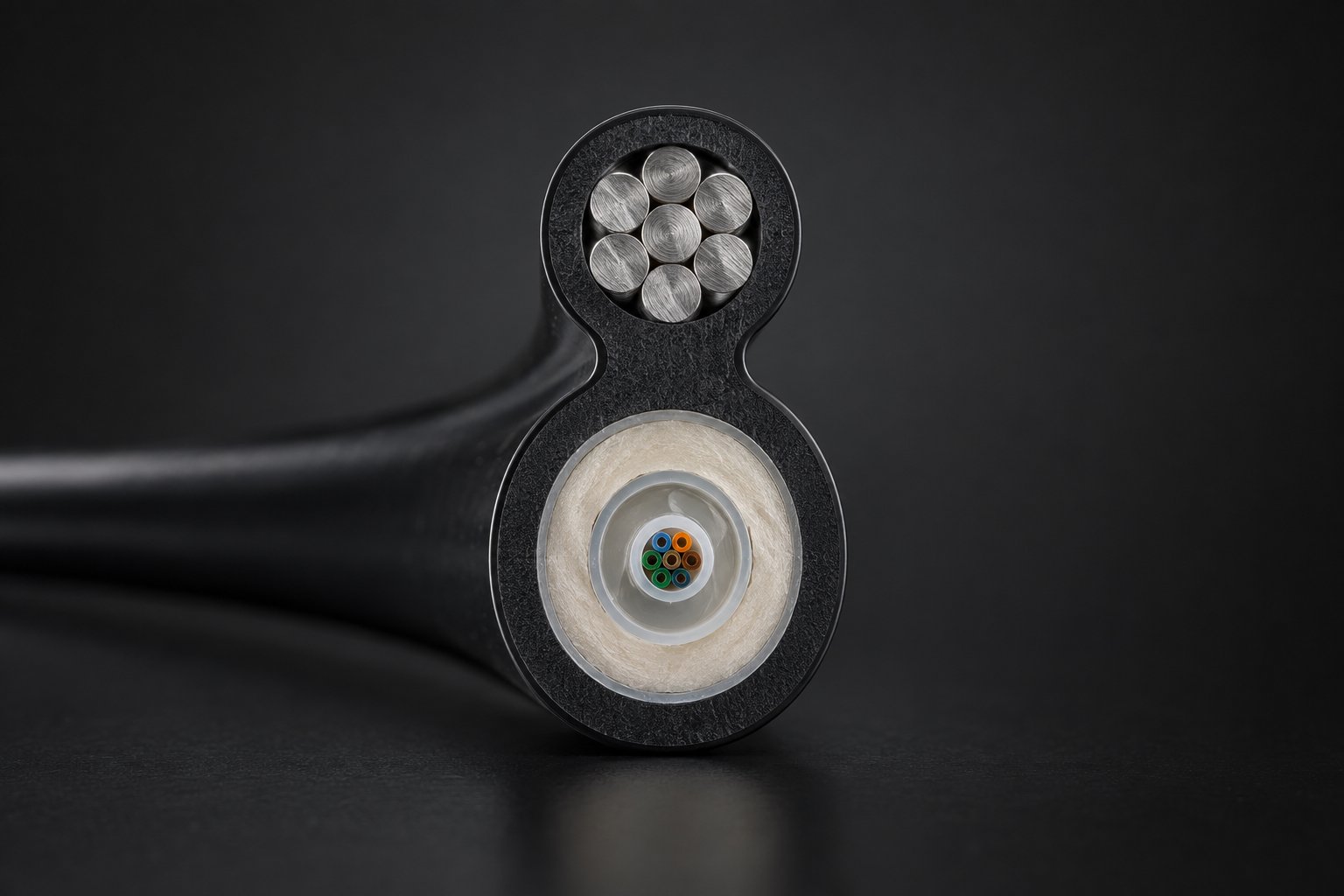
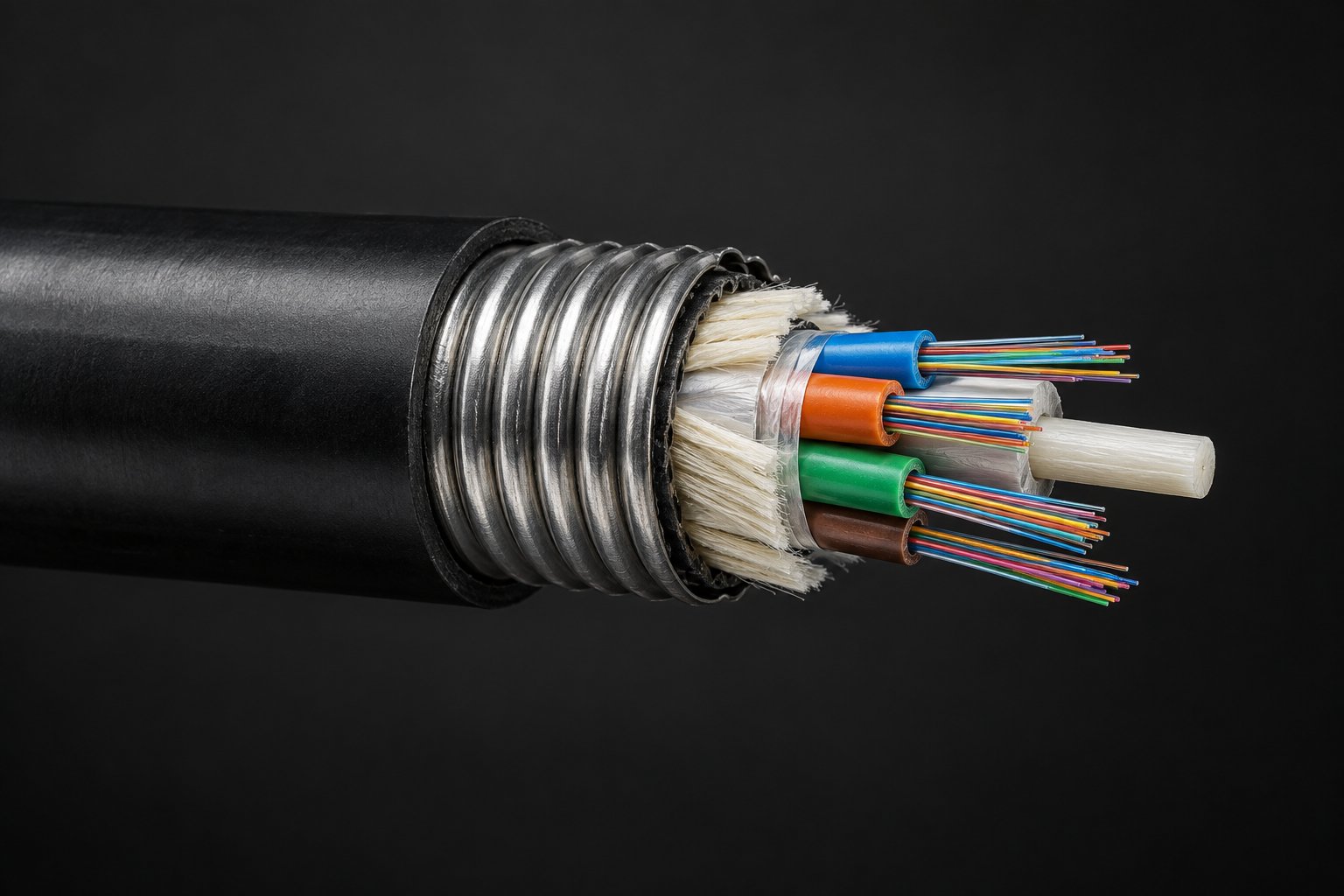
All-dielectric self-supporting fiber optic cable for aerial installation on power poles and transmission towers without a metal messenger.
G.652D single mode (standard)
Product Notes
- All-dielectric self-supporting design
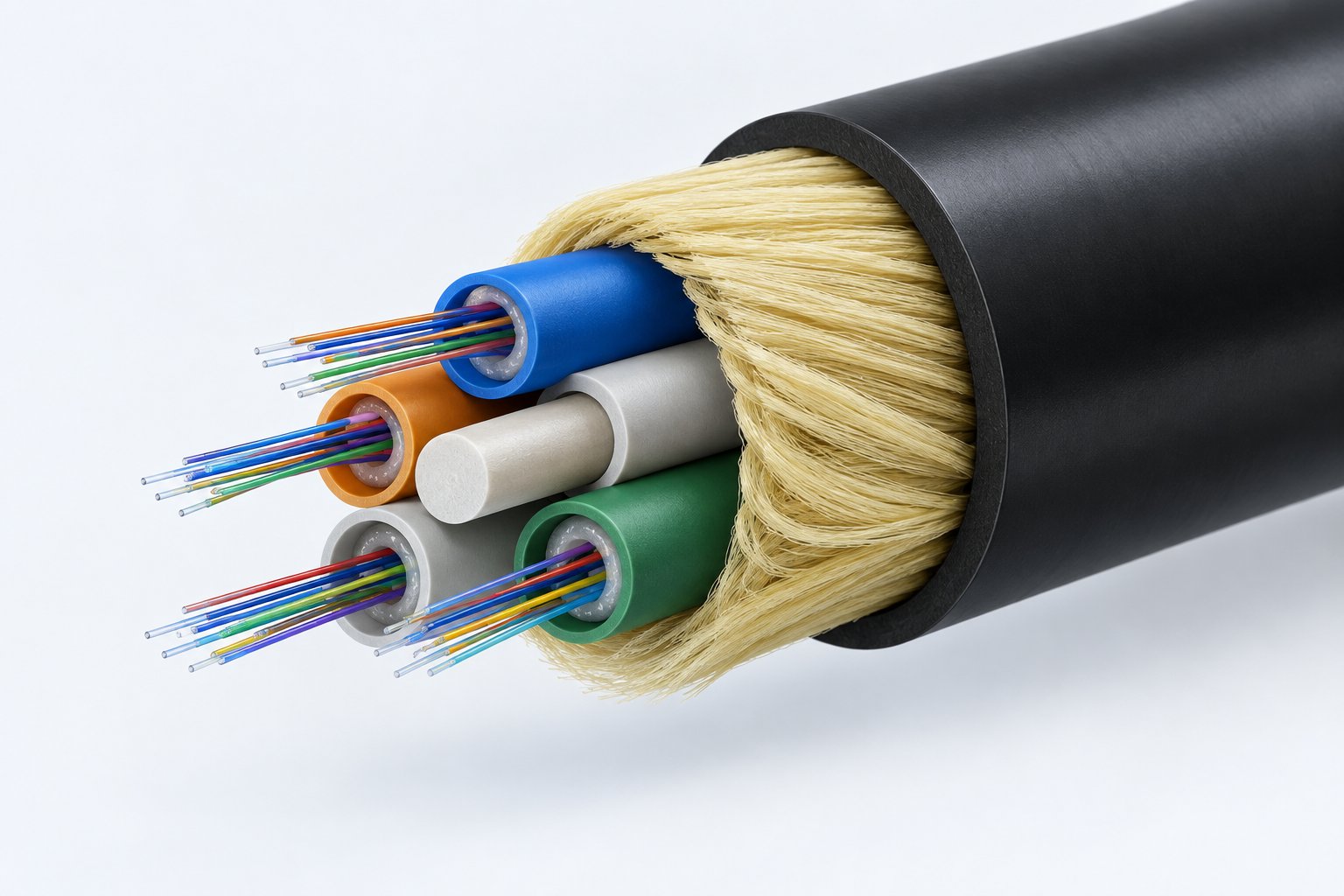
- Aramid yarn strength members
- No metal messenger required
- UV-resistant PE jacket
Specifications
Fiber type, connector, test data, packaging proof and sample-kit notes are kept in the same quote sheet.
| Fiber type | G.652D single mode (standard) |
|---|---|
| Fiber count | 4-144 cores (custom) |
| Strength member | Aramid yarn |
| Jacket | PE, UV-resistant |
| Application | Power poles, transmission towers, aerial spans |
Application Notes
Why aerial fiber links on power poles fail without the right cable
When you run fiber along power poles or transmission towers, the cable has to carry its own weight across every span. A conventional outdoor cable with a metal strength member needs a separate steel messenger line to support it, and that metal path sits close to live conductors. On a long aerial route this adds hardware, slows the crew, and leaves the link exposed to lightning and corrosion. The result is a network that is heavier to install, harder to maintain, and more likely to suffer damage near the power line.
What an all-dielectric self-supporting cable changes
Our ADSS fiber optic cable is built to be installed directly on power poles and transmission towers without a metal messenger. The strength member is aramid yarn, so the cable supports its own weight across the span while keeping the entire structure free of metal. Because there is no conductive path, the cable can be routed close to live conductors with far less risk of lightning-induced damage or corrosion. This is the design that makes aerial fiber practical on utility routes.
Construction and materials behind the performance
The cable uses G.652D single mode fiber as the standard option, with a fiber count from 4 to 144 cores so you can size the link to the route. Aramid yarn provides the tensile strength that lets the cable span between poles without sagging into the clearance envelope. The outer jacket is UV-resistant PE, selected to hold up to years of direct sunlight on an exposed aerial run. Every layer is chosen for the specific job of a self-supporting aerial cable.
How to size an ADSS cable for your route
Before you request a quotation, the two numbers that matter most are the fiber count and the span length between supports. The fiber count decides how many circuits the cable can carry and is set by your network plan, not by the cable itself. The span length, together with the local wind and ice loading, determines how much aramid yarn is needed so the cable stays within its sag and clearance limits. Tell us the longest span on your route and the pole or tower spacing, and we can confirm the construction that fits your conditions.
Installation and maintenance considerations
Because an ADSS cable carries no metal, the installation crew does not need to bond or ground the cable the way a metallic messenger would require. The main job on site is to control tension during stringing so the cable is not over-stressed, and to use the correct clamps and fittings at each support point. On an exposed route, periodic inspection of the jacket and fittings is the practical maintenance step; the UV-resistant PE jacket is chosen to reduce the need for frequent attention on a long aerial run.
How we control quality in production
Nexora has been manufacturing fiber optic cabling since 2014, with a 16,000 m² facility, more than 180 employees and 12 production lines. Our annual capacity reaches 2.8 million fiber kilometers, and a team of more than 30 QC staff checks the cable at each stage of production. We also support OEM and ODM projects, so the cable can be built to your specification and delivered under your brand.
What this means for your project
For a utility or telecom operator planning an aerial route, the practical gain is a simpler installation with fewer components, a lower risk of damage near live conductors, and a cable that keeps its strength and jacket integrity through years of outdoor exposure. You get a self-supporting aerial cable sized to your fiber count, built on a production line that has shipped to customers in more than 50 countries.
Frequently asked questions
Can the cable be installed without a steel messenger? Yes. The aramid yarn strength member is designed to let the cable support its own weight across the span, which is the core benefit of an ADSS design.
What fiber types and counts are available? G.652D single mode is the standard option, with fiber counts from 4 to 144 cores. Other fiber types can be discussed for OEM and ODM projects.
Is the jacket suitable for outdoor exposure? The standard jacket is UV-resistant PE, selected for long-term use on exposed aerial routes.
What information do you need to quote an ADSS cable? The fiber count, the longest span length, and the pole or tower spacing on your route are the key inputs for confirming the construction and pricing.
Can you build the cable to our specification? Yes. We offer OEM and ODM manufacturing and can adapt the cable to your project requirements.
Request product details
Send us your fiber count, route length and installation conditions, and our team will confirm the specification and pricing for your project.
Tags
Related Fiber Products
Get A Quote
Send fiber type, connector, quantity, application and packaging requirement. The response can include test data and sample-kit notes.