

A practical B2B guide to the documentation a fiber optic cable project handover should deliver: as-built drawings, reel-level traceability, test records, labeling registers, warranty terms, and spare parts registers.
You have approved the cable specification, checked the factory test reports, and watched the reels arrive on site. Six weeks later the installation crew hands over the network, and the question that decides whether you can actually operate, extend, and defend that network is simple: what documentation do you have?
For B2B buyers—telecom contractors, ISPs, EPC firms, integrators, and enterprise network owners—the fiber optic cable project handover is where technical success either becomes a usable asset or quietly turns into an operational liability. A link that passes every test but has no records behind it is a link you cannot troubleshoot efficiently, cannot extend safely, and cannot defend in a commercial dispute. This guide walks through the documentation a professional handover package should contain, why each item matters, and how to write these requirements into your RFQ and contract so they are delivered, not negotiated away at the end of the project.
The framework below reflects how test and administration standards treat documentation in practice. ISO/IEC 14763-3, the international standard for testing installed optical fibre cabling, devotes an entire clause to test equipment and result documentation because a measurement without a record cannot be verified later. ANSI/TIA-606, the North American administration standard, is built on the same principle: every identifier must be backed by a record, and records must link together so a connection can be traced end to end. Your handover package should demand nothing less.
Why Handover Documentation Is a Procurement Issue, Not a Paperwork Issue
It is tempting to treat documentation as an administrative afterthought—something the site supervisor prints at the end of the job. That view is expensive. Consider what actually happens in the months and years after handover:
- Troubleshooting speed. When a link degrades, technicians trace connections by label, consult the as-built drawings, and compare current OTDR readings against the acceptance baseline. Without those records, a fault that takes 20 minutes to isolate can consume a full shift.
- Change management. Every future upgrade—adding fibers to a spare pair, rerouting a trunk, replacing a patch panel—depends on knowing exactly what is installed, where it runs, and how it was terminated.
- Commercial protection. If a cable section fails prematurely, your warranty claim and any dispute resolution rest on batch numbers, factory test reports, and acceptance measurements. No records, no case.
- Audit and compliance. Data center certifications, government projects, and many private network SLAs require documented administration. Missing paperwork can delay occupancy or payment regardless of how well the network performs.
The financial asymmetry is stark. Producing a complete handover package adds a small percentage to project cost, while reconstructing records after the fact—if it is possible at all—typically costs multiples of that and sometimes requires re-testing entire links. This is why experienced buyers treat documentation requirements as a deliverable with the same contractual weight as the cable itself, defined before the order is placed rather than requested after installation.
There is also a supplier-selection angle. Manufacturers and contractors who produce clean, complete handover documentation are usually the same ones who run disciplined factories and projects. A supplier's willingness to commit, in writing, to a defined documentation package is a cheap and reliable signal of overall professionalism. If a bidder pushes back on providing reel-level test data or as-built drawings, ask yourself what else they are not writing down.
The Handover Package at a Glance
A complete fiber optic cable project handover package has two layers. The product documentation comes from the manufacturer and proves what was supplied. The installation documentation comes from the contractor and proves what was built. You need both, cross-referenced, because a defect can originate on either side.
| Document | Provided by | What it proves |
|---|---|---|
| Product datasheets and specification sheets | Manufacturer | The cable design, fiber type, and mechanical parameters as ordered |
| Factory test reports and certificate of conformance | Manufacturer | Each reel met attenuation and geometry limits before shipment |
| Reel labels and batch records | Manufacturer | Traceability from installed section back to production batch |
| As-built route drawings | Contractor | Where every cable actually runs, including field changes |
| Cable and fiber schedules | Contractor | Fiber numbering, spans, lengths, and terminations in one table |
| Labeling records (per ANSI/TIA-606 or project scheme) | Contractor | Every identifier on hardware matches a linked record |
| Insertion loss test records | Contractor | Each link passes its loss budget at required wavelengths |
| OTDR traces and event tables | Contractor | Splice quality, span uniformity, and a baseline for future comparison |
| End-face inspection records | Contractor | Connectors were inspected and clean per IEC 61300-3-35 methodology |
| Splicing and closure records | Contractor | Every splice location, fiber assignment, and closure configuration |
| Punch list and exception log | Contractor | Open items, owners, and closure dates are tracked to zero |
| Warranty and spare parts register | Supplier/Contractor | Coverage terms, start dates, and stored spares are documented |
If a bidder's draft handover plan does not cover every row of this table, that is not a formatting difference—it is a scope difference you should resolve before contract award.
As-Built Drawings and Cable Schedules: The Map You Will Use Forever
Design drawings show intent. As-built drawings show reality, and on any real project the two diverge: a duct blocked at the last minute forces a reroute, a splice point moves 80 meters, two additional fibers are terminated at an intermediate node. If those changes exist only in the installation crew's memory, your network map is already wrong on the day it is commissioned.
Require the contractor to deliver as-built route drawings that reflect the network as installed, including:
- The full route of every cable, with measured or scaled segment lengths and depth/protection notes for buried sections.
- Location of every splice point, closure, cabinet, and termination panel, referenced to fixed site features or GPS coordinates for outside plant.
- Slack storage locations and loop lengths, so future repair crews know where recovery slack exists.
- All deviations from the approved design, each marked with a change reference.
The cable schedule is the companion table that makes the drawings usable. For each cable section it should list the cable identifier, fiber count and type, route from–to, installed length, and the termination points of every fiber. In a well-run project, the schedule's fiber numbering matches both the physical labels on the patch panels and the fiber identifiers in the test records, so a technician can move from a test result to a physical fiber without guesswork.
Accept both paper and digital formats, but insist on the digital copy in an editable format (spreadsheet for schedules; vector PDF or the CAD format your GIS team uses for drawings). A scanned image of a table cannot be sorted, filtered, or extended as your network grows, and you will regret accepting it as the master record. Finally, require the as-builts to be dated and version-controlled; a package with three undated drawings of the same route is a dispute waiting to happen.
Reel-Level Records: Batch Numbers, Factory Test Reports, and Datasheets
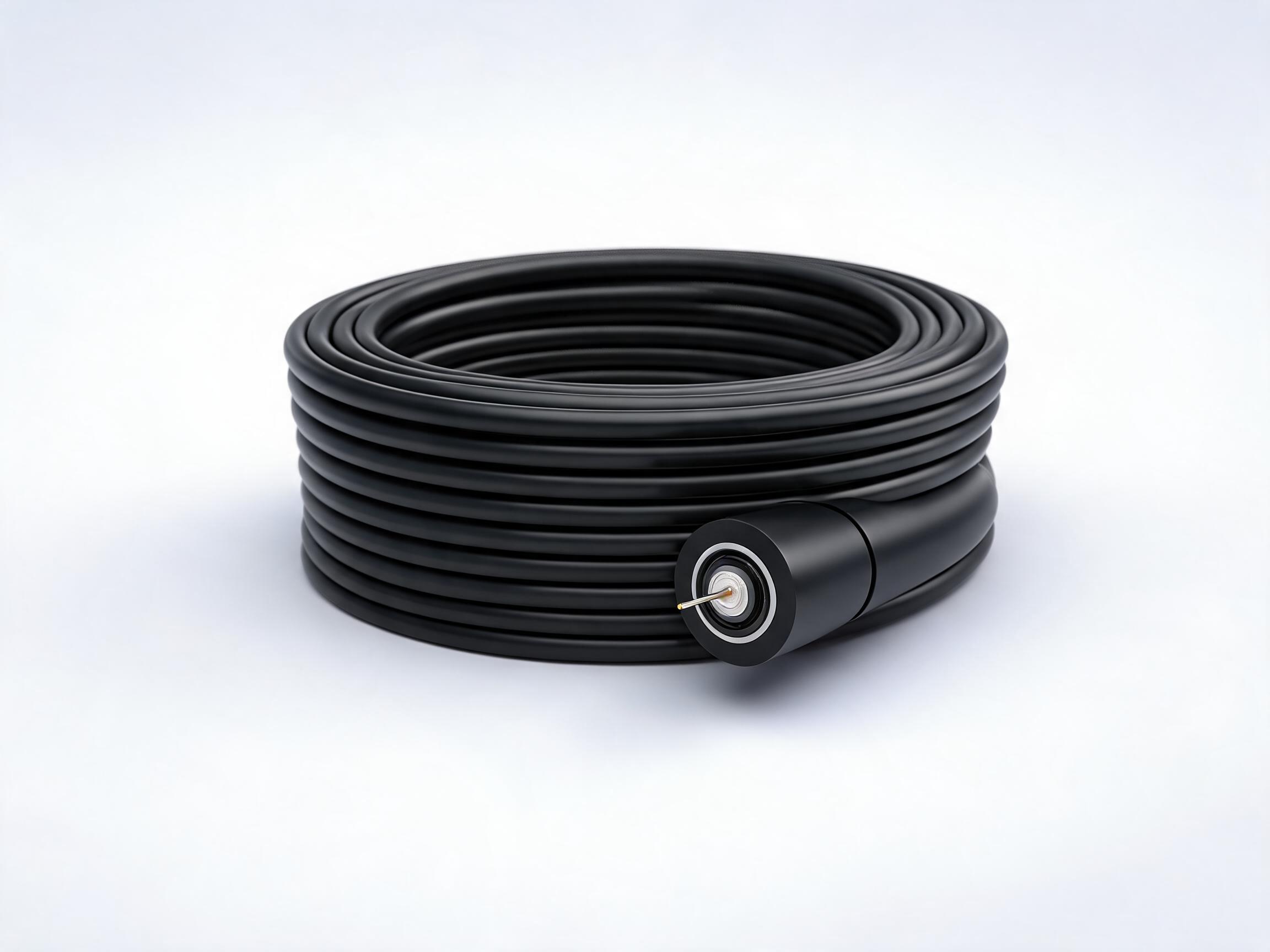
Product documentation is where traceability begins, and it must be organized per reel, not per project. Two reels of nominally identical cable can come from different production batches with slightly different attenuation statistics; if a span underperforms a year later, batch-level records are how you determine whether the issue is isolated or systematic.
For every reel delivered, the handover package should include the following, which you can cross-check against the physical reel label during delivery inspection:
| Record | Minimum fields | What you check it against |
|---|---|---|
| Reel label copy | Reel number, cable type/code, fiber count and type, batch number, length, gross/net weight, manufacture date | The physical label on the delivered reel and the printed jacket markings |
| Factory attenuation test report | Attenuation at 1310/1550 nm (and 1625 nm where specified) per fiber, typically in dB/km | The order specification; typical values are subject to the datasheet |
| Certificate of conformance (CoC) | Standards referenced (e.g., IEC 60794 family), batch references, QC sign-off | The certifications you required in the RFQ |
| Product datasheet (revision controlled) | Cable construction, mechanical and environmental parameters, fiber geometry | The revision quoted in your purchase order |
During delivery inspection, verify that the printed sequential meter markings on the jacket are intact and that each reel's length matches its label. Record the reel numbers against the cable sections where they were installed. This single habit—mapping reel number to installed span—is what later lets you say, with evidence, "the failed section came from batch X, and the factory report for that batch shows attenuation within specification," which is the difference between a warranty claim and a vague complaint.
Keep the datasheet revision that governed your order, not just the latest one. Manufacturers refine designs over time, and when a parameter in a handover document differs from what you ordered, the purchase-order revision is your reference point. If you need a refresher on reading these documents critically before you buy, see our guide to reading a fiber optic cable datasheet before you buy.
Labeling and Identification Records
Labels are the visible half of network administration; the records behind them are the invisible half. ANSI/TIA-606, the administration standard for telecommunications infrastructure, requires that every element of the cabling system—cables, ports, panels, pathways, spaces—carry a unique identifier, that each identifier be backed by a record, and that records be linked so any connection can be traced end to end. Even when a project does not formally invoke the standard, its logic is the practical benchmark: if a technician cannot trace a path from an outlet to a panel to a backbone using only labels and records, the administration has failed.
Your handover requirements for labeling should therefore cover both artifacts and records:
- Durable physical labels. Machine-printed, abrasion- and UV-resistant labels on cables at both ends, at every accessible intermediate point, and on all panels and closures. Handwritten tape labels fail long before the cable does.
- A documented identifier scheme. One page defining the format for cable, port, panel, and closure identifiers, so future additions follow the same logic. The scheme should be consistent with the fiber color code conventions used on site; if you need a primer, see our guide to the fiber optic cable color code.
- The label register. A table listing every identifier with the record fields behind it: cable type, termination points, length, and installation date. This register is the deliverable that turns labels into administration.
- Connector and polish records. For every panel and adapter position, the connector type and polish (UPC or APC). Mismatched polish types are a silent performance killer—pairing an APC patch cord into a UPC adapter path adds avoidable loss and reflections—so the records should make the intended pairing explicit at every position.
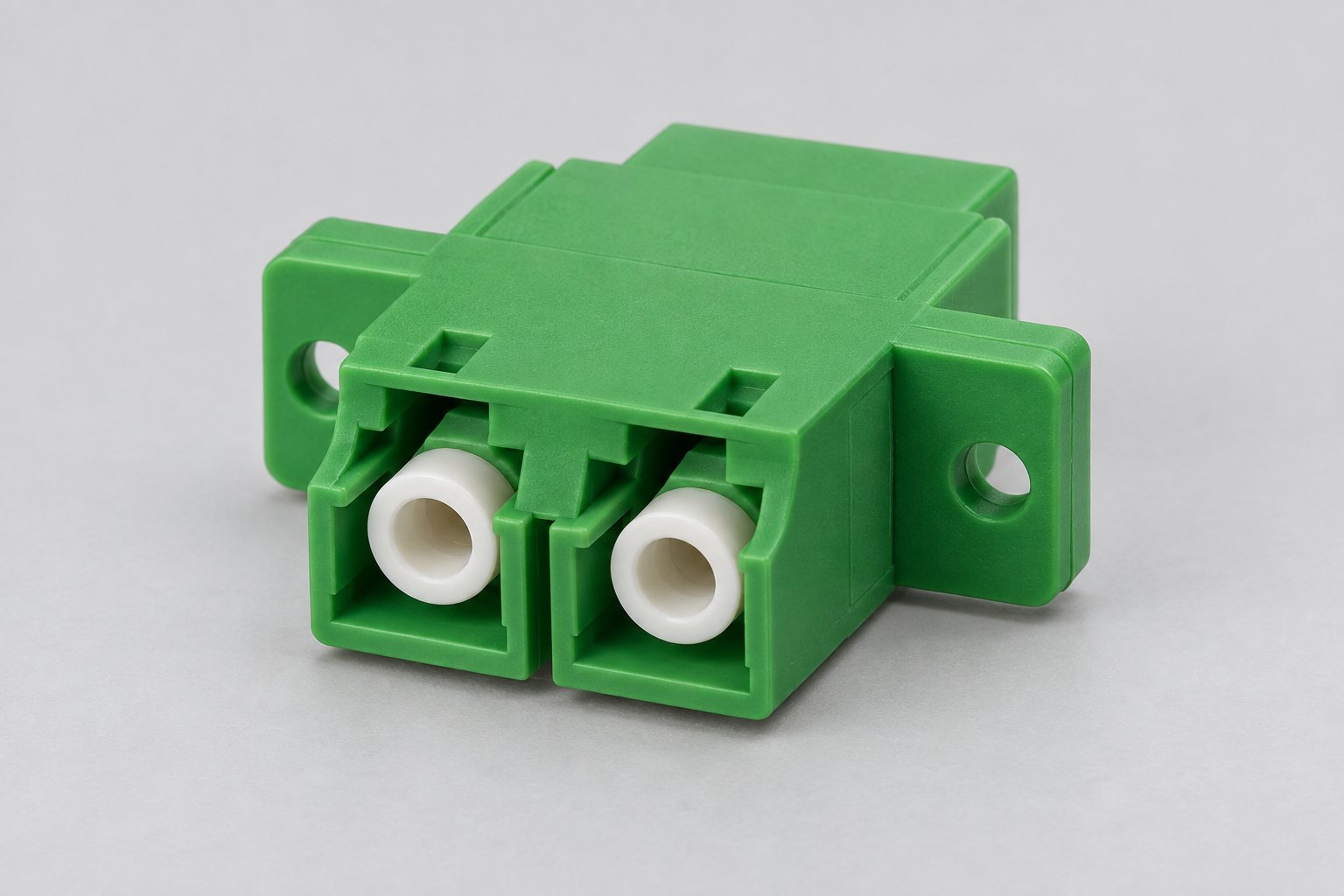
One more practical requirement: ask for photo documentation of key positions—patch panels fully populated and labeled, closures opened showing splice trays, cabinet layouts. Photos cost minutes to produce and resolve endless "which port was it?" conversations later. A structured photo set (one per panel, one per closure, plus overall rack views) is now standard practice on well-run data center projects and costs almost nothing on any project.
Test Records: Insertion Loss, OTDR, and End-Face Inspection
Test records are the heart of the acceptance package, and they deserve the most scrutiny because they are the most commonly faked-by-omission deliverable: real instruments, rushed methods, no context. A row of passing numbers with no reference method, wavelength, direction, or trace file is not an acceptance record.
ISO/IEC 14763-3, which governs testing of installed optical fibre cabling, is explicit that test equipment, reference measurements, and results must be documented, including the test cords and adapters used, so results can be reproduced. Use that logic to structure what you require per link:
| Record element | What to require | Why it matters |
|---|---|---|
| Test method and reference | Method A/B/C per ISO/IEC 14763-3 or the project-specified equivalent; reference measurement date | Loss results are only meaningful relative to the reference method |
| Wavelengths | 1310 and 1550 nm for single mode; 850 and 1300 nm for multimode (plus 1625 nm where monitoring is planned) | A link can pass at one wavelength and fail at another |
| Bi-directional results | Both directions for OTDR on outside plant spans | Splice loss readings differ by direction; single-direction readings hide events |
| OTDR trace files | Native instrument files (not screenshots) plus event tables | Native files allow independent re-analysis and become the maintenance baseline |
| Instrument calibration and settings | Calibration certificate references, pulse width, range, test cord types | Settings change what an OTDR can and cannot see |
| End-face inspection | Pass/fail per connector, inspected before mating, per IEC 61300-3-35 methodology | Contamination is the leading cause of field link problems |
Two practices separate a defensible acceptance package from a folder of PDFs. First, require the results to be compared against a calculated loss budget for each link, not against a vague "it looks fine" threshold: fiber attenuation (typical values, subject to the datasheet) plus connector and splice losses should be summed, and measured results should sit below the budget with reasonable margin. Our guide to calculating a fiber optic link loss budget shows how this is done, and our walkthrough of testing a fiber optic link with a light source and power meter covers the insertion loss method itself. Second, require the native OTDR files, not just summary tables; the trace you accept at handover becomes the baseline your maintenance team compares every future measurement against. For the acceptance workflow in detail, see our guide to using an OTDR to accept a new fiber optic cable installation.
End-face inspection deserves its own line item precisely because it is so often skipped. The IEC 61300-3-35 methodology—inspect first, clean only when necessary, re-inspect after cleaning—takes seconds per connector and prevents the majority of "mystery loss" tickets in the first year. The handover record should state that every connector was inspected and clean before mating, and flag any connector that needed multiple cleaning cycles.
Splicing Records and Closure Documentation
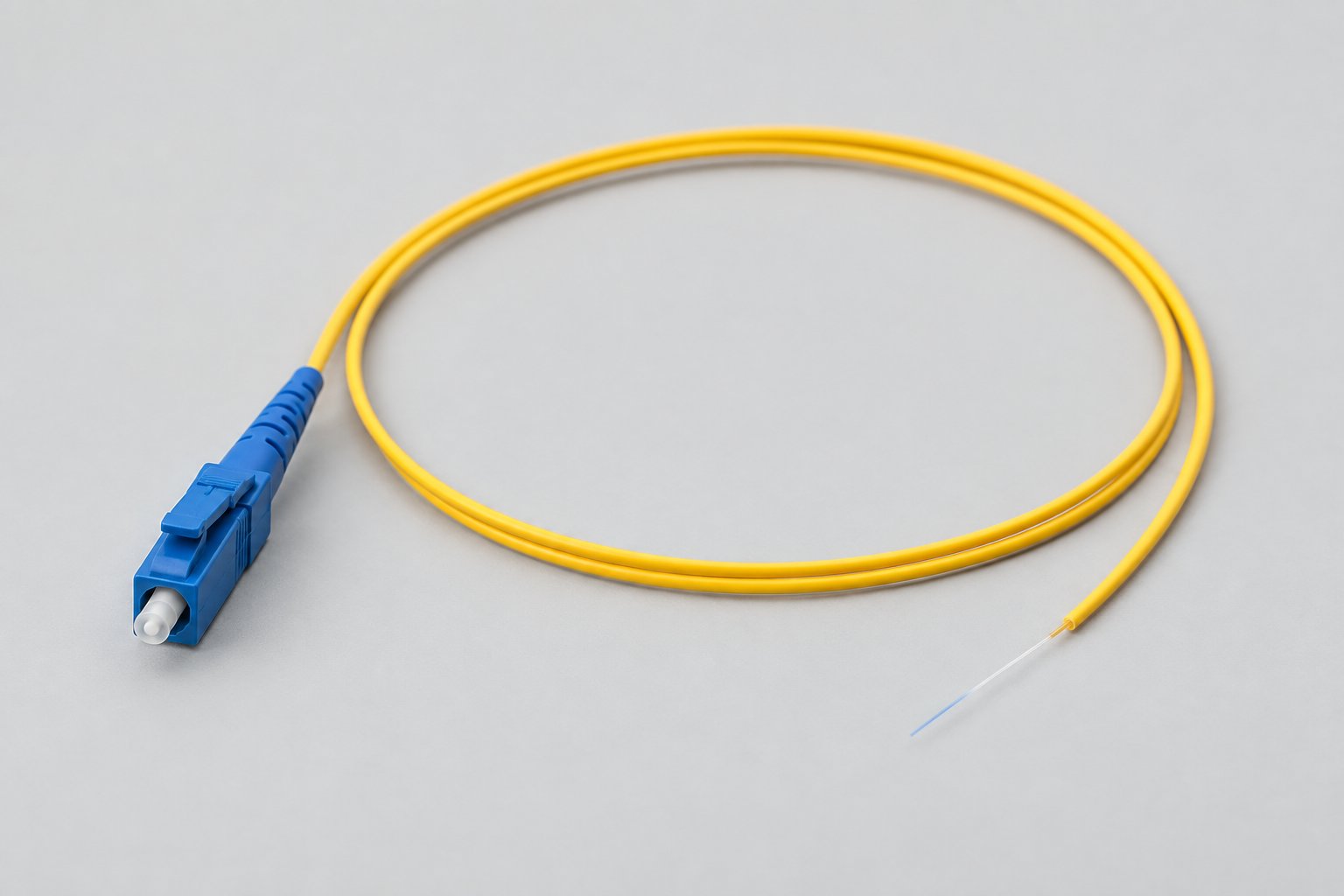
Every splice is a permanent decision buried inside a closure, and the only way anyone can service it later is through the records. The splicing documentation for each closure should include:
- Closure identity and location, cross-referenced to the as-built drawing and the label on the closure itself.
- Splice schedule per tray: incoming fiber (cable ID and fiber number) fused to outgoing fiber or pigtail, with the recorded splice loss from the fusion machine or the OTDR event table.
- Pigtail and fan-out records: the connector type, fiber type, and length of each pigtail used, so a damaged pigtail can be replaced with the right part without guesswork.
- Slack storage description: where slack loops are stored and roughly how much slack exists, which determines whether a future repair can be made without re-pulling cable.
- Closure sealing details: gasket and entry configuration as installed, plus re-entry notes if the closure was opened more than once.
Cross-check these records against the OTDR event table: every splice event in the trace should correspond to a splice in the schedule at a plausible location, and vice versa. Gaps between the two are one of the most reliable indicators of rushed work. Typical splice losses for fusion-spliced single mode joints are commonly in the 0.05–0.10 dB range (typical values; acceptance thresholds and individual results are subject to the project specification and the datasheet), so any recorded event dramatically above the project threshold should already have been remediated before handover, not explained afterward.
If the project used pre-terminated assemblies instead of field splices, the documentation obligation does not disappear—it shifts. You still need the module-to-fiber mapping, polarity method (A, B, or C for MPO trunks), and test records per channel, because a polarity mismatch is the most common cause of failed high-count trunks at turn-up. For the panel-level organization that ties all of this together, our guide to planning an optical distribution frame (ODF) and rack termination covers how fiber assignments should be structured from the start.
The Handover Meeting, Punch List, and Exception Log
Documentation is finalized in a structured handover meeting, not in a corridor conversation. The meeting's job is to walk through the package item by item, verify completeness, and convert every open item into a tracked punch list entry with an owner and a due date. A handover without a punch list is a handover where someone is about to discover problems alone.
Structure the meeting around the deliverables, in this order:
- Document completeness check against the contract deliverables list (the table earlier in this article makes a good agenda).
- Spot verification: pick a sample of links and verify that label → schedule → test record → OTDR trace all agree. Ten minutes of sampling exposes systemic sloppiness fast.
- Physical walk-through of key sites: cabinets match photos, closures are labeled, slack is stowed, and the installed hardware matches the as-builts.
- Punch list formation: every missing label, unexplained event, or absent record becomes a numbered item with an owner and deadline.
- Acceptance sign-off criteria: define in advance whether acceptance is withheld until the punch list is clear or granted with a documented retention (e.g., a payment hold against specific items). Both are legitimate; ambiguity is not.
The exception log matters as much as the passing results. A professional contractor records every anomaly found during installation—a crushed duct repaired with a reroute, a splice re-done after a high first reading, a connector replaced after failing inspection—and presents it with the corrective action taken. Honest exceptions build trust; a package with zero exceptions on a 200-span project usually means exceptions were not recorded, not that they did not occur.
Warranty, Spare Parts, and Post-Handover Support
The handover package should close out the commercial terms with the same rigor as the technical ones. Three documents belong here:
1. Warranty documentation. The warranty statement should be unambiguous about what is covered, by whom, and from when. At Nexora, for example, fiber optic cable and patch cord products carry a warranty of 12 months from the shipment date, and we state that plainly in every quotation and delivery document so buyers can align their project schedules with the coverage window. Note the practical implication: on long projects, cable shipped early for phased installation consumes warranty time in storage, which makes correct warehouse storage (see our guide on storing fiber optic cable in your warehouse) and timely installation both part of warranty stewardship. What the warranty covers in detail—and what it reasonably does not—is explained in our article on what a 12-month warranty really covers for fiber optic buyers.
2. Spare parts register. If the contract included spare cable, patch cords, pigtails, or closures, the register should list each spare with its quantity, batch/serial numbers, and storage location. Spares without records degrade into unidentifiable inventory; a spare reel whose batch is documented can be deployed with confidence because its factory test report is already on file. The register should also note the storage conditions (vertical drum storage on racks, temperature range) so the spares remain serviceable.
3. Support and escalation contacts. Names, roles, and channels for technical support from both the manufacturer and the contractor during the defect liability period. When a link fails at 2 a.m., the difference between a 20-minute and a 20-hour response is often whether the escalation path was written down at handover.
Buyers should also ask, during the handover meeting, for the supplier's position on post-warranty support: can they still supply matching cable and components if an extension is built two years later? Manufacturers with stable product lines and long-term production runs can, and that continuity is worth having in writing—especially for outdoor cable designs where jacket color, print legend, and construction details should match across orders. For how we structure this on the manufacturing side, see our overview of choosing a fiber optic cable manufacturer for long-term B2B supply.
Common Documentation Gaps and How to Catch Them
Across projects, the same documentation gaps recur. Knowing them in advance lets you check for them deliberately instead of discovering them during the first outage:
| Gap | Typical symptom | How to catch it at handover |
|---|---|---|
| Test records without native OTDR files | Summary PDFs only; traces "available on request" | Require native files in the contract; sample-check five traces against event tables |
| Single-direction OTDR only | One trace per span, no reverse direction | Specify bi-directional testing for outside plant spans |
| Labels without a register | Physical labels exist, no linked records | Spot-check: pick three labels and ask for their records live |
| As-builts not updated after changes | Field crew recalls reroutes; drawings do not show them | Compare drawing revision dates against the change log |
| Reel numbers not mapped to spans | Batch traceability broken once reels are cut | Require the reel-to-span mapping as a named deliverable |
| Splice schedule does not match OTDR events | Event counts or locations disagree | Cross-check one closure end to end before sign-off |
| End-face inspection skipped | First-year tickets with "mystery loss" | Require inspection records per IEC 61300-3-35 methodology |
| Warranty start date ambiguous | Disputes over whether coverage expired | Insist the warranty statement names shipment date as the start |
None of these gaps is expensive to close when defined in advance; all of them are expensive to close after the crew has demobilized. That asymmetry is the strongest argument for making the documentation package a contract deliverable with named acceptance criteria.
Writing Documentation Requirements into Your RFQ and Contract
Requirements that live only in your head do not survive contact with a tight schedule. To make the handover package real, move it up the procurement timeline:
- In the RFQ, list the documentation deliverables as a priced, evaluated item. Ask bidders to confirm each line explicitly ("we will deliver native OTDR files for every span, bi-directional, at 1310/1550 nm"). A one-line "documentation per industry standards" clause is unenforceable; a table is not.
- In the contract, attach the deliverables list as a schedule and tie a defined portion of payment to its completion. Buyers who tie, say, final payment milestones to the documentation package see completion rates change immediately.
- In the kick-off meeting, agree the identifier scheme, the file formats, and the reporting templates before installation starts. Templates agreed at the end produce formats nobody can merge.
- During installation, require monthly documentation snapshots (updated schedules, test results to date) rather than a single dump at the end. Progressive delivery also tells you early whether documentation discipline is real.
The same discipline applies on the supply side. When you request a quotation, state the documentation you expect with the cable: reel labels with batch traceability, factory attenuation reports per reel, certificate of conformance, and revision-controlled datasheets. Our article on what to include in a fiber optic cable RFQ gives you the full request checklist, and the export-focused guide to packing, shipping, and delivery inspection shows how reel-level checks fit into the arrival process.
Finally, align the documentation requirements with the installation crew's competence. Records are produced by people, and crews trained to a documented method produce records that match one. Our article on fiber optic installation crew training and certification explains what to look for when you evaluate the team behind the paperwork.
Digital Handover: Asset Registers and Cable Management Software
Paper and PDF deliverables satisfy the contract, but the most useful handover packages today are delivered as data. An asset register—a structured file (a spreadsheet export at minimum, or a database format if the project supports it) that lists every cable, panel, port, closure, and identifier together with its record fields—turns a static document set into something your operations tools can actually consume. If you operate cable management software or a GIS platform, specify the import format at kick-off and require the contractor to deliver against it, not against whatever the site laptop produces by default.
Three practical rules keep a digital handover honest. First, one identifier format everywhere: the IDs in the asset register, on the physical labels, in the test records, and on the drawings must match character for character, because any mismatch breaks the traceability chain the register exists to provide. Second, a single master copy with controlled versions—distributed spreadsheets mutate silently, and within a year nobody knows which file is current; the register should live in one governed location with named owners and a defined change procedure. Third, structured formats over screenshots: a table delivered as an image is a table nobody can filter, sort, or merge into future extensions.
The payoff compounds over the life of the network. With a maintained digital register, adding a span means appending rows; troubleshooting starts with a filtered query instead of a drawer of binders; and every future contractor inherits an accurate picture instead of re-surveying your plant at your expense. If a bidder has never delivered a structured asset register before, ask for a sample from a previous project—it takes five minutes to judge whether their digital output will help you or slow you down.
Handover on Phased and Multi-Site Projects
Long and multi-site projects need one extra layer of documentation discipline, because the risks compound with every phase. If each phase is accepted with its own package and nothing consolidates them, you end up with fourteen versions of the schedule and no single answer to the question "what is actually installed across the whole network?"
Require two things on these projects. First, a master documentation register that starts at phase one and is extended, not rewritten, at each acceptance: every cable section, closure, and identifier is added as commissioned, tagged with the phase that delivered it. Second, per-phase acceptance with progressive baselines: test records and OTDR traces are delivered and baselined phase by phase, so a defect discovered in phase three is compared against the phase-two baseline rather than against a single year-one snapshot that no longer matches the network.
Two cross-phase hazards deserve explicit contract language. Batch continuity: when additional reels are ordered for later phases, the records must link the new batches into the same project structure, so traceability survives across procurement events; do not let phase three's cable arrive as an undocumented island. Numbering stability: identifiers assigned in phase one must never be reused or reformatted later, because a reused ID silently corrupts the register. On the supply side, this is also where a manufacturer's long-term production consistency matters—matching jacket print, construction, and datasheet revisions across orders placed months apart is what keeps cross-phase records comparable. Our guide to choosing a fiber optic cable manufacturer for long-term B2B supply covers what to verify before committing to a multi-year supply arrangement.
A Practical Handover Checklist
Use the condensed checklist below as your acceptance agenda. Each line is either present, complete, and cross-referenced—or it is a punch list item.
- Product datasheets (order-revision) for every cable and component type in the project.
- Factory test reports and certificate of conformance for every reel, with batch numbers.
- Reel-to-span mapping linking every installed section to its production batch.
- As-built route drawings, dated and version-controlled, including all field changes.
- Cable and fiber schedules with fiber numbering consistent with labels and test records.
- Identifier scheme document plus the full label register per ANSI/TIA-606 logic.
- Insertion loss records per link: method, wavelengths, direction, reference date, instruments.
- Native OTDR trace files and event tables, bi-directional on outside plant spans.
- End-face inspection records per connector, per IEC 61300-3-35 methodology.
- Splicing records per closure: schedule, losses, pigtails, slack storage, sealing details.
- Photo documentation of panels, closures, and cabinet layouts.
- Exception log with corrective actions for every recorded anomaly.
- Punch list with owners and deadlines, and agreed acceptance/retention criteria.
- Warranty statement with coverage terms and start date (shipment date), plus spare parts register and escalation contacts.
- A digital asset register (editable master file) consolidating every identifier, schedule row, and record link.
- For phased projects: a master documentation register extended at each phase acceptance, plus per-phase test baselines.
A package that clears this list gives your operations team everything they need to run the network: a map that is true, records that trace, baselines that compare, and commercial terms that hold.
Frequently Asked Questions
Who should keep the original handover documents—the contractor or the network owner?
The network owner should hold the originals (or the authoritative digital copies), with the contractor retaining working copies. The owner lives with the network; the contractor's involvement typically ends at the defect liability period. Specify in the contract that delivery means delivery to the owner in editable formats, not to the owner's consultant "for review."
Are PDFs acceptable, or do we need editable files?
PDFs are fine for signed certificates and test summaries, but schedules and drawings should also be delivered in editable formats (spreadsheet, CAD, or GIS). You will extend, merge, and re-sort these records for the life of the network; a flat PDF forces manual re-entry every time.
How long should handover records be retained?
Retain them for the design life of the cabling system, which for outdoor fiber optic cable is measured in decades. Attenuation comparisons against the acceptance baseline remain useful for 20+ years, and batch traceability matters whenever a systematic defect question arises. Digital storage makes the marginal cost of retention trivial.
What if the contractor says testing "all passed" but will not share trace files?
Treat it as a red flag, not a technicality. Native trace files are the only independent evidence that the tests were performed as claimed. Make delivery of native files an explicit payment condition; contractors with genuine results release them without hesitation.
Does the handover documentation differ for FTTH access projects?
The structure is the same, with more endpoints: per-subscriber drop records, ONT locations, and splitter allocation tables join the list. The core logic—every fiber traceable from the OLT port to the subscriber outlet through linked labels and records—applies at any scale.
Can the supplier's factory reports replace on-site acceptance testing?
No. Factory reports characterize the cable as manufactured; site acceptance characterizes the link as installed, including every splice, connector, and bend in between. Both are needed, and the handover package should contain both, cross-referenced by reel and span.
Conclusion: Buy the Network, and Buy Its Memory
A fiber optic network is physical infrastructure plus the information that makes it operable. Buyers who specify only the physical half pay twice: once at handover, and again every time the missing records slow a repair, stall an upgrade, or weaken a claim. The fix costs little—a documentation deliverables table in the RFQ, a checklist at acceptance, and the discipline to withhold sign-off until the package is complete.
When you evaluate suppliers and contractors, use their documentation behavior as a filter. The manufacturer who ships reel-labeled, batch-documented cable with factory test reports is telling you how their factory runs. The contractor who delivers native OTDR files and a linked label register is telling you how their project runs. Choose the partners who write things down—and hold the handover package to the standard in this article.
Planning a fiber optic cable project and want the supply side of the documentation equation handled from day one? Contact the Nexora team for a quotation that includes reel-level test documentation, batch traceability, and warranty terms stated plainly—12 months from the shipment date—so your handover package is complete from the reel outward.