
Nexora
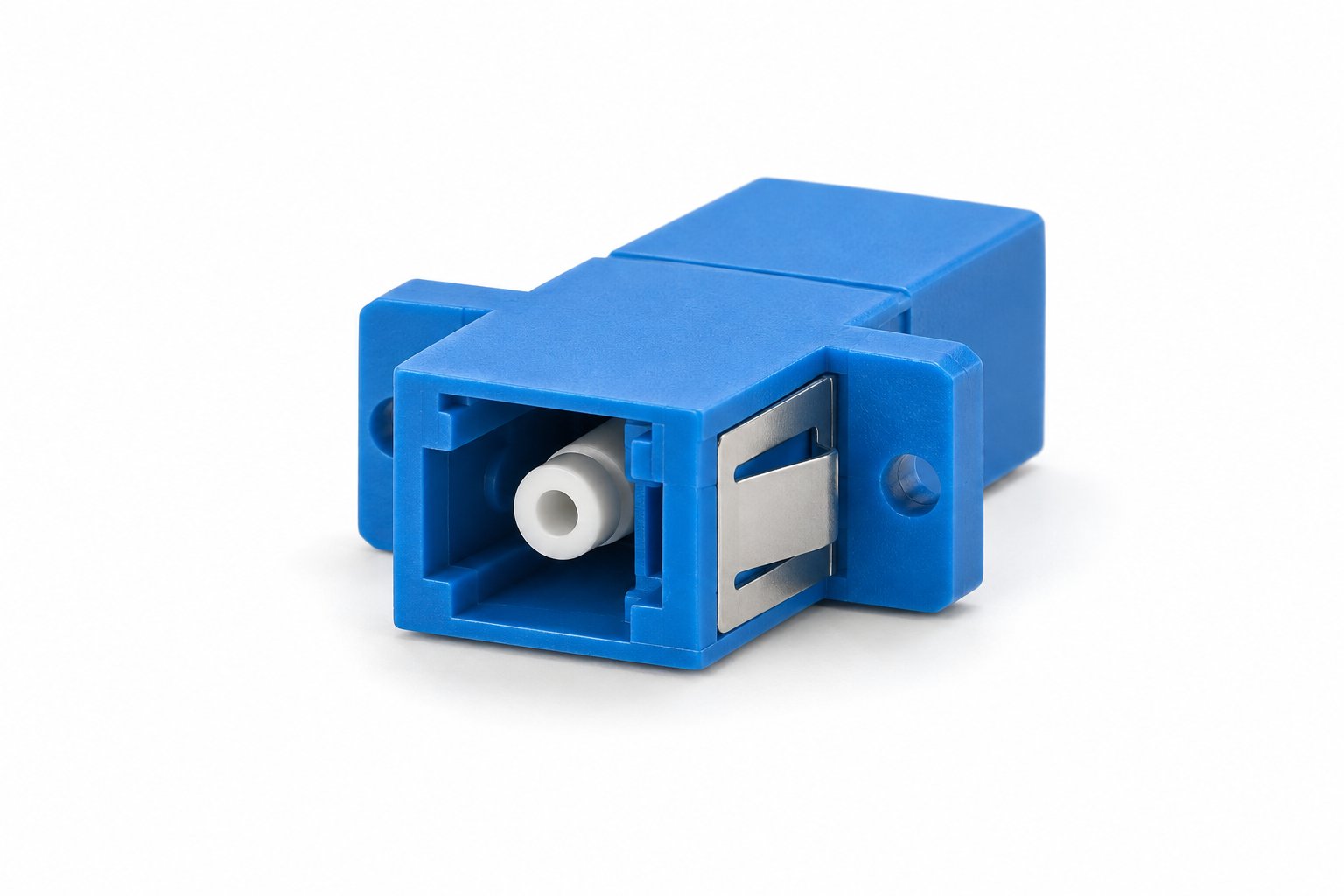
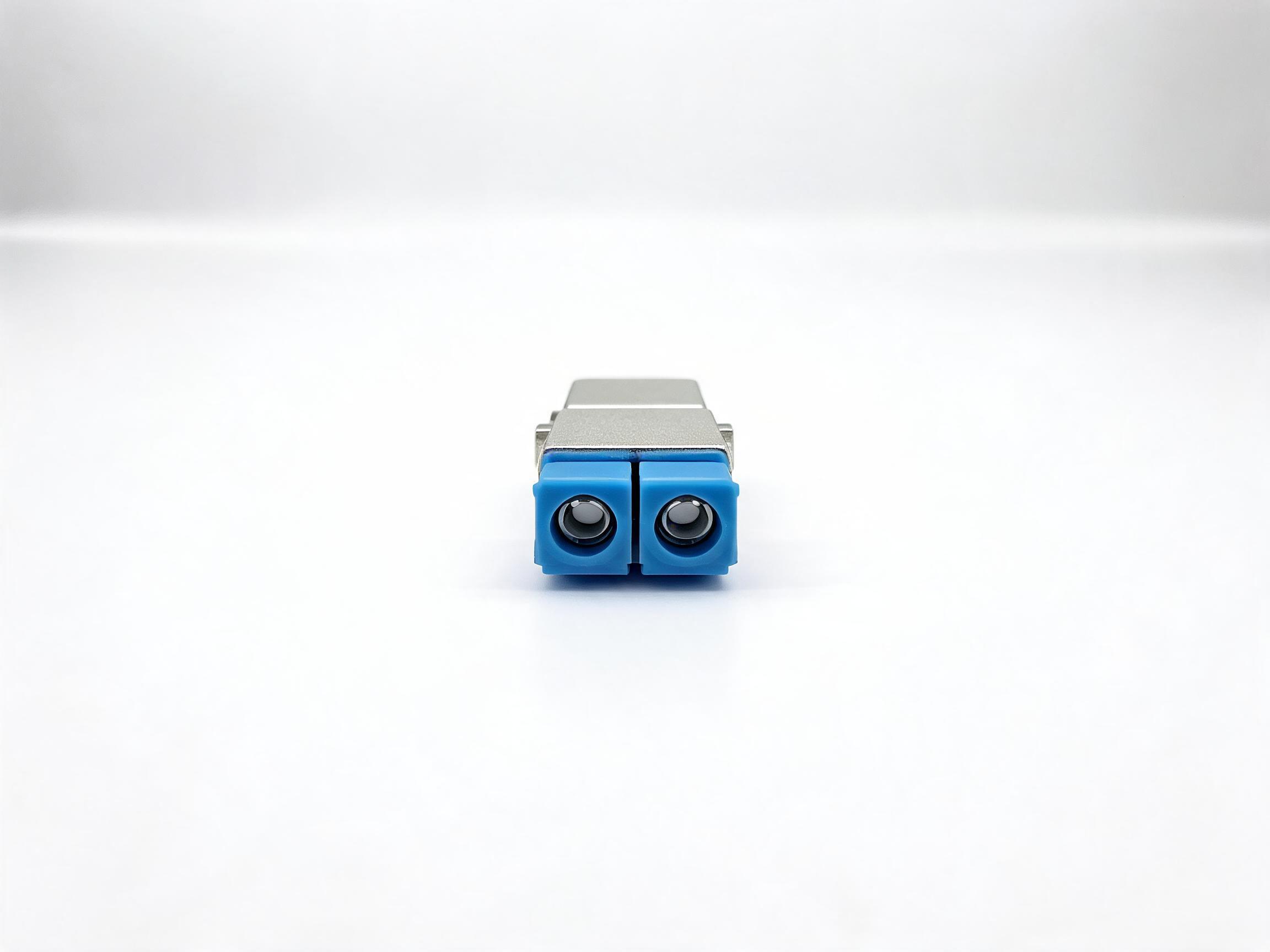
SC/UPC Single Mode Fiber Optic Adapter
SC/UPC single mode fiber optic adapter for precise, low-loss mating of UPC connectors in FTTH and access networks.
SC/UPC
Product Notes
- UPC flat end face
- Precise alignment sleeve
- Low insertion loss
- Simplex and duplex options
Specifications
Fiber type, connector, test data, packaging proof and sample-kit notes are kept in the same quote sheet.
| Connector type | SC/UPC |
|---|---|
| Mode | Single mode |
| Type | Simplex or duplex |
| Flange | Standard or custom |
| Application | FTTH, patch panels, ODF |
Application Notes
Why the SC/UPC adapter is the quiet bottleneck in your FTTH link
Every fiber connection in an FTTH or access network passes through an adapter. The SC/UPC single mode adapter is the small component that aligns two connector ferrules so light crosses the joint with minimal loss. When the alignment sleeve is off-center, the ferrule bore is rough, or the housing flexes under repeated plugging, the same cable that tested clean at the factory starts showing intermittent loss at the patch panel. Buyers who treat the fiber optic adapter as a commodity often discover the cost only after a link that should be stable begins to drift.
This page explains what the SC/UPC adapter actually controls in your network, how to choose between simplex and duplex, and what to confirm before you order. It is written for procurement and network engineers who need a component that behaves predictably across a large deployment, not a one-off lab sample.
What the SC/UPC adapter does in the link
The adapter is a passive coupler. It holds two SC connectors face to face, with a precision alignment sleeve that keeps the two ferrules concentric. For single mode fiber, where the core is only a few microns wide, that concentricity decides how much light crosses the joint. A flat UPC end face on the connector is designed to sit flush inside the sleeve, so the two polished surfaces meet squarely.
In practice the adapter does three jobs at once:
- It aligns the two ferrules so the cores line up.
- It holds the connectors firmly so the joint does not move under vibration or cable strain.
- It protects the polished end faces from dust and damage when connectors are mated and unmated.
Because the adapter is the point where two connectors meet, its dimensional consistency matters more than its price. A sleeve that is a few microns out of tolerance shows up as higher loss on that one joint, and in a network with hundreds of joints the small errors add up.
UPC end face: what it means for your network
UPC stands for Ultra Physical Contact. The connector ferrule is polished to a flat, slightly domed surface that presses firmly against the mating ferrule. This is the standard choice for most single mode data and access applications, and it is the end face this SC/UPC adapter is built to accept.
The practical point for a buyer is matching: an adapter does not change the polish of the connectors you plug into it. If your patch cords and pigtails are UPC, this SC/UPC single mode adapter is the correct match. If your network uses APC (angled) connectors, you need an APC adapter instead, because the angled end faces must align with each other. Mixing the two is a common field error that produces high loss and is hard to trace.
Simplex or duplex: choose before you order
This adapter is available as simplex or duplex. The choice depends on how your links are built:
- Simplex carries one fiber per adapter. Use it for single-fiber links, patch panels where each port is terminated individually, and ODF layouts that count ports one by one.
- Duplex carries two fibers side by side in one housing. Use it where transmit and receive run as a pair, which is common in transceiver-based links and in patch panels that manage pairs together.
Confirm the type with your panel layout before ordering. A duplex adapter cannot be split into two simplex ports, so choosing the wrong one means reworking the panel face.
Flange options and panel fit
The adapter is offered with a standard or custom flange. The flange is the mounting feature that locks the adapter into the panel or ODF cutout. Standard flanges fit common panel openings; custom flanges are used when your panel uses a non-standard cutout or a specific mounting style.
Before you order, confirm the panel cutout dimensions and the flange style your existing hardware expects. This is a small detail that causes the most rework, because an adapter that does not clip into the panel cannot be used even if the optical performance is correct.
Where the SC/UPC adapter is used
This single mode adapter is designed for FTTH and access network applications, and it appears in three main places:
- Patch panels where distribution cables terminate and cross-connect to drop cables.
- ODF (optical distribution frames) where feeder and distribution fibers are managed and patched.
- FTTH termination points where the network transitions from distribution to the subscriber drop.
In all three, the adapter is the fixed point that connectors plug into repeatedly. Its job is to stay dimensionally stable across many mating cycles so the link loss does not creep up over time.
How we build and check the adapter
The adapter is produced in a facility that has been operating since 2014, with a 16,000 m² plant, more than 180 employees and 12 production lines. The plant runs a quality team of more than 30 QC staff, and the annual capacity is around 2.8 million units across the product range. We support OEM and ODM projects and ship to customers in more than 50 countries.
These are company-level facts about our manufacturing base. They describe the environment the adapter is made in, not a product-specific certification. If you need a specific test report or certificate for a particular order, confirm the requirement with our sales team so we can scope it correctly.
What to confirm before you order
To get a quote that matches your deployment, have these details ready:
- Simplex or duplex housing.
- Standard or custom flange, and the panel cutout dimensions.
- Estimated quantity, so we can confirm packaging and lead time for your volume.
- Whether you need a sample for fit testing before a full order.
Providing these up front avoids a quote that looks right on paper but does not fit your panel.
Frequently asked questions
Is this adapter for single mode or multimode fiber?
This SC/UPC adapter is for single mode fiber. The alignment sleeve and bore are sized for single mode connectors. If your network is multimode, choose a multimode adapter instead.
Can I use this adapter with APC connectors?
No. This adapter is built for UPC flat end faces. APC connectors use an angled end face and need an APC adapter. Using the wrong one produces high loss and can damage the polished surfaces.
What is the difference between simplex and duplex?
Simplex holds one fiber; duplex holds two fibers side by side. Choose based on whether your links run single-fiber or paired transmit/receive.
Can the flange be customized?
Yes, the adapter is offered with a standard or custom flange. Confirm the panel cutout and mounting style with our sales team before ordering.
Do you provide samples for fit testing?
We can discuss sample availability for your project. Confirm the quantity and testing requirement with our sales team so we can scope it.
Request product details
Tell us your housing type, flange requirement, panel cutout and estimated quantity, and we will confirm the specification and lead time for your order.
Request product detailsTags
Related Fiber Products
Get A Quote
Send fiber type, connector, quantity, application and packaging requirement. The response can include test data and sample-kit notes.