
Nexora
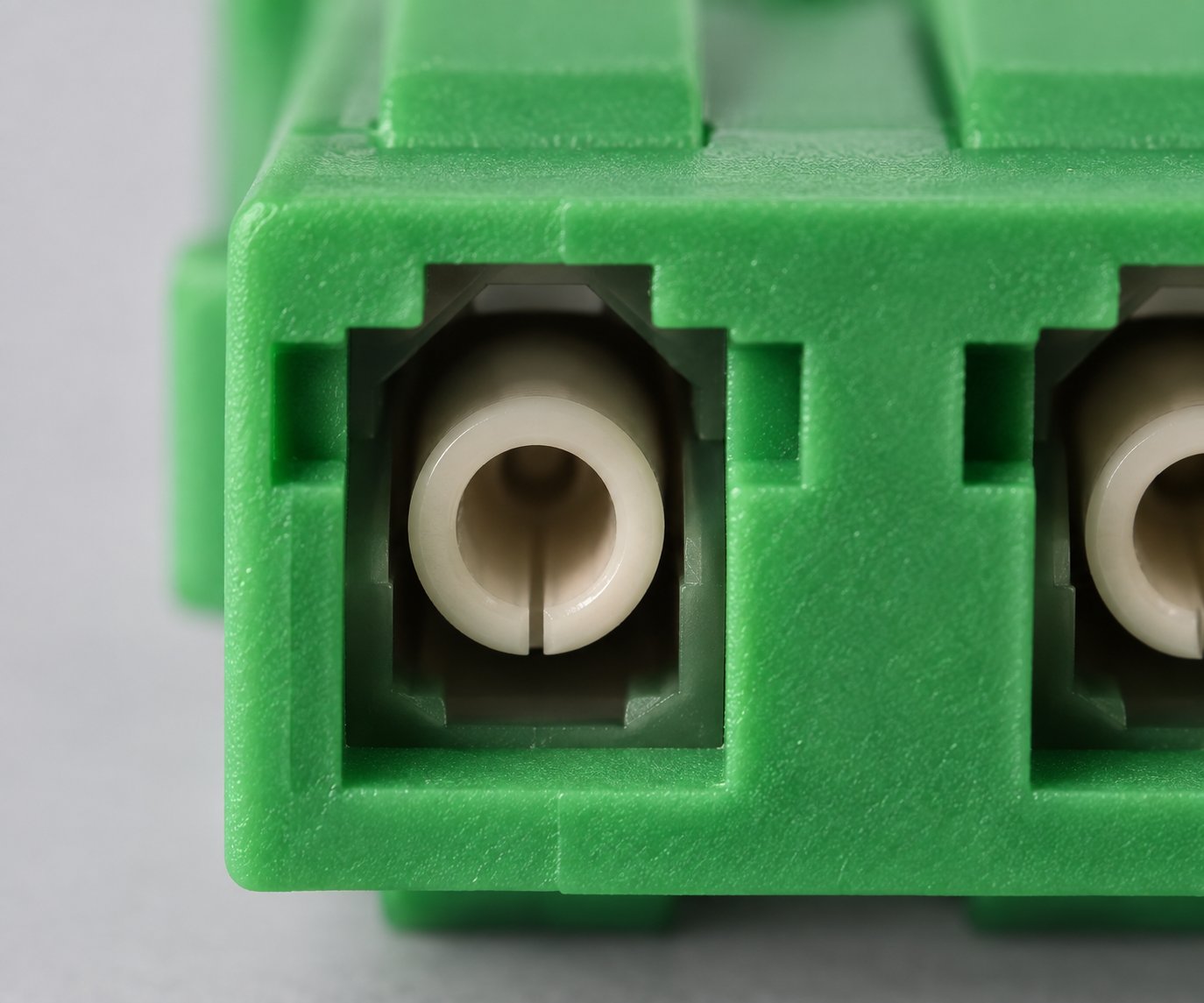
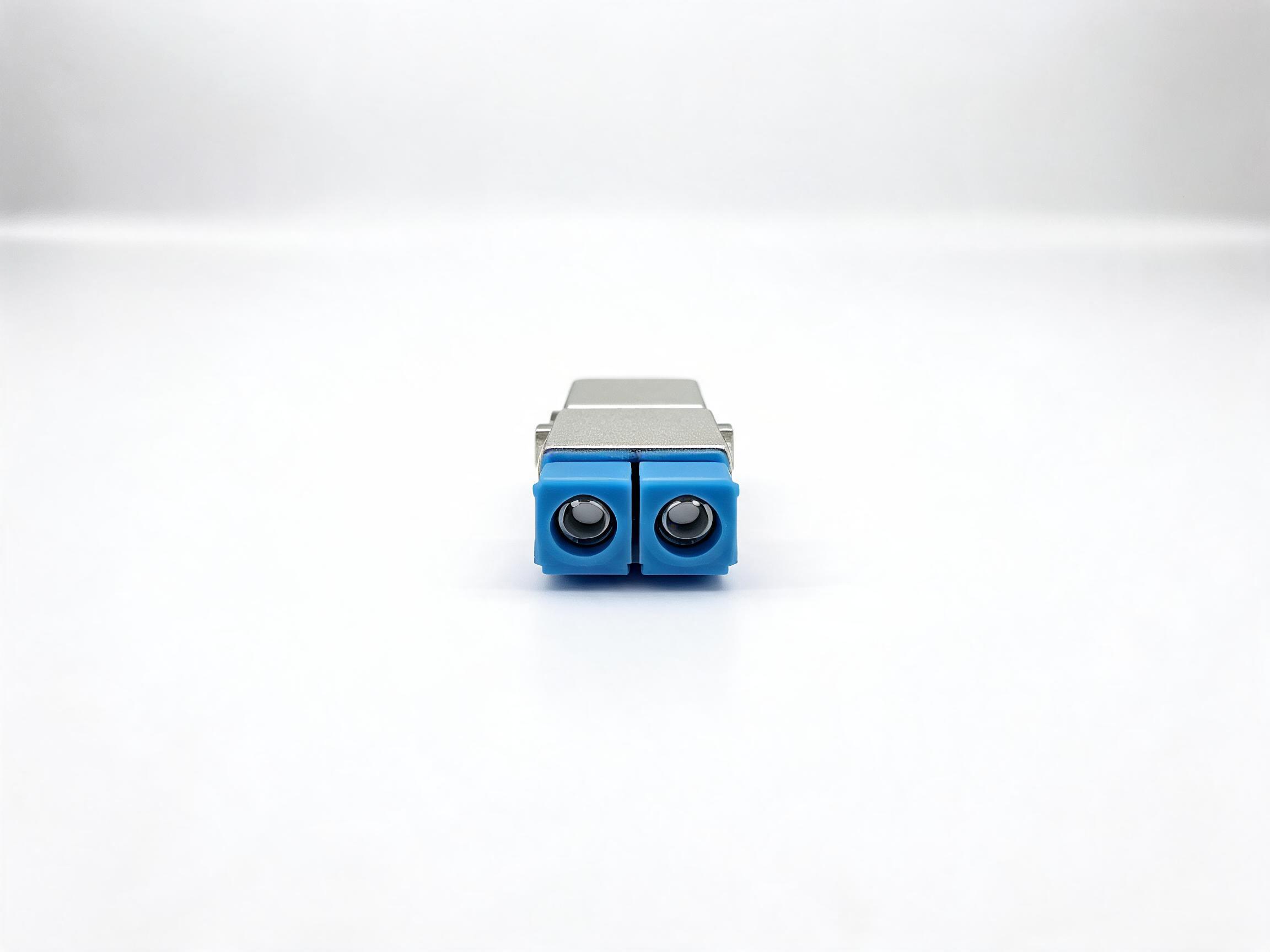
LC/APC Duplex Fiber Optic Adapter
LC/APC duplex fiber optic adapter for high-density data center and access network connections with high return loss.
Connector
LC/APC
Connector type
LC/APC
Application
Data centers, high-density panels, FTTH
Product Notes
- APC 8-degree angled end face
- High return loss
- Compact LC duplex design
- High-density panel ready
Specifications
Fiber type, connector, test data, packaging proof and sample-kit notes are kept in the same quote sheet.
| Connector type | LC/APC |
|---|---|
| Mode | Single mode |
| End face | APC (8-degree angled) |
| Type | Duplex |
| Flange | Standard or custom |
| Application | Data centers, high-density panels, FTTH |
| Insertion loss | ≤ 0.20 dB (typical, mated pair) |
| Return loss | ≥ 60 dB (APC, single mode) |
| Alignment sleeve | Ceramic (zirconia), split type |
| Housing material | Flame-retardant engineering plastic |
| Mating durability | 500 mating cycles |
| Operating temperature | -40 °C to +85 °C |
| MOQ | 1,000 pcs |
| Lead time | 7-15 days after order confirmation |
| Packaging | Anti-static bag, 100 pcs per inner box, export carton |
| Warranty | 12 months from shipment date |
| OEM/ODM | Supported, including custom flange and color |
Application Notes
One failure mode that costs data center teams the most time
The most expensive problem with a duplex adapter is not a hard failure. It is a link that passes a power meter at commissioning and then drifts out of budget weeks later. The usual cause is a ferrule that is not held concentrically: when the alignment sleeve loses its grip or the housing flexes under repeated plugging, the two fiber cores sit slightly off-axis, and the mated pair loses more light than the link budget allowed for.
That drift is hard to find because it is intermittent. A technician re-tests a port, sees an acceptable reading, closes the ticket, and the alarm returns on the next traffic peak. Each return visit costs a truck roll and a maintenance window, and in a high-density panel the suspect port may be one of 48 in a single rack unit, so isolating it means pulling several links offline.
How this LC/APC duplex adapter addresses it
The fix is mechanical, not electrical. This adapter uses a split ceramic (zirconia) alignment sleeve that applies even radial pressure along the full length of both ferrules, so the two cores stay concentric through the mating cycle instead of being held at a single contact point. The sleeve is the part that decides whether a duplex link stays inside its loss budget after the tenth or the five-hundredth insertion.
The APC 8-degree angled end face is the second half of the answer. A flat (UPC) face reflects light straight back toward the transmitter; the angled face directs that reflected component away from the core, which is why an APC mated pair is specified at ≥ 60 dB return loss in single mode. In a duplex link the transmit and receive paths sit in one housing, so both legs share the same alignment quality and the same polish geometry.
Specifications
| Parameter | Value |
|---|---|
| Connector type | LC/APC |
| Mode | Single mode |
| End face | APC (8-degree angled) |
| Configuration | Duplex (two fibers in one housing) |
| Insertion loss | ≤ 0.20 dB (typical, mated pair) |
| Return loss | ≥ 60 dB (APC, single mode) |
| Alignment sleeve | Ceramic (zirconia), split type |
| Housing material | Flame-retardant engineering plastic |
| Mating durability | 500 mating cycles |
| Operating temperature | -40 °C to +85 °C |
| Flange | Standard or custom |
| Application | Data centers, high-density panels, FTTH |
| MOQ | 1,000 pcs |
| Lead time | 7-15 days after order confirmation |
| Packaging | Anti-static bag, 100 pcs per inner box, export carton |
| Warranty | 12 months from shipment date |
Where the LC/APC adapter fits in the network
This adapter is intended for single-mode duplex connections in data centers, high-density panels, and FTTH access networks. In a data center it sits in the patching field where LC duplex jumpers terminate into panels and equipment; in FTTH it sits at the distribution point where the drop cable meets the access network. Both locations ask the same thing of the part: a mating point that holds its geometry across the service life of the rack.
Because the end face is APC, this adapter must be paired with APC connectors. An APC adapter and a UPC connector are not interchangeable; the angled face and the flat face do not mate correctly, and forcing them together risks damage to the ferrule. If your deployment uses UPC connectors, select the UPC version instead, and confirm the polish type of the connectors already installed before ordering.
Choosing the right version
Three decisions determine which version fits your deployment. First, confirm the polish type: this adapter is APC, so it pairs with APC connectors only. Second, confirm the mode: this is a single-mode adapter, used with single-mode fiber and connectors. Third, confirm the flange: standard flanges suit common panel cutouts, while a custom flange is specified when the cutout, mounting hole pattern, or housing color must match an existing deployment.
For a duplex link, the duplex body keeps both fibers in one panel port, which saves one port position per link compared with two simplex adapters and keeps the pair physically together so the two legs are less likely to be crossed during installation. If your panel is laid out for simplex ports, confirm the layout before deciding, because terminating a duplex link there may require two simplex adapters instead.
Installation and maintenance notes
Keep the dust caps on the adapter ports until the connectors are ready to be inserted. A clean ferrule face is the single largest factor in stable loss; a speck of dust on the end face can raise loss far more than the adapter geometry itself. Insert the connector straight in and seat it fully, because a partially seated connector reads as a high-loss or intermittent connection.
Before plugging in a connector, inspect the ferrule end face with a scope if one is available, and clean it with the correct fiber cleaning tool if it is contaminated. Do not reuse a contaminated connector in a clean adapter port: the contamination transfers to the alignment sleeve and affects the next connection as well.
Quality control and manufacturing
Every adapter passes an end-face inspection and an insertion/return loss check before packing, and the ceramic sleeve is checked for concentricity and for freedom from cracks or chips. Nexora operates a 16,000 m² facility with 12 production lines and more than 180 employees, runs 30+ QC staff, supports 500+ OEM/ODM programs, and ships to more than 50 countries. These are company-level facts about the manufacturing and quality-control environment behind this product line; they describe the factory, not a product-specific certification.
Procurement FAQ
- What is the MOQ? 1,000 pcs per order for the standard version. Custom flange or color runs are quoted separately.
- What is the lead time? 7-15 days after order confirmation for standard quantities; custom flange tooling adds time, which is confirmed in the quotation.
- How is it packaged? Anti-static bag, 100 pcs per inner box, then export carton. Custom carton marking is available for OEM orders.
- What payment terms do you accept? T/T and L/C are both accepted; the exact terms are stated in the quotation.
- Can I get a sample before ordering? Yes, samples are available for evaluation; sample and freight terms are confirmed with the quotation.
- Can you print our logo or brand on the product or packaging? Yes, OEM/ODM is supported, including custom flange, housing color, and packaging marking.
- What is the warranty? 12 months from shipment date.
- Is this adapter compatible with UPC connectors? No. The APC angled end face mates with APC connectors only; select the UPC version for UPC connectors.
Request product details
Tell us the polish type (APC), mode (single mode), duplex configuration, flange requirement, and quantity you need. Our team will confirm the correct version and prepare the details for your deployment.
Request product detailsTags
Related Fiber Products
Get A Quote
Send fiber type, connector, quantity, application and packaging requirement. The response can include test data and sample-kit notes.
OEM & Customization
Connector types, fiber counts, cable lengths, jacket materials and packaging can be configured to your project specification.
Technical Support
Our engineering team helps you confirm product selection, installation details and documentation before you place the order.
Quality & Testing
Every order is inspected before shipment, and test data or inspection reports can be provided with the goods on request.