
Nexora
FC/APC Single Mode Fiber Optic Adapter
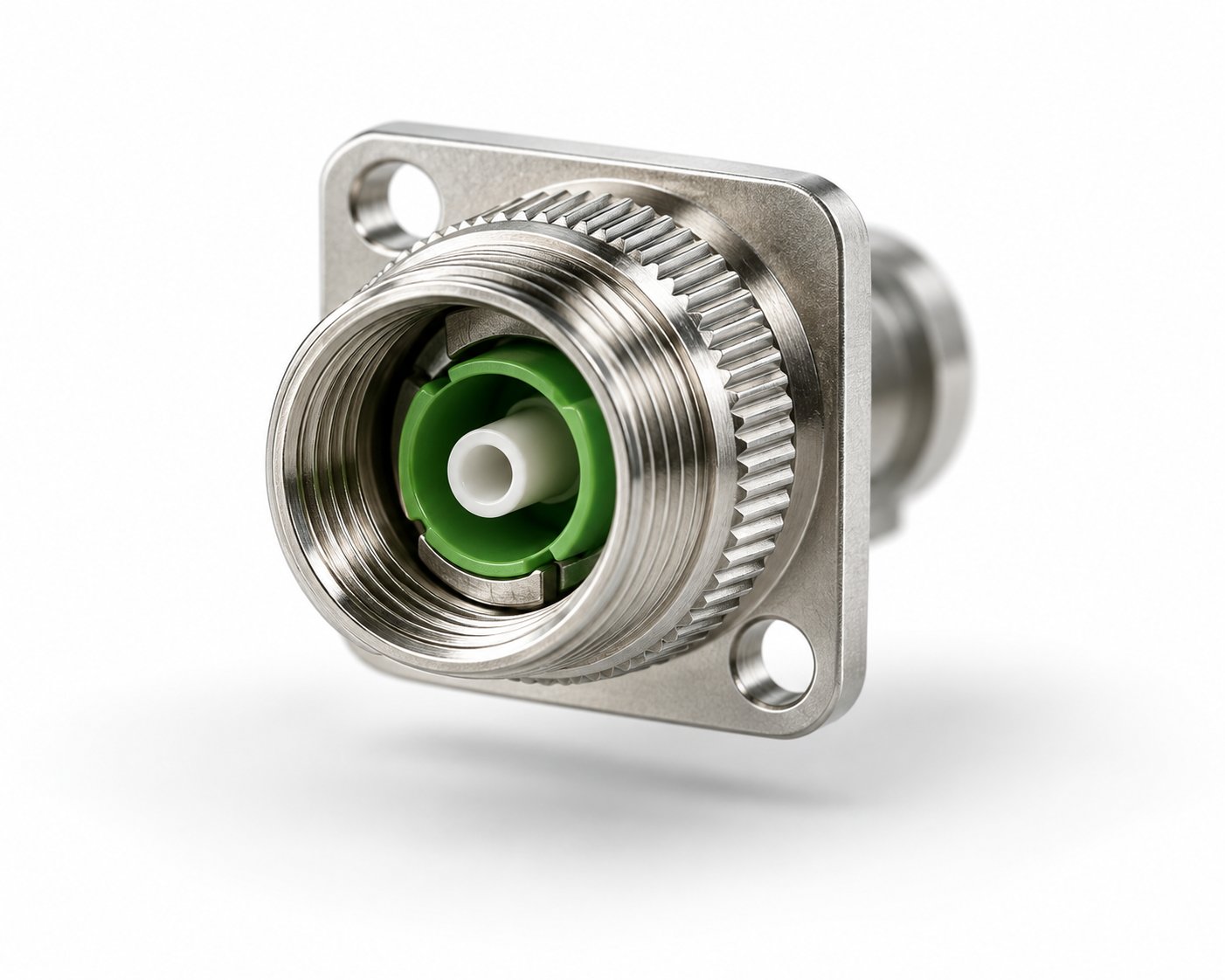
FC/APC single mode fiber optic adapter with threaded locking and an APC angled end face for high-reliability connections.
FC/APC
Product Notes
- FC threaded locking
- APC angled end face
- Vibration-resistant connection
- High return loss
Specifications
Fiber type, connector, test data, packaging proof and sample-kit notes are kept in the same quote sheet.
| Connector type | FC/APC |
|---|---|
| Mode | Single mode |
| Type | Simplex |
| Application | Test equipment, CATV, high-reliability links |
Application Notes
Why the FC/APC adapter matters in high-reliability single-mode links
The FC/APC single mode fiber optic adapter is the mating point where two FC/APC connectors meet inside a patch panel, ODF, or test setup. In single-mode networks that carry long-haul, CATV, or measurement signals, the adapter does more than hold two plugs together: it keeps the two angled end faces aligned so the connection stays stable under vibration and repeated plugging.
For a buyer sourcing adapters in volume, the practical question is not whether an adapter exists, but whether the one you install will keep insertion loss and return loss predictable across hundreds of ports. That is where the combination of an APC angled end face and FC threaded locking matters.
What this FC/APC adapter is built for
This FC/APC adapter is a simplex single mode adapter with an APC (8-degree angled) end face and FC threaded locking. It is specified for test equipment, CATV, and high-reliability links. The threaded coupling is the defining difference from push-pull connectors: once the FC nut is tightened, the connection resists loosening from vibration, which is why FC remains common in test benches and broadcast/CATV headends where a connector must not drift.
The APC angled end face is designed to reduce reflected light back into the source. In single-mode systems, reflected power can disturb laser sources and degrade signal quality, so an angled polish is used where return loss matters. Because the angle is built into the ferrule, an APC adapter must be paired with APC connectors; it is not interchangeable with a flat UPC polish.
How to select and verify the right single mode adapter
When you compare FC/APC adapters from different suppliers, check the points that affect real link performance rather than the outer shell:
- End-face polish match: confirm the adapter is APC and that your connectors are also APC. Mixing APC with UPC changes the physical contact and can raise loss.
- Alignment sleeve: the internal sleeve that centers the two ferrules is what keeps insertion loss low. Ask the supplier what sleeve material and alignment tolerance the adapter uses.
- Locking mechanism: verify the FC threaded nut engages cleanly and holds the connector without play, since this is the feature that protects against vibration.
- Simplex vs duplex: this model is simplex (one fiber per adapter). If your panel needs two fibers per port, plan for two simplex adapters or a duplex variant.
These are selection checks you can run with the supplier before ordering; they do not replace a datasheet, but they tell you which questions to ask.
Where it fits in your network
Because of the threaded lock and angled polish, this FC/APC adapter is a natural fit for:
- Test equipment and measurement setups where a connector must stay put and return loss must stay low.
- CATV and broadcast headends where single-mode signals are distributed and connections are handled repeatedly.
- High-reliability single-mode links where vibration or repeated handling could otherwise loosen a push-pull connector.
If your application is a high-density data center patch field, a push-pull connector such as LC is usually more space-efficient; FC is chosen where locking strength and stability matter more than density.
Installation and maintenance notes
Adapters are passive parts, but how they are handled affects link quality:
- Keep dust caps on unused ports and clean the alignment sleeve before first use; a clean sleeve keeps insertion loss low.
- Tighten the FC nut by hand until it seats; do not over-torque, which can stress the ferrule.
- When you plug an APC connector, align the keyway so the angled faces mate correctly; forcing a misaligned plug can damage the polish.
- Inspect the end faces periodically in high-use test ports, since repeated plugging is the main wear point.
Procurement FAQ
Is this adapter compatible with UPC connectors?
No. This is an APC adapter with an 8-degree angled end face. It is designed to mate with APC connectors. Using it with a flat UPC polish changes the physical contact and is not recommended.
Is this adapter single mode or multimode?
It is specified as a single mode adapter. Confirm your fiber type and connector polish with the supplier when ordering so the adapter matches your link.
Can I get a duplex version?
This model is simplex. If your panel needs two fibers per port, ask the supplier about a duplex variant or plan for two simplex adapters.
What should I provide when requesting a quote?
Share the connector type (FC/APC), fiber mode, simplex or duplex requirement, the panel or ODF you are mounting into, and the quantity. This lets the supplier confirm the flange and alignment sleeve match your application.
Request product details
Tell us your connector type, fiber mode, simplex or duplex requirement, and target quantity so we can confirm the adapter configuration and flange for your panel.
Request product detailsTags
Related Fiber Products
Get A Quote
Send fiber type, connector, quantity, application and packaging requirement. The response can include test data and sample-kit notes.