
Nexora
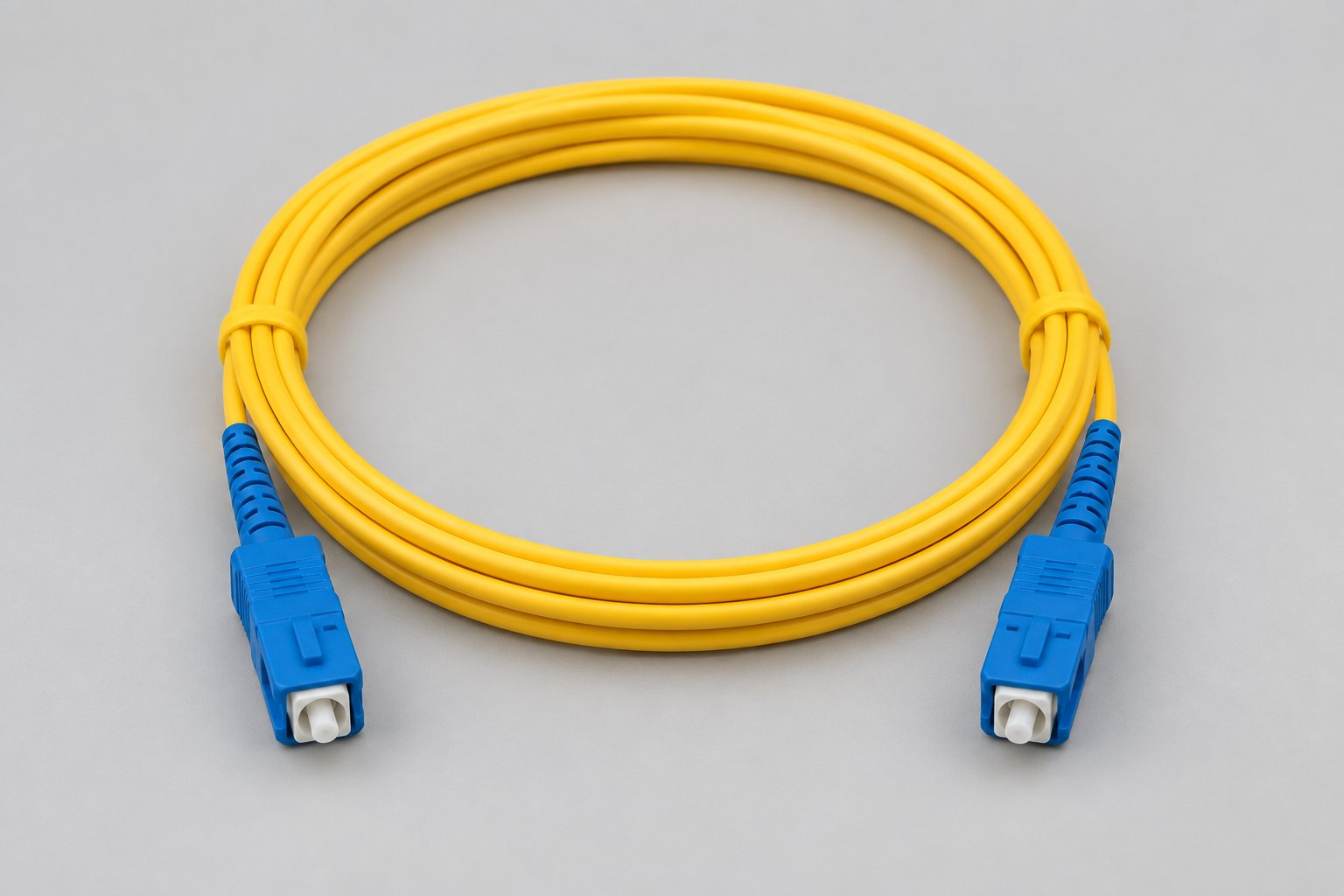
SC-SC Multimode OM3 Patch Cord
SC to SC multimode OM3 patch cord for high-speed data center and LAN links, with low insertion loss and reliable duplex performance.
SC to SC, duplex
Product Notes
- Laser-optimized OM3 fiber
- Low insertion loss
- Custom lengths and colors
Specifications
Fiber type, connector, test data, packaging proof and sample-kit notes are kept in the same quote sheet.
| Connector Type | SC to SC, duplex |
|---|---|
| Fiber Type | Multimode OM3 |
| Insertion Loss | <= 0.3 dB |
| Return Loss | >= 30 dB |
| Length | 0.5-50 m, custom |
| Jacket | LSZH / PVC |
| Application | Data centers, LAN, storage networks |
Application Notes
Why the SC-SC Multimode OM3 Patch Cord Matters for High-Speed Links
When you are building a data center, LAN or storage network that runs 10G and higher, the fiber patch cord between the switch port and the transceiver is not a passive afterthought. It is the physical link that carries the optical signal, and its end-face polish, fiber grade and connector alignment decide how much of that signal actually reaches the receiver. This SC-SC multimode OM3 patch cord is built for exactly those short and medium distance high-bandwidth links, where a poorly made patch cable shows up as insertion loss, link errors or rework on site.
The Buyer Problem: Unstable 10G+ Links and Rework
For a network contractor or data center buyer, the recurring problem is not the switch or the transceiver, it is the patch cord that quietly degrades the link. A multimode patch cable with an ordinary fiber grade or a roughly polished end face can push insertion loss above the budget, cause return loss to drift, and make a 10G or 40G link intermittent. When that happens on a live rack, the cost is not the cable itself, it is the technician time, the downtime and the re-termination work. Buyers need a patch cord they can install once and trust, with a fiber grade and polish that match the speed they are actually running.
How This Patch Cord Solves It
This SC-SC multimode OM3 patch cord uses laser-optimized OM3 fiber, which is designed to carry 10G signals over the distances typical of intra-building backbone and data center links. The precision SC connectors and a smooth polished end face keep insertion loss at ≤ 0.3 dB and return loss at ≥ 30 dB, so the link budget stays predictable. The duplex construction keeps the transmit and receive fibers together, which makes routing cleaner and reduces the chance of a crossed pair during installation.
What the Specs Tell a Buyer
| Parameter | Value |
|---|---|
| Connector Type | SC to SC, duplex |
| Fiber Type | Multimode OM3 |
| Insertion Loss | ≤ 0.3 dB |
| Return Loss | ≥ 30 dB |
| Length | 0.5-50 m, custom |
| Jacket | LSZH / PVC |
| Application | Data centers, LAN, storage networks |
When you compare patch cords, the insertion loss and return loss figures are the numbers that matter most for a high-speed link. A lower insertion loss leaves more optical budget for the actual transmission, and a higher return loss means less reflected signal that can interfere with the transmitter. The 0.5-50 m length range covers the common patch panel to switch and switch to switch runs, and custom lengths are available for non-standard paths.
Choosing the Right Length and Jacket
For a data center rack, measure the actual path from the patch panel to the switch port and add a small service loop, rather than ordering an exact straight-line length. For jacket, choose LSZH when the cable runs through plenum or occupied spaces where low smoke and halogen-free material matter, and PVC for general indoor runs where cost is the priority. Both are available in this patch cord, so the choice is driven by your building code and installation environment.
Installation and Care Notes
Keep the patch cord within a sensible bend radius when routing it through a rack or patch panel, and avoid pulling on the connector body when you seat or remove it. A clean, dust-free end face is what keeps insertion loss and return loss where the spec says they are, so wipe the connector with a fiber cleaning tool before first use and whenever a link starts to show errors. These are standard handling practices for any multimode patch cable, not a claim about a specific test result.
Quality Control Before Dispatch
Each patch cord is checked for insertion loss and return loss before dispatch, along with a visual inspection of the connector end face. Nexora operates 30+ QC stations across incoming material, component, in-process, functional, visual, final and packaging inspection, and the 12 production lines support both standard and custom orders. This is a company-level manufacturing capability, not a claim that this specific cable carries a third-party certification.
Procurement FAQ
What length should I order for a rack-to-switch run?
Measure the physical path and add a service loop of 0.5-1 m. The standard range is 0.5-50 m, and custom lengths are available for non-standard paths.
Should I choose LSZH or PVC jacket?
Use LSZH for plenum or occupied spaces where low smoke and halogen-free material are required by building code. Use PVC for general indoor runs where cost is the priority.
Can I get custom lengths and colors for an OEM project?
Yes. Nexora supports OEM and ODM projects with custom lengths, jacket colors, labels and packaging. Share your specification or reference sample with the sales team to confirm the configuration.
How is the patch cord tested before shipment?
Each cord is checked for insertion loss and return loss before dispatch, along with a visual inspection of the connector end face. For specific test data or a test report, confirm the requirement with the sales team when you place the order.
Request Product Details
Get a Quote for Your Network
Tell us the length, jacket type and quantity you need, and our team will confirm the configuration and lead time for your project.
Request product detailsTags
Related Fiber Products
Get A Quote
Send fiber type, connector, quantity, application and packaging requirement. The response can include test data and sample-kit notes.