
Nexora
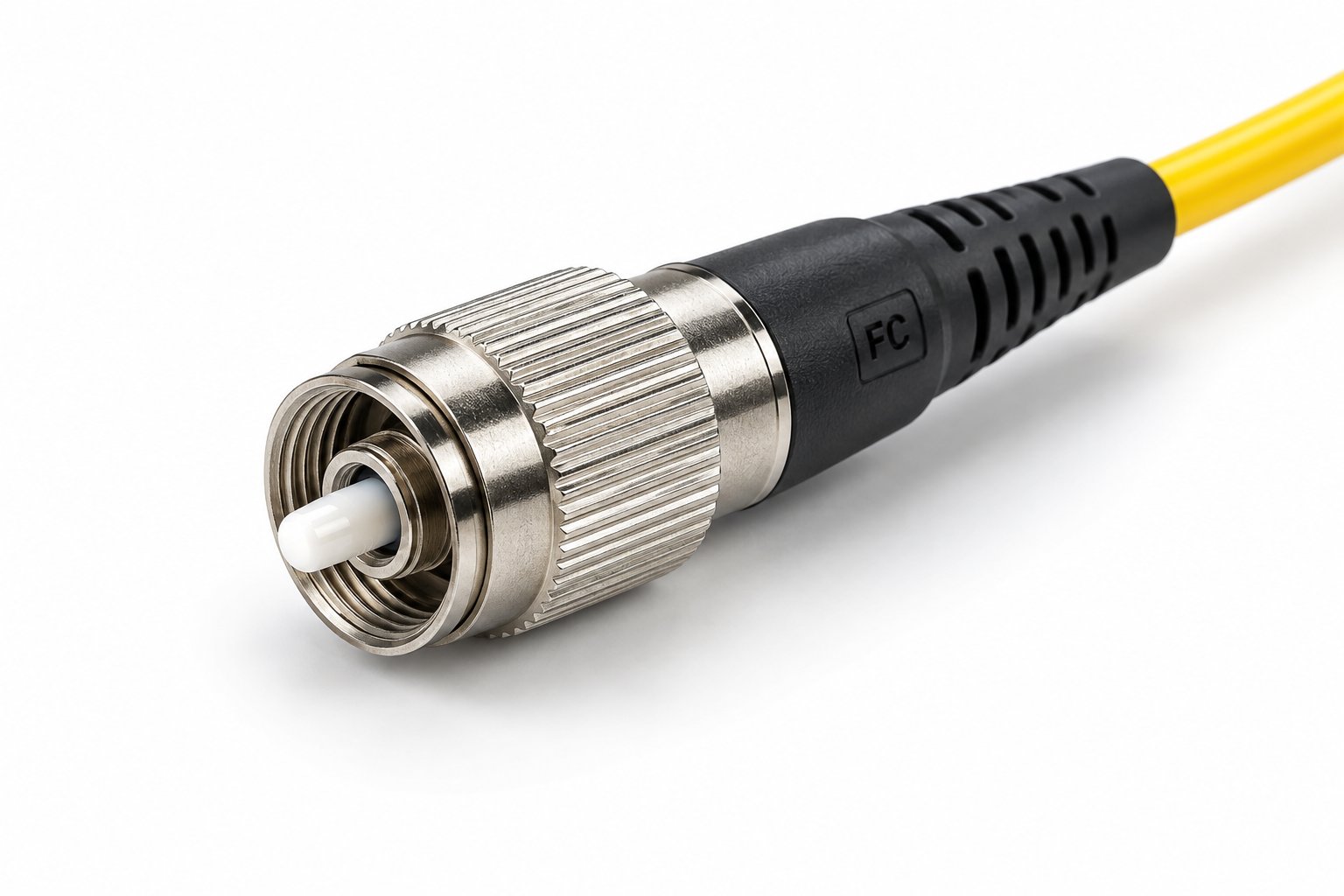
FC-FC Single Mode Patch Cord
FC to FC single mode patch cord with threaded locking, UPC standard polish, ≤0.30 dB typical insertion loss and 12-month warranty for test equipment and high-reliability links.
Fiber type
Single mode
Connector
FC-FC
Connector type
FC-FC
Product Notes
- FC threaded locking
- Single mode G.652D fiber
- ≤0.30 dB typical insertion loss
- UPC standard, APC on request
Specifications
Fiber type, connector, test data, packaging proof and sample-kit notes are kept in the same quote sheet.
| Connector type | FC-FC |
|---|---|
| Fiber type | Single mode G.652D, 9/125 µm |
| Type | Simplex |
| Locking | FC threaded coupling nut |
| Length | Custom |
| Application | Test equipment, CATV headends, high-reliability links |
| Polish | UPC standard, APC on request |
| Insertion loss | ≤0.30 dB typical, ≤0.50 dB max @1310/1550 nm |
| Return loss | ≥50 dB (UPC), ≥60 dB (APC) |
| Jacket material | PVC standard, LSZH available |
| MOQ | 100 pcs per length and connector configuration |
| Lead time | 7–12 working days standard, 15–20 working days for large or mixed orders |
| Warranty | 12 months from shipment date |
Application Notes
Why an FC-FC single mode patch cord holds its position on a live test bench
An FC-FC patch cord locks with a threaded metal coupling nut. Once that nut is tightened, the ferrule is held against the adapter by the thread itself rather than by spring tension, so the connection does not depend on a latch staying engaged. On a test bench where cords are mated and unmated all day, or in a CATV headend where a link runs continuously, that is the difference between a reading you can trust and a connection that drifts between measurements.
This page covers what the cord is built from, the optical figures you need for a link budget, the polish and length decisions that decide whether the cord fits, and the delivery and after-sales terms to settle before you place an order.
What this FC-FC single mode patch cord is
This is a simplex FC to FC patch cord on single mode G.652D fiber, with threaded locking on both ends and a length made to your measurement. The core configuration:
- Connector type: FC-FC, threaded coupling nut on both ends
- Fiber type: single mode G.652D, 9/125 µm
- Type: simplex, one fiber per cord
- Polish: UPC by default; APC available on request
- Insertion loss: ≤0.30 dB typical, ≤0.50 dB maximum, tested at 1310 nm and 1550 nm
- Return loss: ≥50 dB (UPC), ≥60 dB (APC)
- Length: custom, made to your routing path
- Application: test equipment, CATV headends, telecom transmission links
Because the cord is simplex, each FC-FC single mode patch cord carries one fiber. A link that needs two fibers takes two simplex cords, or a duplex assembly confirmed with the factory before the order is released.
Optical figures you can put into a link budget
Insertion loss and return loss are the two numbers that decide whether a cord fits an existing link, so they are worth stating rather than describing. The figures below are the values this cord is tested against at 1310 nm and 1550 nm:
| Parameter | Value | Test condition |
|---|---|---|
| Insertion loss (typical) | ≤0.30 dB | 1310 nm / 1550 nm, per mated pair |
| Insertion loss (maximum) | ≤0.50 dB | 1310 nm / 1550 nm, per mated pair |
| Return loss, UPC | ≥50 dB | 1310 nm / 1550 nm |
| Return loss, APC | ≥60 dB | 1310 nm / 1550 nm |
| Fiber type | G.652D, 9/125 µm | Single mode |
| Operating wavelength | 1310 nm / 1550 nm | Standard single mode windows |
Use the maximum figure when you add the cord into a link budget, and the typical figure when you compare suppliers. If your budget is tight, tell us the loss you have to stay under and the number of mated pairs in the run, and the factory can confirm whether a standard cord or a tighter-screened assembly is the right choice.
Where the threaded lock earns its keep
The FC connector was designed for connections that must not come loose. The threaded nut keeps the ferrule in firm contact with the adapter, which matters in a few concrete situations:
- Test equipment: a cord that is mated and unmated repeatedly, or sits on a bench with equipment vibration around it, needs a connection that stays seated while a measurement is taken.
- CATV headends and distribution: links carrying signal continuously benefit from a connector that does not rely on spring tension to remain seated.
- Telecom transmission links: where a drifting connection would be expensive to trace, the positive lock of the threaded nut keeps the ferrule seated without relying on a latch.
That is why FC connectors stay in use in test and broadcast environments even as smaller connectors take over high-density data centers. If your application is a dense patch panel where space is tight, an FC-FC single mode patch cord is usually not the best fit; a smaller connector type is easier to manage there.
Choosing the right FC-FC single mode patch cord
Three decisions decide whether the cord you receive works in your link.
1. Match the fiber type to your link
This cord is single mode G.652D, used for longer-distance and higher-bandwidth links. If your link is multimode, this cord is not the right match; confirm the fiber type with the factory before ordering.
2. Match the end-face polish to your equipment
FC connectors come in different end-face polishes, and the polish on the connector must match the polish on the adapter and the far-end connector for the link to perform as intended. This cord ships with UPC polish as standard; APC is available on request. Mixing UPC and APC on a single mode link is a common source of avoidable loss, so state the polish you need when you order.
3. Measure the path before you specify length
Length is custom. Measure the actual routing path between the two connection points, add slack for service loops and routing around obstacles, and specify that length when you order. A cord that is too short cannot be extended; a cord that is far too long adds slack that has to be managed.
Installation and handling notes
A few habits keep an FC-FC single mode patch cord performing well over time:
- Keep dust caps on until connection: the ferrule end face is the most sensitive part of the connector; a cap protects it from dust and scratches during handling and shipping.
- Tighten the nut by hand: the threaded nut should be snug, not forced. Overtightening can stress the ferrule and the fiber.
- Respect the bend radius: avoid sharp bends at the connector boot and along the run; a tight bend can add loss or stress the fiber.
- Clean the end face before each connection: a clean ferrule end face is the most reliable way to keep insertion loss low on a single mode link.
How the cord is inspected before it ships
Every cord passes through the same inspection sequence before packing, and the checks cover the optical figures quoted above:
- End-face inspection: the ferrule end face is examined for scratches, pits and contamination before the connector is assembled into the cord.
- Insertion loss and return loss test: each cord is measured at 1310 nm and 1550 nm against the limits in the table above.
- Interferometer check: end-face geometry is verified on the polished connector.
- Visual and final inspection: connector, boot, jacket and labeling are checked before the cord is packed.
Inspection runs through incoming material, component, in-process, functional, visual, final and packaging stages, so a cord is checked more than once between the ferrule and the carton. If your project needs test data with the shipment, say so in your inquiry and the factory will confirm which records can be supplied with the order.
Ordering, packing and delivery
Because the cord is made to length, the commercial terms are worth settling at the quotation stage rather than after the order:
- MOQ: 100 pieces per length and connector configuration. Mixed lengths can be combined to reach the minimum; confirm the split with the factory before ordering.
- Lead time: 7–12 working days for standard lengths after specification confirmation, and 15–20 working days for large or mixed-length orders. Lead time starts from the confirmed specification, not from the inquiry date.
- Packing: each cord is coiled to a controlled radius, bagged individually with the connector protected, and packed in export cartons. Carton quantity depends on cord length; the packing list states the quantity per carton.
- Shipping: express, air and sea freight are all available. Tell us the destination port or address and the required arrival window, and the quotation will state the shipping term.
Warranty and after-sales
Nexora provides a 12-month warranty from the shipment date covering manufacturing defects in the connector, ferrule and cable assembly. If a cord fails the optical limits stated on this page on arrival, report it with the order number and the measured value, and the factory will arrange replacement or credit after review. Cords damaged by over-tightening, sharp bends or contaminated end faces during installation are outside the warranty scope, which is why the handling notes above matter. Warranty terms for a specific project can be confirmed in the quotation.
What to confirm before you order
Because the FC-FC single mode patch cord is made to order, a short checklist keeps the order accurate:
- Fiber type (single mode G.652D for this cord)
- End-face polish on both ends (UPC standard, APC on request)
- Simplex or duplex configuration
- Exact length in your preferred unit
- Jacket material: PVC as standard, LSZH available for indoor runs where low smoke and halogen-free cable is required
- Quantity, destination and required arrival date
If any of these is not yet decided, include the question in your inquiry so the factory can confirm the option before production.
Frequently asked questions
What is the MOQ for an FC-FC single mode patch cord?
The minimum order is 100 pieces per length and connector configuration. Mixed lengths can be combined to reach the minimum; confirm the split with the factory before ordering.
What is the lead time and how is the cord packed?
Standard lengths ship in 7–12 working days after specification confirmation, and large or mixed-length orders in 15–20 working days. Each cord is coiled to a controlled radius, bagged individually with the connector protected, and packed in export cartons with the quantity per carton stated on the packing list.
What payment terms do you accept?
Payment terms are confirmed in the quotation. Tell us your preferred term when you send the inquiry and the sales team will confirm what is available for your order value and destination.
Can I get a sample before placing a bulk order?
Samples can be arranged for evaluation. State the length, polish and quantity you need, and the factory will confirm the sample arrangement and the terms that apply.
Can the cord be supplied with our logo or private label?
OEM and ODM supply is part of Nexora's standard service. Send the label artwork and packing requirements with your inquiry so the factory can confirm the format before production.
Is this FC-FC single mode patch cord compatible with FC/APC equipment?
Compatibility depends on the end-face polish. This cord ships with UPC polish as standard and APC is available on request, so confirm the polish on your adapters and far-end connectors and specify the matching polish when you order.
Can I get a duplex FC-FC single mode patch cord?
This cord is simplex. If your link needs two fibers, confirm a duplex assembly or order two simplex cords with the factory before ordering.
What warranty applies to the cord?
Nexora provides a 12-month warranty from the shipment date covering manufacturing defects in the connector, ferrule and cable assembly. Report any cord that fails the stated optical limits on arrival with the order number and measured value, and the factory will arrange replacement or credit after review.
Request product details
Tell us the fiber type, end-face polish, simplex or duplex configuration, exact length, quantity and destination, and our team will confirm the option and prepare the details for your order.
Tags
Related Fiber Products
Get A Quote
Send fiber type, connector, quantity, application and packaging requirement. The response can include test data and sample-kit notes.
OEM & Customization
Connector types, fiber counts, cable lengths, jacket materials and packaging can be configured to your project specification.
Technical Support
Our engineering team helps you confirm product selection, installation details and documentation before you place the order.
Quality & Testing
Every order is inspected before shipment, and test data or inspection reports can be provided with the goods on request.