
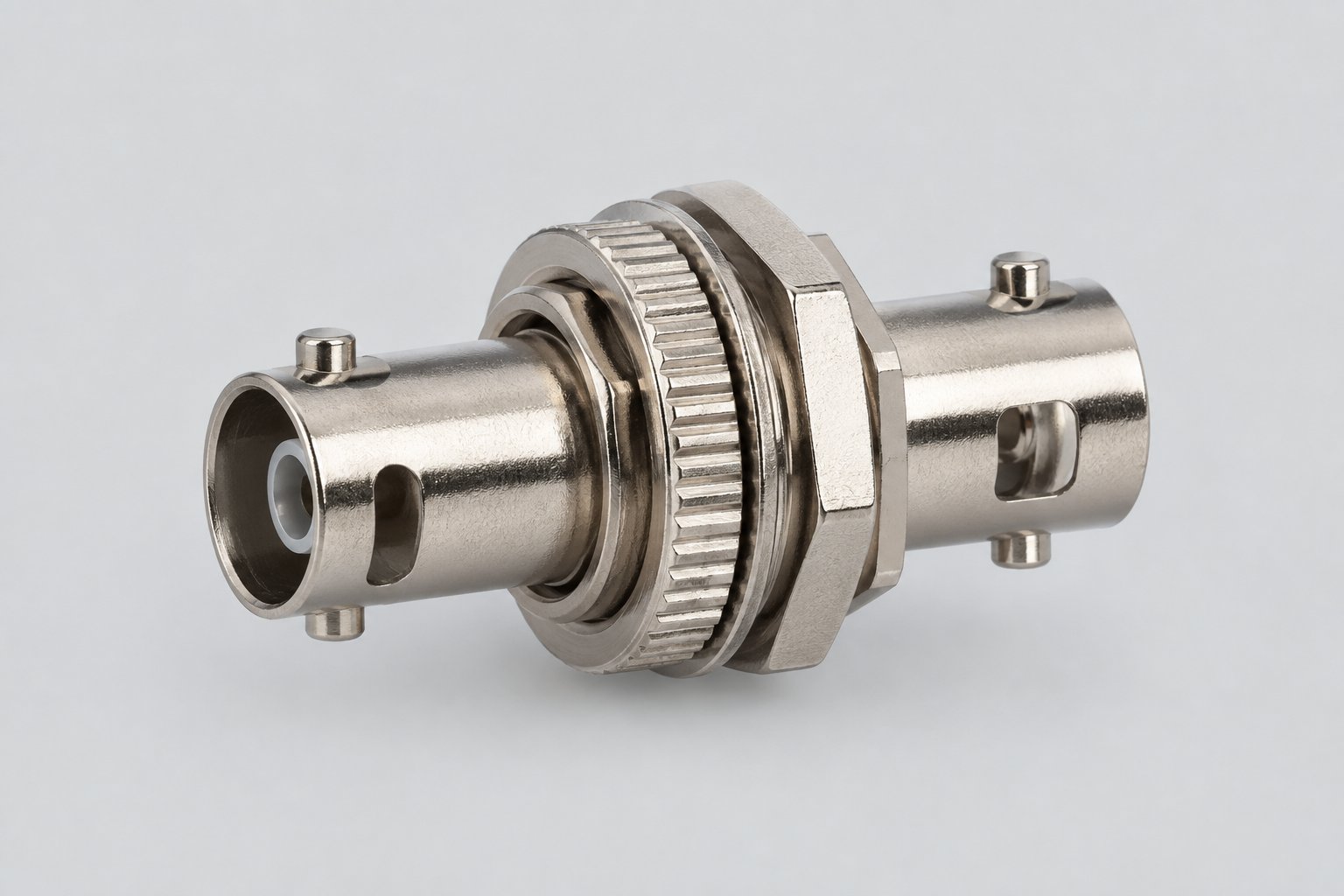
ST to ST Fiber Patch Cable: Keeping Legacy Bays Reliable
ST-ST patch cables still run in thousands of bays. What to check on the bayonet, the multimode glass and the panel adapters before reordering — and when to plan the LC migration.
The ST connector's bayonet twist made it the 1990s campus standard, and it has outlived every prediction: factories, universities and carrier rooms still run ST bays today. An ST to ST fiber patch cable is usually a multimode cord — most surviving ST plants are OM1/OM2 short-wave links — and keeping those bays reliable comes down to three checks: the bayonet, the glass class and the panel adapters behind it.
What to check before reordering
| Check | What good looks like | Why it fails otherwise |
|---|---|---|
| Bayonet engagement | Quarter-turn seats with a firm stop; keyed slot aligns every time | Worn keys cross-thread and leave ferrules misaligned |
| Glass class | OM1/OM2 62.5 or 50 µm to match the installed plant; newer retrofits on OM3/OM4 | Modal bandwidth mismatch caps the link speed |
| Panel adapters | Healthy ceramic sleeves in every ST bulkhead — see our ST multimode adapter | Fatigued sleeves add loss every re-patch |
Specifying the cord
- Simplex construction. ST is a simplex connector — count cords per fiber, not per pair.
- Ferrule polish. Multimode ST uses PC polish; single-mode ST builds exist for older SM bays and use UPC. Match the panel.
- Jacket. 2.0/3.0 mm PVC or LSZH to match the room's fire code.
- Length discipline. ST bays are dense; over-length cords coil badly behind panels. Route-measure before ordering.
Planning the LC migration
Keep ST bays running with like-for-like cords, and migrate by equipment generation: new switches arrive LC, so each refresh either adds an ST-LC hybrid cord at the boundary or converts one panel at a time. Our multimode SC-SC OM3 cord family covers the LC side of that transition. The ST bay itself does not need to move until the panel is touched.
Key specifications at a glance
| Parameter | Typical value |
|---|---|
| Fiber | OM1/OM2 62.5/50 µm multimode; OM3/OM4 for retrofits; OS2 for legacy SM bays |
| Insertion loss | ≤0.3 dB typical / ≤0.5 dB max per cord |
| Return loss (PC, MM) | ≥20 dB typical |
| Locking | Bayonet quarter-turn, keyed |
| MOQ | 100 pcs per SKU |
| Lead time | 7–15 working days after deposit |
| Payment | 30% T/T deposit, balance before shipment |
| Warranty | 12 months from shipment date |
Values marked typical are industry reference figures; the shipped datasheet for each SKU governs.
Buyer FAQ
Are ST patch cables still manufactured?
Yes — built to order in multimode and single-mode variants. Legacy does not mean discontinued; it means the bay sets the specification.
Can an ST cord connect to LC equipment?
Not directly: ST is a 2.5 mm bayonet, LC a 1.25 mm latch, and no passive adapter mates them. Use an ST-LC hybrid cord at the boundary — the same rule as our ST-LC upgrade guide.
OM1 or OM2 — which do we order for an old 62.5 plant?
Match the installed glass. A 62.5 µm OM1 cord on a 50 µm plant misaligns mode fill and can break the link budget; read the jacket print on the existing run first.
Karar aracı
ST bölmenizi ne güvenilir tutar?
Önce çalıştırılacak kontrolü seçin — yanıt bu sayfadaki eski bölme kurallarını özetler.
Çözüm fiyat teklifi isteyin
Kurulum senaryonuzu, gerekli konnektör tiplerini, fiber sayılarını ve hedef miktarları tanımlayın. Girdileriniz ne kadar spesifik olursa mühendislerimiz uygun ürünleri ve üretim/teslim süresini o kadar hızlı teyit edebilir.