
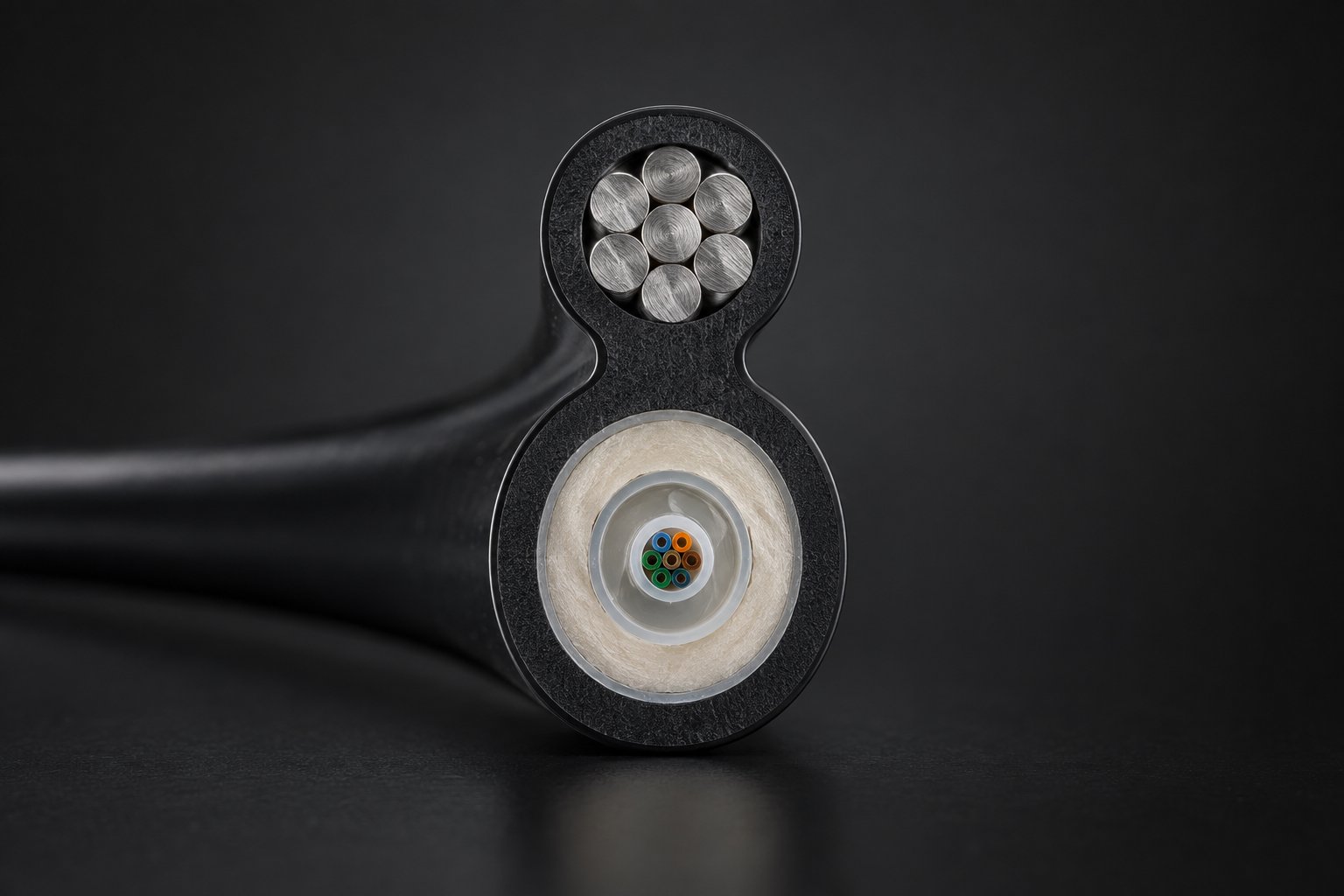
Figure 8 Fiber Cable: Aerial Runs with an Integrated Messenger
A figure 8 fiber cable carries its own messenger, so the span hangs in one pass. When it beats ADSS, how to size the span, and what the lashing crew needs.
A figure 8 fiber cable is a loose-tube cable and a steel messenger joined in one sheath shaped like the numeral 8. The crew hangs the whole assembly in a single pass — no separate lashing of a bare cable to a pre-strung wire — which is why short and medium aerial spans so often specify it. The design decision is not figure 8 or nothing; it is figure 8 versus all-dielectric ADSS versus cable-plus-separate-messenger.
Figure 8 vs ADSS vs separate messenger
| Option | Strength member | Best fit | Watch out for |
|---|---|---|---|
| Figure-8 self-supporting | Integrated steel messenger | Pole-to-pole campus and access spans where a single pass matters | Steel messenger needs bonding/grounding near power lines |
| ADSS | Aramid yarn, all-dielectric | Shared power corridors, long spans, dry-zone tracking | Span and sag must be engineered per tower |
| Cable + separate messenger | Stranded steel wire | Routes where the messenger already exists | Two-pass installation, higher labor cost |
Sizing the span before ordering
- Span length and sag. State pole spacing and allowable sag — the messenger grade and cable construction are selected against the worst span, not the average.
- Ice and wind load. Ice-covered or high-wind routes move to a heavier messenger; the quote should carry the load case you specify.
- Existing hardware. Suspension and tension clamps must match the messenger diameter — send the hardware list with the inquiry.
- Grounding plan. The steel messenger must be bonded per the site's earthing rules wherever it runs near equipment.
Termination at the ends
Terminate the loose-tube side indoors with pigtails and an adapter panel, as in our pigtail termination guide; the messenger ends on its own clamp at the entrance bracket. Separating the two terminations is what keeps future re-patching cheap.
Key specifications at a glance
| Parameter | Typical value |
|---|---|
| Fiber | G.652D single mode, 2–144 cores typical |
| Attenuation | ≤0.36 dB/km @1310 nm / ≤0.22 dB/km @1550 nm (typical, per datasheet) |
| Structure | Loose tube + integrated steel messenger, figure-8 cross-section |
| Temperature | −40 °C to +70 °C (typical) |
| MOQ | Per-reel order, factory-cut lengths |
| Lead time | 7–15 working days after deposit |
| Payment | 30% T/T deposit, balance before shipment |
| Warranty | 12 months from shipment date |
Values marked typical are industry reference figures; the shipped datasheet governs each build.
Buyer FAQ
Can figure 8 cable run on shared power poles?
Physically yes, but the steel messenger near live hardware demands bonding and clearance discipline. Many operators choose ADSS on shared corridors precisely to remove the metal.
What span length is figure 8 good for?
It depends on the messenger grade and load case. Short campus spans are routine; for long crossings send the span, sag and load data so the build is engineered rather than guessed.
Do we order it by reel or by cut length?
Both are possible: standard reels for stock, factory-cut lengths for engineered routes. Cut lengths reduce mid-span splices on straight pole lines.
Karar aracı
Açıklığınıza hangi havai hat yapısı uygun?
Açıklık kararını seçin — yanıt, bu sayfadaki havai hat kurallarını yeniden ifade eder.
Çözüm fiyat teklifi isteyin
Kurulum senaryonuzu, gerekli konnektör tiplerini, fiber sayılarını ve hedef miktarları tanımlayın. Girdileriniz ne kadar spesifik olursa mühendislerimiz uygun ürünleri ve üretim/teslim süresini o kadar hızlı teyit edebilir.