
ST to ST Fiber Patch Cable: Keeping Legacy Bays Reliable
ST-ST patch cables still run in thousands of bays. What to check on the bayonet, the multimode glass and the panel adapters before reordering — and when to plan the LC migration.
The ST connector's bayonet twist made it the 1990s campus standard, and it has outlived every prediction: factories, universities and carrier rooms still run ST bays today. An ST to ST fiber patch cable is usually a multimode cord — most surviving ST plants are OM1/OM2 short-wave links — and keeping those bays reliable comes down to three checks: the bayonet, the glass class and the panel adapters behind it.
What to check before reordering
| Check | What good looks like | Why it fails otherwise |
|---|---|---|
| Bayonet engagement | Quarter-turn seats with a firm stop; keyed slot aligns every time | Worn keys cross-thread and leave ferrules misaligned |
| Glass class | OM1/OM2 62.5 or 50 µm to match the installed plant; newer retrofits on OM3/OM4 | Modal bandwidth mismatch caps the link speed |
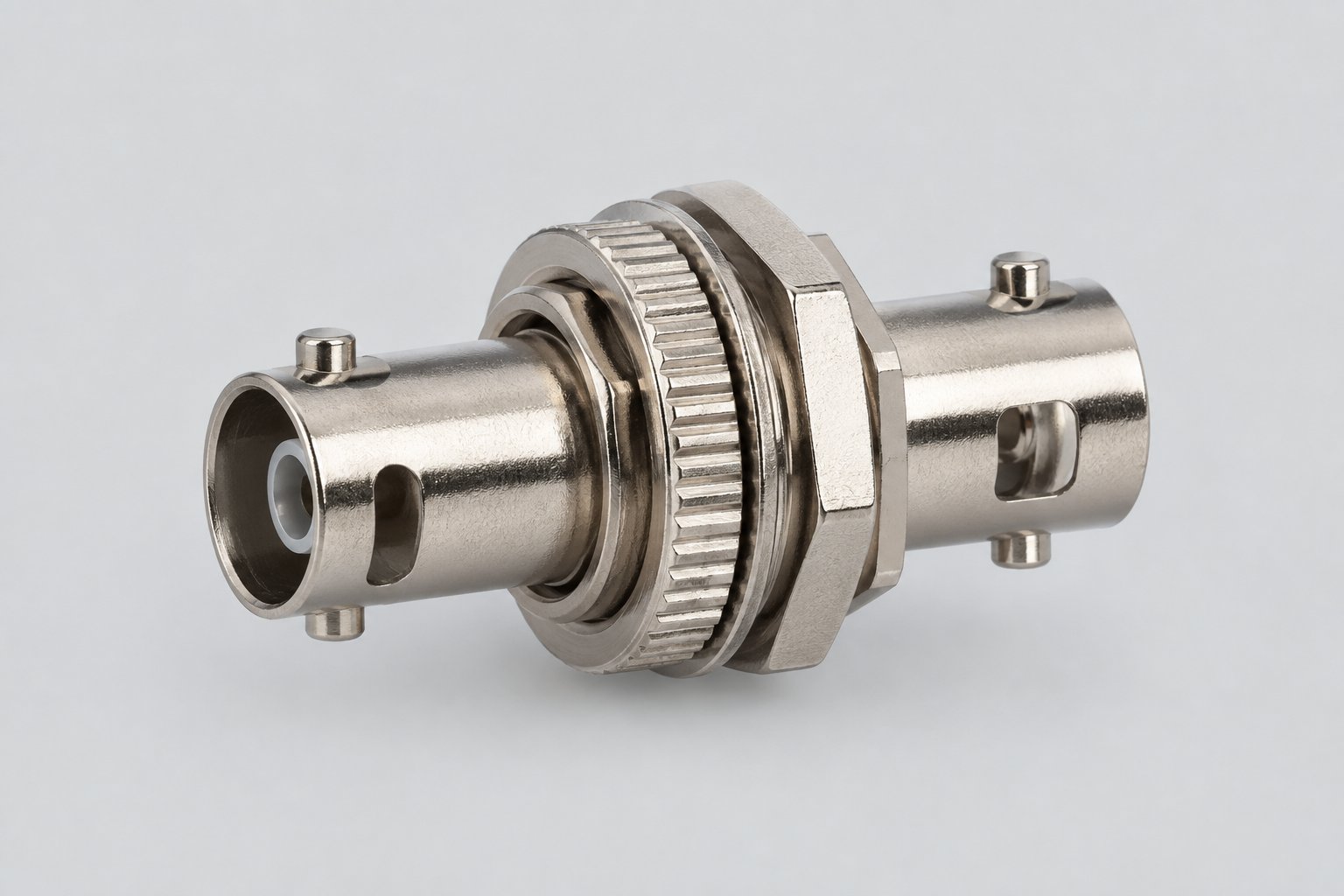
| Panel adapters | Healthy ceramic sleeves in every ST bulkhead — see our ST multimode adapter | Fatigued sleeves add loss every re-patch |
Specifying the cord
- Simplex construction. ST is a simplex connector — count cords per fiber, not per pair.
- Ferrule polish. Multimode ST uses PC polish; single-mode ST builds exist for older SM bays and use UPC. Match the panel.
- Jacket. 2.0/3.0 mm PVC or LSZH to match the room's fire code.
- Length discipline. ST bays are dense; over-length cords coil badly behind panels. Route-measure before ordering.
Planning the LC migration
Keep ST bays running with like-for-like cords, and migrate by equipment generation: new switches arrive LC, so each refresh either adds an ST-LC hybrid cord at the boundary or converts one panel at a time. Our multimode SC-SC OM3 cord family covers the LC side of that transition. The ST bay itself does not need to move until the panel is touched.
Key specifications at a glance
| Parameter | Typical value |
|---|---|
| Fiber | OM1/OM2 62.5/50 µm multimode; OM3/OM4 for retrofits; OS2 for legacy SM bays |
| Insertion loss | ≤0.3 dB typical / ≤0.5 dB max per cord |
| Return loss (PC, MM) | ≥20 dB typical |
| Locking | Bayonet quarter-turn, keyed |
| MOQ | 100 pcs per SKU |
| Lead time | 7–15 working days after deposit |
| Payment | 30% T/T deposit, balance before shipment |
| Warranty | 12 months from shipment date |
Values marked typical are industry reference figures; the shipped datasheet for each SKU governs.
Buyer FAQ
Are ST patch cables still manufactured?
Yes — built to order in multimode and single-mode variants. Legacy does not mean discontinued; it means the bay sets the specification.
Can an ST cord connect to LC equipment?
Not directly: ST is a 2.5 mm bayonet, LC a 1.25 mm latch, and no passive adapter mates them. Use an ST-LC hybrid cord at the boundary — the same rule as our ST-LC upgrade guide.
OM1 or OM2 — which do we order for an old 62.5 plant?
Match the installed glass. A 62.5 µm OM1 cord on a 50 µm plant misaligns mode fill and can break the link budget; read the jacket print on the existing run first.
Herramienta de decisión
¿Qué mantiene fiable su bahía ST?
Seleccione la comprobación que debe hacer primero: la respuesta reproduce las reglas para bahías heredadas de esta página.
Solicitar una cotización de solución
Describa su escenario de despliegue, los tipos de conector requeridos, los recuentos de fibra y las cantidades objetivo. Cuanto más específicos sean sus datos, más rápido podrán nuestros ingenieros confirmar los productos compatibles y el plazo de entrega.