
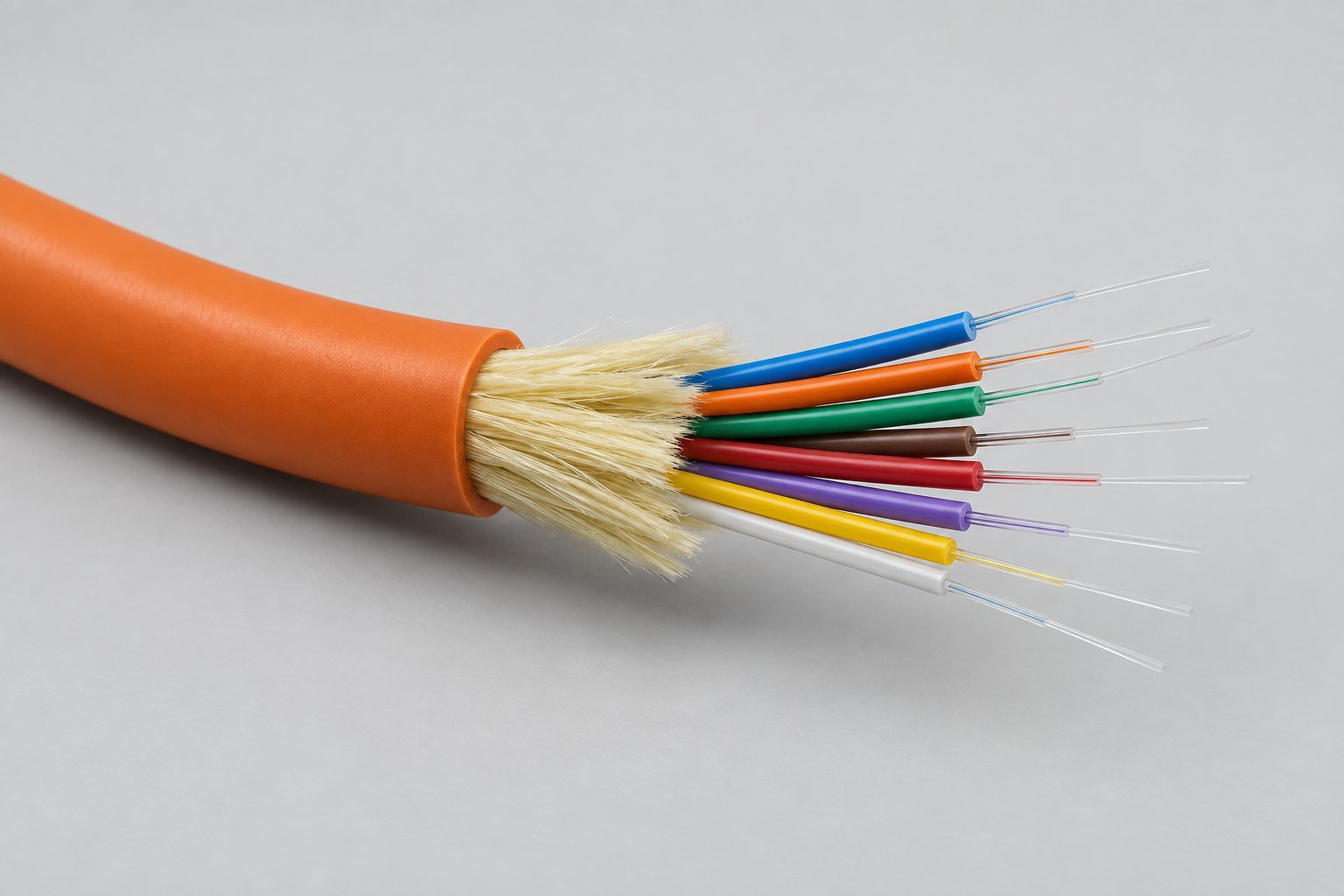
How to Buy Fiber Optic Cable: 8 Checks Before the Deposit
A due-diligence path for buyers: what to verify on the datasheet, in the sample, on the factory floor and in the shipping set before wiring the 30% deposit.
The market for fiber optic cable is wide, and the price spread between a serious manufacturer and a repackager can be 30% on paper for glass that tests very differently in the ground. Whether you are comparing quotes for a WDM network rollout or a simple indoor run, the same eight checks separate a factory worth the deposit from one worth avoiding.
The eight checks
- Datasheet conformance. Compare the quoted attenuation, tensile and temperature range to the fiber standard claimed (G.652D, G.657A2, OM4). A factory that cannot produce its own datasheet per construction is reselling.
- Fiber brand traceability. Ask which fiber is loaded and whether the reel test report traces to the fiber lot.
- Sample testing. Test a sample on your own OTDR: attenuation at 1310/1550 nm, and for the jacket, a crush and bend check against the datasheet figures (marked typical values must be confirmed on the shipped datasheet).
- Geometry check. Measure outer diameter and wall thickness on the sample; loose-tube cables with thin, inconsistent sheaths fail in burial.
- Reel and packing standard. Wooden drums, end caps and sequential meter marks — the details from our bulk cable guide — show whether the factory ships to spec or to the cheapest carton.
- Test reports with the shipment. Confirm every drum ships with its own attenuation and length test report, not one report for the batch.
- MOQ and lead time in writing. Get the MOQ per SKU and the lead-time start point (after deposit or after drawing approval) in the PI, not in a chat message.
- Warranty terms. The warranty period and its start date (shipment from factory) should appear on the quotation — ours is 12 months from shipment date.
Sample-to-shipment flow
- Sample first, order second. A paid sample with its test report costs little and answers checks 1–4 before any deposit.
- Pilot reel. For multi-kilometer projects, one pilot drum installed and OTDR-tested by your crew de-risks the full order.
- Pre-shipment photos. Drum photos with meter marks and end caps before container loading catch packing shortcuts early.
Key specifications at a glance
| Parameter | What to verify |
|---|---|
| Attenuation @ 1310 / 1550 nm | ≤0.4 / ≤0.3 dB/km typical claim (confirm on datasheet and sample) |
| Fiber standards | G.652D / G.657A2 single-mode; OM1–OM4 multimode |
| Test reports | Per-drum attenuation and length report in the shipment set |
| Lead time | 7–15 working days after deposit (standard constructions) |
| Payment | 30% T/T deposit, balance before shipment |
| Warranty | 12 months from shipment date |
Buyer FAQ
Is a free sample always available?
Sample policy depends on construction and length. Ask for the sample cost and lead time with your inquiry — a factory confident in its line has no reason to dodge a tested sample.
What test report should ship with each drum?
At minimum: attenuation per fiber at 1310/1550 nm and the measured length per drum. For armored and ADSS builds, add the mechanical test summary for the construction.
How do we verify the fiber brand claim?
Ask for the fiber lot reference on the drum test report and match it to the fiber supplier's lot certificate for that reel. A traceable answer takes one document; a vague one is itself information.
Narzędzie decyzyjne
Która kontrola przebiega pierwsza?
Proszę wybrać kolejny krok należytej staranności — odpowiedź przywołuje osiem kontroli opisanych na tej stronie.
Poproś o wycenę rozwiązania
Opisz scenariusz wdrożenia, wymagane typy złączy, liczby włókien i docelowe ilości. Im bardziej szczegółowe dane, tym szybciej nasi inżynierowie potwierdzą pasujące produkty i czas realizacji.